Full Article
about Sotillo del Rincón
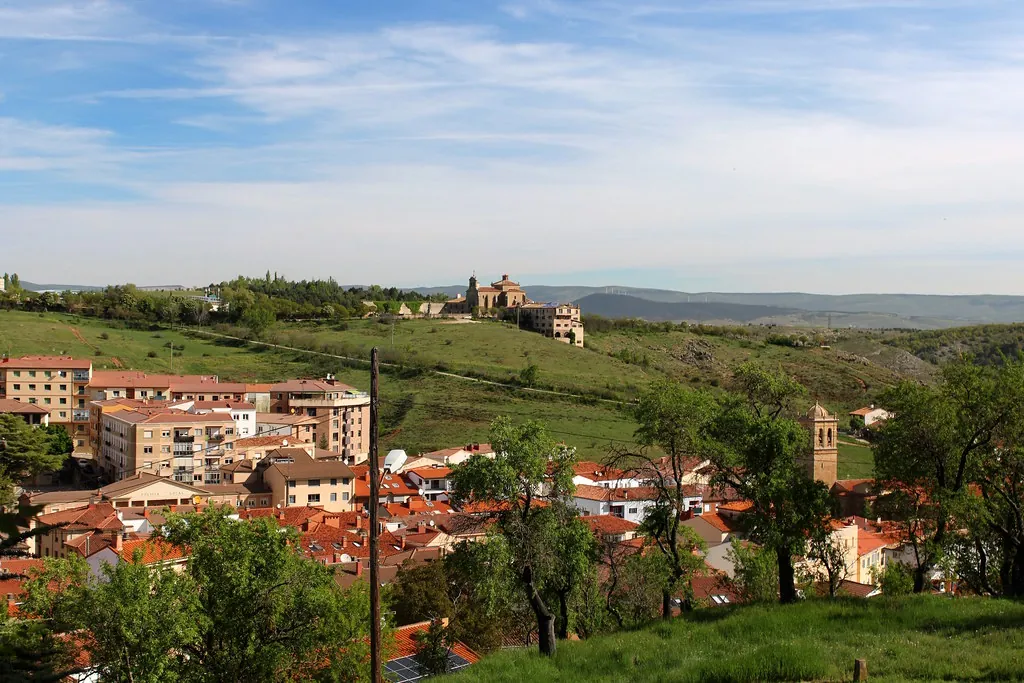
Church of the Nativity; Colonial-style mansions built by returning emigrants
Hide article Read full article
A village that appears almost by chance
Some places seem to turn up without much warning. A winding drive through the mountains, pine trees on either side, the occasional cow by the road, and then a cluster of stone houses comes into view. Sotillo del Rincón, in the province of Soria, feels a bit like that. It is not completely out of the way, but it is not on any major route either, and that helps explain why it still feels calm.
The village has around 170 residents and sits at roughly 1,100 metres above sea level in the Sierra de Urbión. Winter makes itself known here. The houses reflect that reality, with thick walls, sloping roofs and plenty of pine wood. Walking through the centre, it quickly becomes clear these are not decorative features. These are buildings designed to deal with cold, snow and the passing of time.
The shape of the village
Sotillo del Rincón is easy to explore on foot. Calle Mayor forms the backbone, with smaller squares and narrow streets branching off it. There are no major landmarks that demand constant attention, but there are details that stand out if you move at a slower pace.
The parish church, dedicated to San Pedro, defines much of the village skyline with its tower. Around it are older houses, many with small enclosed yards attached directly to the home. That layout says a lot about how people have lived here over generations: livestock close by, a vegetable patch within reach, everything compact and practical.
The façades combine limestone and sandstone. Some still have wooden balconies and large doors with worn metal fittings. This kind of architecture makes sense in a place shaped by long winters and daily work tied to the land and animals. It is functional, but it also gives the village a consistent and recognisable character.
Pine forests and walking routes
The surroundings of Sotillo del Rincón are defined by pine forests. It does not take long to leave the last houses behind and find yourself among trees. The smell of resin is noticeable, especially when the sun warms the ground.
There are paths linking the village with others in the Razón valley, as well as routes that climb towards higher parts of the Sierra de Urbión. These are straightforward trails, the kind people have used for generations to move between grazing areas and woodland.
Wildlife is part of the landscape. Roe deer can sometimes be spotted if you are lucky. Wild boar are also present, though you are more likely to hear them than see them. In autumn, the forest floor fills with mushrooms, and it is common to see locals out with baskets and knives collecting níscalos or boletus. These are well-known edible mushrooms in Spain, but if you are unfamiliar with them, it is better to observe and learn rather than pick.
Food shaped by the climate
The cooking in this part of Soria is straightforward and tied closely to the environment. These are dishes designed to warm you up after spending time outdoors.
Roast lamb is common across the area. There are also cured meats prepared at home during the traditional matanza, the annual slaughter used to preserve meat for the year ahead. Chorizo, morcilla (a type of blood sausage) and cured pork fat remain staples in many households. Alongside these, you will find simple stews made with legumes and vegetables.
It is not complicated cooking. In fact, it leans in the opposite direction. But after a cold walk through the forest, it becomes clear why these dishes are still part of everyday life.
Exploring the Razón valley
One of the advantages of stopping in Sotillo del Rincón is its position within the Razón valley. Within a few kilometres, the landscape shifts noticeably.
Vinuesa is nearby and tends to be busier, especially at weekends. From there, many people head towards Laguna Negra, a well-known glacial lake, and other areas within the Sierra de Urbión.
Covaleda and Salduero are also close. These are villages closely tied to the surrounding pine forests, where daily life continues to revolve around woodland and land use. For those who enjoy unhurried drives along mountain roads, this part of Soria offers plenty of variety without needing to travel far.
When the village changes its rhythm
The atmosphere in Sotillo del Rincón shifts with the seasons. In winter, snow appears some years and the quiet becomes more noticeable. Early mornings can bring ice on the roads, so a slower approach is sensible.
Spring and autumn are often the most comfortable times for walking. The forest feels more active and the temperatures are easier to manage. These seasons also highlight the changing colours and textures of the landscape.
Then there are the village festivals. These bring back residents who live elsewhere during the year, and for a few days the usual calm gives way to a busier, more social rhythm. Even with a small population, the connection to the place remains strong and visible during these moments.
Sotillo del Rincón is not somewhere that aims for attention. It works differently. You arrive, walk through streets lined with stone houses, spend time among the pines, and realise that a simple plan can be more satisfying than expected.