Full Article
about Sotresgudo
Ocultar artículo Leer artículo completo
At 940 metres, silence sounds different
The church bell strikes noon, yet the village square remains empty. Not because Sotresgudo is abandoned—its 5,000 inhabitants simply have better things to do than linger in the midday heat. At this altitude, even September sun carries bite. The air thins, sharpening every sound: a tractor's diesel growl carries for miles across the cereal plains; wheat stalks rustle like newspaper pages.
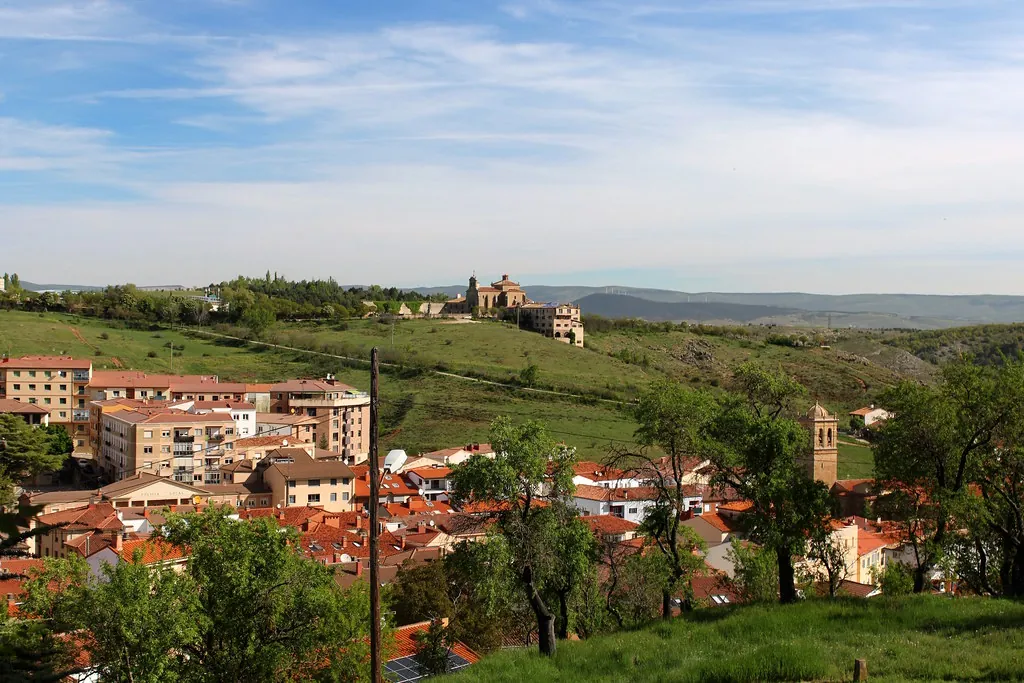
This is Spain's meseta, the high plateau where Castile's heart beats slow and steady. Forty-five kilometres northeast of Burgos city, Sotresgudo sits precisely where the plateau begins its eastern dip toward the Ebro valley. The difference matters. Drive here from Madrid and you'll climb 600 metres in two hours; from Santander, you descend the same amount. Your ears pop either way.
Stone, wheat and the spaces between
The municipal boundaries encompass not just Sotresgudo proper but a constellation of smaller settlements—Herrán, Rodilla, San Mamés—scattered across 65 square kilometres of wheat, barley and fallow fields. Between them run agricultural tracks, wide enough for combine harvesters, that double as walking routes. These aren't manicured footpaths. Expect dust, expect gravel, expect to step aside for the occasional John Deere.
The churches reward close inspection. San Miguel Arcángel in Sotresgudo village features a 13th-century doorway whose weathered carvings require kneeling to appreciate properly. Inside, a gilded retablo depicts local saint Millán de la Cogolla with his trademark stigmata—tiny rubies set into the painted hands. Photography is permitted, though the dim interior demands patience and steady hands rather than flash.
Residential architecture follows a pattern repeated across northern Castile: stone ground floors, timber upper storeys, terracotta roof tiles weighted against Atlantic storms. Many houses display heraldic shields carved during the 16th-century wool boom, when merino wealth built solid walls against bitter winters. Some properties stand empty, their wooden balconies sagging. Others have been restored with double-glazing and satellite dishes, creating a patchwork of decay and renewal that feels honest rather than tragic.
When the plain becomes path
Cycling here suits those who find hill climbs tedious but flat miles boring. The terrain rolls gently—never steep, but sustaining enough effort to justify the mid-morning cheese stop. Local routes connect the villages in loops of 15-30 kilometres, passing chozos (stone shepherd huts) and veteran holm oaks that predate the railway age. Bring GPS; signposting is sporadic and the landscape's uniformity can confuse newcomers.
Spring brings green wheat and nesting skylarks. Autumn turns stubble fields gold against purple saffron crocuses—Spain's most expensive spice grows wild here, though picking it violates regional protection laws. Summer walking starts at dawn or waits until 6 pm; midday temperatures regularly exceed 35°C despite the altitude. Winter transforms the plain into a brown abstract, interrupted by bright yellow calendula flowers that bloom regardless of frost.
Birdlife specialises in open-country species. Spotting scopes reveal little bustards performing mating displays in April, while hen harriers quarter the fields throughout winter. Bring binoculars and patience; wildlife viewing requires stillness that the constant wind makes challenging.
Food that understands hunger
The village's two cafés open irregularly outside festival periods. One operates from what appears to be someone's front room; knock loudly if the door's locked. When they're serving, order the menestra de verduras—slow-cooked vegetables that tastes of soil and sunshine rather than supermarket uniformity. The other café does excellent tortilla, cooked to order while you wait. Both close by 4 pm sharp.
For proper meals, plan ahead. The asador in Herrán roasts Segovian-style suckling pig in a wood-fired oven, but requires 24 hours' notice for small groups. They'll serve wine from Ribera del Duero at €12 per bottle—restaurant prices without restaurant mark-ups. Alternatively, self-cater from Burgos city's Mercado Norte before driving out. Local accommodation provides basic kitchen facilities; nobody expects Michelin stars at 940 metres.
The August fiesta changes everything. For three days, temporary food stalls appear in Sotresgudo's main square serving morcilla de Burgos (blood sausage with rice), roast peppers and ice-cold beer at €2 per caña. The village population triples as former residents return from Bilbao and Barcelona. Book accommodation months ahead, or accept that you'll be driving back to Burgos city at 2 am along unlit country roads.
Practicalities for the plateau
Getting here without a car requires determination. Three daily buses connect Burgos city with Sotresgudo; the journey takes 50 minutes and costs €3.40. The last return departs at 6 pm, making day trips feasible but inflexible. Car hire from Burgos railway station runs €35-45 daily; the drive takes 35 minutes via the BU-532, a decent road that ices over in winter.
Accommodation means rural casas rurales—self-catering houses sleeping 4-6 people from €80 nightly. Two operate year-round; others close November-March when heating costs outweigh income. Expect wood-burning stoves, patchy Wi-Fi and water pressure that drops when neighbours shower. The nearest hotel sits 15 kilometres away in Medina de Pomar; perfectly pleasant, but requiring a designated driver for evening wine tasting.
Weather demands respect. Summer afternoons feel Mediterranean; nights drop to 12°C even in July. Winter brings snow several times annually, though it rarely settles beyond morning. Spring and autumn offer the best compromise—mild days, cool nights, and that extraordinary plateau light that makes everything look like a Dutch Old Master painting.
The anti-destination
Sotresgudo won't suit everyone. Those seeking tapas trails, Moorish architecture or beach proximity should stop reading now. The village offers instead something increasingly rare: space to think, paths without way-markers, churches without entrance fees. It rewards visitors who arrive with provisions, waterproofs and realistic expectations.
Come for three days minimum. Day-trippers spend more time driving than experiencing; the meseta reveals itself slowly, like a book that improves after chapter three. Walk the agricultural tracks at sunrise when dew highlights spider webs stretched between wheat stalks. Sit in the square at dusk watching swifts hunt insects against a sky that seems higher than elsewhere. Accept that the café might be closed, that the museum doesn't exist, that your phone signal will fail precisely when you need directions.
This is Castile stripped of tourist gloss: sometimes uncomfortable, frequently beautiful, always honest. The altitude ensures that even silence sounds different up here—thinner, clearer, carrying the scent of distant rain across forty kilometres of wheat.