Full Article
about Tamaron
Ocultar artículo Leer artículo completo
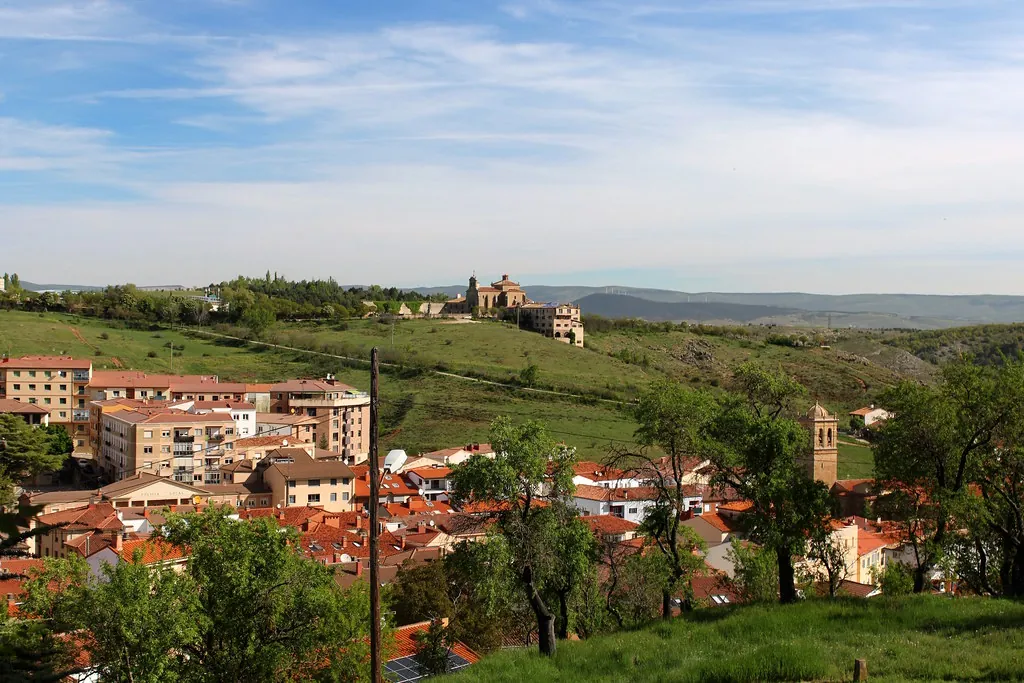
The church bell strikes noon, yet nobody hurries. An elderly man in a beret shuffles across the dusty plaza, his walking stick tapping a rhythm against the flagstones. Behind him, the adobe walls of houses glow amber in the Castilian sun, their wooden shutters painted that particular shade of green you only find in rural Spain. This is Tamarón, population 85 on a busy day, where time hasn't so much stopped as stretched itself thin like toffee in summer heat.
The Architecture of Absence
Fifty kilometres northeast of Burgos city, where the A-62 motorway shrinks into provincial roads that snake through endless wheat fields, Tamarón appears almost by accident. There's no dramatic approach, no sweeping vista—just a gradual accumulation of stone and mortar rising from the flatness. The parish church of San Miguel stands as the village's only vertical statement, its modest tower built from the same honey-coloured limestone that forms the surrounding landscape.
The church's architecture tells Tamarón's story in layers. Romanesque foundations support a 16th-century nave, while the baroque altarpiece inside arrived during the village's brief wool boom. Weathered stone tablets beside the entrance record baptisms from 1789—names of families who've either left for Bilbao or Madrid, or remain in the adjacent cemetery where plastic flowers mark recent visits. The building stays unlocked during daylight hours, though the priest only visits twice monthly now.
Wandering the narrow lanes reveals houses built from whatever materials came to hand. Adobe bricks—mud mixed with straw and left to bake in the summer sun—sit alongside proper stone constructions, creating a patchwork effect that architectural purists might dismiss as accidental. Yet this pragmatic approach embodies Tamarón's character: make do, mend, survive. Several properties display carved crests above their doorways, remnants of minor nobility who controlled local wheat production centuries ago. The Escudero family crest shows a hand clutching three stalks of grain, still visible despite centuries of erosion.
What the Fields Remember
The surrounding landscape appears monotonous at first glance—just wheat, more wheat, and the occasional almond grove. But walk the farm tracks at dawn and the plateau reveals its subtleties. Autumn brings waves of golden stubble that catch low sunlight like fragments of broken mirror. Spring transforms the same earth into a green ocean rippling with wind patterns. The horizon sits impossibly distant, interrupted only by medieval raised paths (cañadas reales) that once guided sheep flocks south for winter grazing.
Local farmer José María García (everyone knows him as Pepe) tends 200 hectares inherited from his grandfather. He'll point out features invisible to urban eyes: the slight depression where a Roman road once ran, the hollow oak that marks a Civil War mass grave, the field boundary changed after a boundary dispute in 1952. "The land remembers everything," he remarks, though he doesn't elaborate on whether this is blessing or curse.
Birdwatchers arrive with expensive binoculars hoping for great bustards, those hefty grassland birds that perform mating dances at dawn. They're here, certainly, along with Montagu's harriers quartering the fields and calandra larks providing constant soundtrack. But the real spectacle happens during late summer harvest when massive combines work through the night, their headlights creating theatrical pools of illumination across the darkness. The machines cost more than most villagers earn in a decade, operating with GPS precision that seems almost obscene in this landscape of gradual change.
The Politics of Emptiness
Tamarón's decline follows a familiar Spanish narrative. The village school closed in 1978 when only seven pupils remained. The bakery shut two years later, followed by the grocery shop in 1983. Now the sole commercial activity is Bar California, run by Loli who returned from Barcelona after her divorce. She opens at 7 am for coffee and serves lunch until 3 pm, though she'll fry eggs later if asked politely. Her tortilla contains potatoes grown by her brother, eggs from her mother's hens, and olive oil pressed in neighbouring Villarcayo. It costs €3.50 with bread, representing perhaps the last genuinely local meal available between Burgos and the Basque border.
The village maintains its ayuntamiento (town hall) through an ingenious arrangement with five other shrinking municipalities. They share a mayor who rotates between locations, handling bureaucratic necessities that seem increasingly abstract when your constituency consists mainly of pensioners and weekend visitors from Bilbao. The last municipal elections saw 67 votes cast—81% turnout that would shame British local democracy, though nobody particularly wanted to win.
This administrative persistence enables Tamarón to access EU rural development funds, which paid for the children's playground installed in 2019. It's used mainly by grandchildren visiting during August fiestas, though local teenagers have discovered that the swings provide an excellent venue for drinking Estrella Galicia far from parental supervision. The metal slide gets too hot to use during summer afternoons when temperatures reach 38°C, but serves as useful storage for jackets during winter when the meseta becomes bitterly cold and wind sweeps unimpeded from the Cantabrian mountains.
Eating the Landscape
Food here connects directly to terrain and season. The neighbouring village of Sotopalacios hosts a monthly produce market where María sells morcilla made from her own pigs, spiced with onions grown in her garden and rice from the Ebro delta. The blood comes from the annual matanza, that autumn ritual where families still gather to transform one creature into months of sustenance. Nothing gets wasted—ears become crunchy snacks, skin renders into chicharrones, even the bladder serves as casing for a particularly pungent sausage that divides opinion sharply.
Local restaurants (meaning establishments within 30 kilometres) serve lechazo asado—milk-fed lamb roasted in wood-fired ovens until the exterior caramelises into glass-like crispness. The dish arrives at table with nothing more than a green salad and perhaps some roasted red peppers dressed in local olive oil. It's €22 in Medina de Pomar's Asador Miguel, worth every cent for meat that tastes cleanly of grass and milk rather than the mutton flavours British palates associate with older animals.
Wine presents more complex geography. Tamarón sits just outside the official boundary for Ribera del Duero denomination, meaning local vines must sell their tempranillo grapes to cooperatives for blending rather than bottling under prestigious labels. The upside appears in bar prices—decent house red costs €1.80 a glass, produced by someone's cousin in Villalbos who never bothered seeking formal classification. It tastes of dark cherries and that particular mineral quality that comes from limestone soils, though locals would never describe it so pretentiously. "It's wine," shrugs Loli. "It gets you drunk."
Finding Your Way Back
Reaching Tamarón requires surrendering to Spanish rural transport realities. There's no bus service on weekends, and weekday connections from Burgos involve changing in Medina de Pomar with two-hour waits. Hiring a car becomes essential, though GPS systems struggle with newer postcodes and you'll probably get lost at least once among identical wheat fields. The tourist office in Burgos (hidden inside the cathedral complex) provides maps showing scenic routes, though "scenic" here means "slightly less straight than the main road."
Accommodation options remain limited. Three village houses offer rooms through casual arrangements—knock at number 14 and ask for Carmen, who'll rent you her son's old bedroom for €25 including breakfast. Otherwise base yourself in Medina de Pomar, whose medieval centre contains several decent hotels and at least one excellent restaurant. The fifteen-minute drive between locations feels longer at night when wild boar emerge from oak plantations to browse wheat stubble.
Visit during late April when the landscape glows an almost violent green before summer drought sets in, or choose October for harvest activity and spectacular thunderstorms that split the enormous sky. August brings fiestas but also temperatures that make afternoon exploration frankly unpleasant. Winter means possible snow and definite closure—many houses stand empty from November through March when owners relocate to warmer coastal flats.
Bring walking boots for the farm tracks, binoculars for birdlife, and sufficient Spanish to attempt conversation. Nobody speaks English here, though they're patient with attempts and appreciate the effort. Most importantly, abandon expectations of "authentic Spain" or whatever marketing departments currently promote. Tamarón simply exists, neither welcoming nor rejecting visitors, too busy surviving to worry about tourism strategies. That very indifference becomes its greatest attraction—a place where British travellers can experience what rural Spain actually looks like when nobody's watching.