Full Article
about Terradillos De Esgueva
Ocultar artículo Leer artículo completo
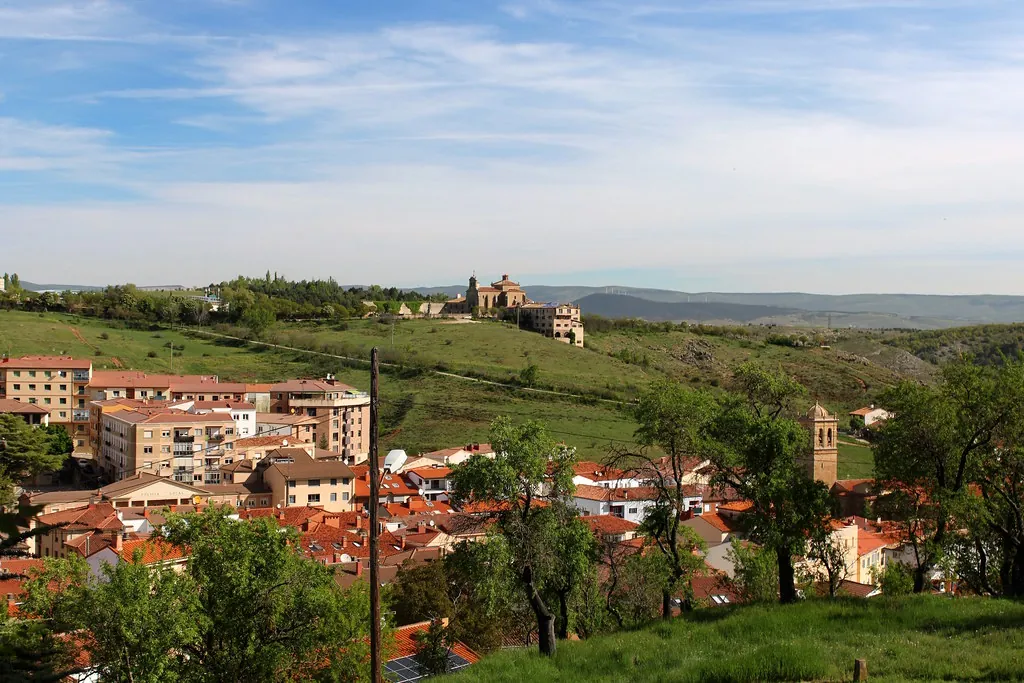
The river Esgueva doesn't announce itself with drama. It slips past Terradillos de Esgueva like an afterthought, a modest ribbon of water that has nonetheless shaped five millennia of settlement here on the high plateau. At 800 metres above sea level, this Burgos village sits where the endless wheat fields of Castilla y León suddenly remember they need water, and the result is somewhere that feels neither fully of the plains nor the mountains.
The approach tells the story. Forty-five minutes south-east from Burgos city, the A-1 motorway spits you onto the CL-128, and suddenly the horizon tilts. Not dramatically—this is still the meseta—but enough to notice. The road dips, the wheat gives way to poplars, and Terradillos appears: a compact grid of adobe walls and terracotta roofs that looks exactly like what it is—a place that has persisted through Romans, Moors, and modernity without ever quite succumbing to any of them.
The Architecture of Persistence
The village church dominates the skyline, but not in the way cathedral towns do. Here, the Iglesia Parroquial de San Juan Bautista rises just high enough to remind you this is still Catholic Spain, its weathered stone tower visible from anywhere within the settlement's five-minute walking radius. Built piecemeal between the 16th and 18th centuries, it wears its additions honestly: mismatched stone, patched walls, a bell tower that leans slightly westward after four centuries of plateau winds.
Wander the two main streets—Calle Real and Calle San Juan—and the real architecture emerges in the details. Adobe walls thick enough to swallow sound. Wooden balconies that haven't been replaced since someone's great-grandfather thought pine was eternal. Ancient grain stores—hórreos—converted into garages, their stone stilts once designed to keep rats from the harvest now supporting Citroëns and ageing Seats.
The village's 500 souls live in houses that blend into one another, sharing walls the way neighbours share gossip. Some façades still display the shields of minor nobility—families who stayed on after the Reconquista, married local farmers, and gradually became indistinguishable from them. The shields are worn smooth now, their lions and castles mere suggestions in stone that has forgotten it was ever carved.
When the Fields Become Your Museum
Terradillos makes no attempt to be picturesque. This is its primary charm. The wheat fields that surround it—thousands of hectares of golden cereal that shift from green to amber to stubble with the seasons—function as an ever-changing exhibition space. Visit in late June and the harvest creates a theatre of combines that work through the night, their headlights carving arcs across the darkness. September brings stubble burning, the air thick with a smell that locals claim reminds them of childhood and British visitors invariably describe as "like someone barbecuing toast."
The river path offers the gentlest introduction to plateau walking. Follow the Esgueva southeast for three kilometres and you'll reach the ruins of Molino de la Torre, a 15th-century flour mill that ground local wheat until 1953. The mill race still channels water, though the grinding stones lie cracked and grass-covered. It's a twenty-minute stroll that feels longer because the altitude—800 metres—makes the air thin and the light sharp.
For something more substantial, the PR-BU 74 trail heads west through dehesa countryside—oak pasture where black Iberian pigs root for acorns. The full circuit is 14 kilometres and takes four hours, climbing to 900 metres before dropping back to the river. Marked with the usual Spanish yellow-and-white flashes, it's properly waymarked but carries the standard Castilian warning: carry water. The nearest shop is back in the village, and the plateau sun doesn't distinguish between May and September—it will dehydrate you regardless.
What to Eat When There's Nothing to Eat
The village's single bar—simply called "Bar"—opens at 7 am for farmers and doesn't close until the last customer leaves, usually well after midnight. Its menu reflects both poverty and ingenuity: migas (fried breadcrumbs with garlic and chorizo) appears twice, once as a starter and again as a main course. The lechazo (roast suckling lamb) comes from a farm 12 kilometres away and is cooked in a wood-fired oven that predates the Spanish Civil War. Order it on Sundays only—any other day and you're eating last week's frozen portion.
Local specialities arrive unannounced. During autumn mushroom season, níscalos (saffron milk caps) appear sautéed with egg, a dish that costs €6 and tastes of earth and pine. Spring brings setas de cardo (oyster mushrooms) gathered from poplar trunks along the river. The bar owner, María José, serves them with a shrug that suggests anyone could have found them. She's lying—she's been walking these fields for fifty years and knows exactly where they fruit.
The village shop doubles as the bakery, opening at 6:30 am for fresh piquitos—bread rolls so crusty they could double as weapons. Buy them before 8 am or accept yesterday's batch. The shop stocks UHT milk, tinned tuna, and local cheese so sharp it makes Cheddar taste like butter. There's no card machine. Cash only, preferably in exact change.
The Seasonal Contract
Spring arrives late at 800 metres—mid-April rather than March—and transforms the wheat from winter brown to impossible green almost overnight. This is the sweet spot: temperatures hover around 18°C, the river runs full from mountain snowmelt, and wild asparagus appears along the banks. Spanish families visit during Easter week, filling the church and the bar's eight tables. Book accommodation now or accept that you're driving back to Burgos.
Summer means heat and silence. Temperatures regularly hit 35°C, the wheat turns gold, and the village empties as locals head to coastal second homes. The bar reduces its hours. The river becomes a trickle. Walking is best attempted before 8 am or after 7 pm—the plateau sun doesn't care about your holiday schedule.
Autumn brings the harvest and the return of life. Combine harvesters work 20-hour days, creating traffic jams on single-track roads. The smell of burning stubble permeates everything. September's fiestas patronales transform the village: temporary bars appear in the square, a brass band plays until 4 am, and someone inevitably sets off fireworks near the church at inappropriate moments. It's either magical or unbearable, depending on your tolerance for Spanish small-town celebration.
Winter is when Terradillos reveals its true character. The plateau wind—el cierzo—sweeps down from the Cantabrians and turns 5°C into something that feels like -5. The wheat fields become a study in brown and grey. The bar's wood stove becomes the village's social centre. Walking is possible—there's no snow at this altitude—but requires layers and a tolerance for horizontal rain. This is when you realise why locals have been leaving for Madrid for three generations.
Getting Here, Staying Here, Leaving Here
The village has no hotel. Your options are three casas rurales—village houses converted into self-catering accommodation. Casa Rural El Esgueva sleeps six and costs €80 per night minimum. The heating works, the Wi-Fi doesn't. Booking requires phoning Pilar, who speaks no English but understands "two nights" and credit card numbers. She'll meet you at the bar with keys and instructions delivered entirely in Castilian Spanish, which bears little resemblance to what you learned at evening classes.
Public transport barely exists. One bus daily from Burgos arrives at 2 pm, returns at 6 am next day. Miss it and you're walking 12 kilometres to the nearest village with a more regular service. Hiring a car isn't optional—it's essential. The final six kilometres from the CL-128 are on a road so narrow that meeting a tractor requires one of you to reverse. Tractors don't reverse.
Terradillos de Esgueva offers no postcards, no fridge magnets, no organised anything. It's a place that continues because stopping would be harder than carrying on. Come here to understand that rural Spain isn't a theme park—it's a series of compromises with geography, economics, and history that somehow still functions. Bring walking boots, cash, and a phrasebook. Leave your expectations at the city limits.