Full Article
about Tobar
Ocultar artículo Leer artículo completo
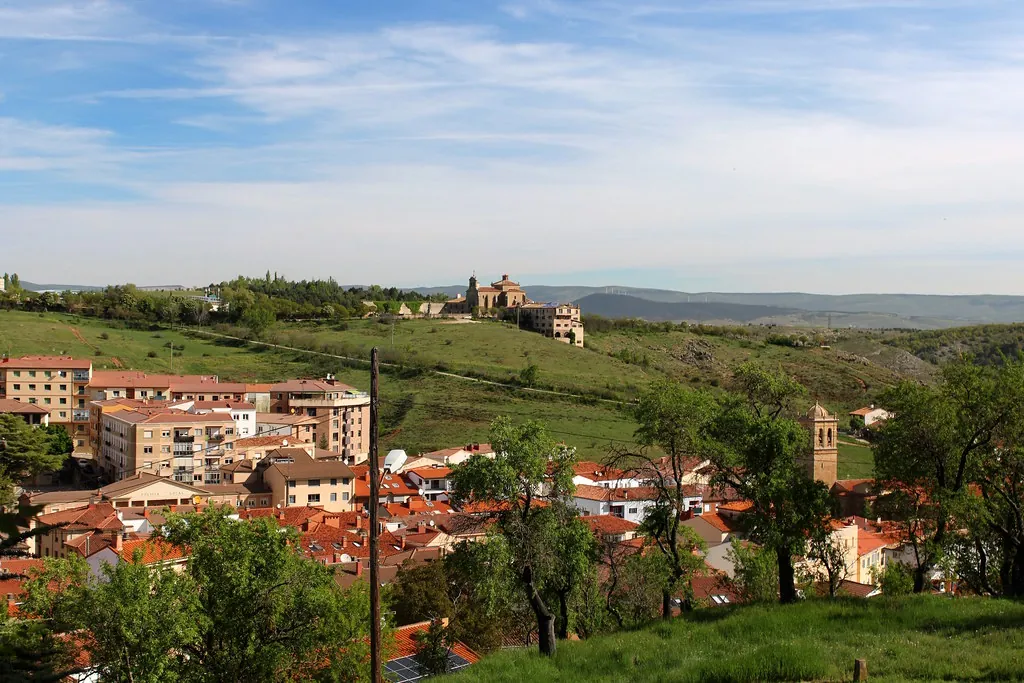
At 940 metres above sea level, Tobar sits just high enough for the air to carry a faint nip most mornings. Dawn breaks over wheat stubble that stretches clear to the horizon, the fields rolling like a calm sea until the land buckles gently into the Montes de Torozos. This is the moment when you realise Castilla y León isn’t flat—it’s simply subtle.
The village appears suddenly after twenty minutes of uninterrupted cereal monoculture. Stone houses the colour of dry earth line a single main street; their wooden doors, painted ox-blood or faded green, are cracked open just wide enough to let a cat slip through. Nothing is sign-posted, nothing is “for tourists”, and that, paradoxically, is what makes the place worth a detour.
A Church Door You Have to Ask For
Tobar’s only formal “sight” is the Iglesia de Santa María, a chunky fifteenth-century parish church whose bell tower doubles as the town’s time-piece. It is usually locked. Walk fifty metres to the only bar—nameless except for the “Cerveza Cruzcampo” sign—and order a cortado. Mention the church. The barman will wipe his hands on a tea towel, disappear out back, and return with an iron key the size of a banana. Inside, the nave smells of wax and stone dust; the altarpiece is gilded but not garish. Spend ten minutes, leave the key back on the counter. The whole transaction feels like being briefly initiated into a private society.
Outside, the architectural attraction is the village itself. Adobe walls bulge slightly, as if exhaling after centuries of service. Wooden balconies sag under terracotta pots of geraniums that somehow survive the winter frosts. Peek through an open gateway and you’ll see the original stable still intact, mangers now filled with firewood rather than hay. Most houses are second homes for families who left for Burgos or Madrid in the 1970s; on weekends Citroëns and ageing Seat Ibizas nose against the stone façades and boots full of supermarket shopping are unloaded in respectful silence.
Walking the Calorie-Burning Prairie
Tobar sits on the southern lip of the Duero basin, which means the countryside looks level until you actually walk it. A farm track leaves the village past the ruined wash-house, then rises 120 metres across three kilometres of wheat and sunflower rotation. From the low ridge you can spot the next village, Hontoria de Valdearados, shimmering in the heat haze 11 km away. The path is tractor-width, dusty in July, gluey with clay after October storms; boots are advised even for a short stroll.
Spring arrives late at this altitude: by late April the first poppies puncture the green, and temperatures hover around 18 °C—perfect for a 10-km loop that links Tobar with the hamlet of San Llorente de la Vega, population 31. Summer, by contrast, is fierce. Thermometers touch 35 °C by noon; the siesta is not quaint, it is survival. Autumn brings cranes heading south, skeins high enough to be audible before they are visible. Winter can surprise: snow is rare but night frosts regularly drop to –5 °C, and the meseta wind whips straight from the Cantabrian cordillera. If you plan December walks, bring the same layers you’d pack for the North York Moors.
Food Meant for Sharing (Even When You Don’t)
There is no restaurant, only the bar that doubles as the church-key depot. Mid-morning it dispenses strong coffee and churros on Saturday; lunchtime offers a three-course menú del día for €12. Order the sopa de ajo (garlic soup with a poached egg) and half a portion of lechazo— suckling lamb slow-roasted in a wood-fired oven until the skin crackles like parchment. A whole tanda feeds four; a media ración is sufficient for two Brits who fancy a siesta afterwards. House red from Ribera del Duero costs €2.50 a glass, fruitier than most supermarket Riojas back home and served at cellar temperature, which in Tobar can be 14 °C even in August.
If you’re self-catering, stock up first. The village bakery opens 7–11 am, sells crusty barras for 70 cents, then shuts. There is no cash machine; the nearest petrol station with an ATM is 19 km away in Aranda de Duero. Sunday is a gastron desert: every food outlet closes after mass, so keep emergency tortilla in the hire-car.
Why You Might Leave After Lunch—and Why You Shouldn’t
Most visitors allot Tobar an hour, a coffee and a photo of the stone well in the plaza. Fair enough if Santander’s ferry is ticking onwards. Stay longer, though, and the village starts to reveal its quiet curriculum: the elderly man who brings out a 1950s threshing machine to demonstrate in fiesta week; the evening walk when swifts reel overhead and the only other sound is the click of dominoes from an open doorway; the night sky so dark that Orion seems three-dimensional.
Accommodation is limited to six rooms above the bar (Hostal El Pozo, £45–55). Beds are firm, Wi-Fi is patchy, but the windows open onto wheat fields that glow at sunset. Book only if you enjoy the sound of church bells on the hour and swallows at dawn. Otherwise base yourself in Burgos and day-trip.
Getting There Without Getting Lost
Tobar is not on Google’s main map layer unless you zoom implausibly close—sat-nav still tries to send articulated lorries through a lane wide enough for a donkey. From Madrid or Bilbao airport take the A-1 autopista north, exit at Lerma, then follow the CL-117 for 24 km. The final approach is a single-track road; meeting a combine harvester is a possibility in July. Allow 90 minutes from either airport, plus ten minutes for wrong turns. There is no bus; a taxi from Burgos rail station costs about €60 each way and must be booked in advance—Uber hasn’t discovered the meseta yet.
When to Come, When to Stay Away
Late April to mid-June is ideal: daytime 20 °C, wild-flowers, and the wheat still green enough to soften the landscape. September offers harvest activity and mild evenings, though dust from threshing can hang in the air. July and August are furnace-hot and the village half-asleep; fiestas happen, but they are for locals first, spectators second. Winter weekends are atmospheric but bleak; if the wind is up, even the cranes keep going.
Tobar will never star on a “Top Ten Spanish Villages” list, and the locals prefer it that way. Come if you are happy to make your own entertainment, to ask for church keys, to walk tractor tracks instead of way-marked trails. Leave the phrase-book humility at home—attempting Spanish here earns more smiles than perfect grammar ever will. And remember: the mirage of flat emptiness is an optical trick. Spend a day and you’ll discover the meseta actually breathes; you just have to stand still long enough to feel it.