Full Article
about Tordomar
Ocultar artículo Leer artículo completo
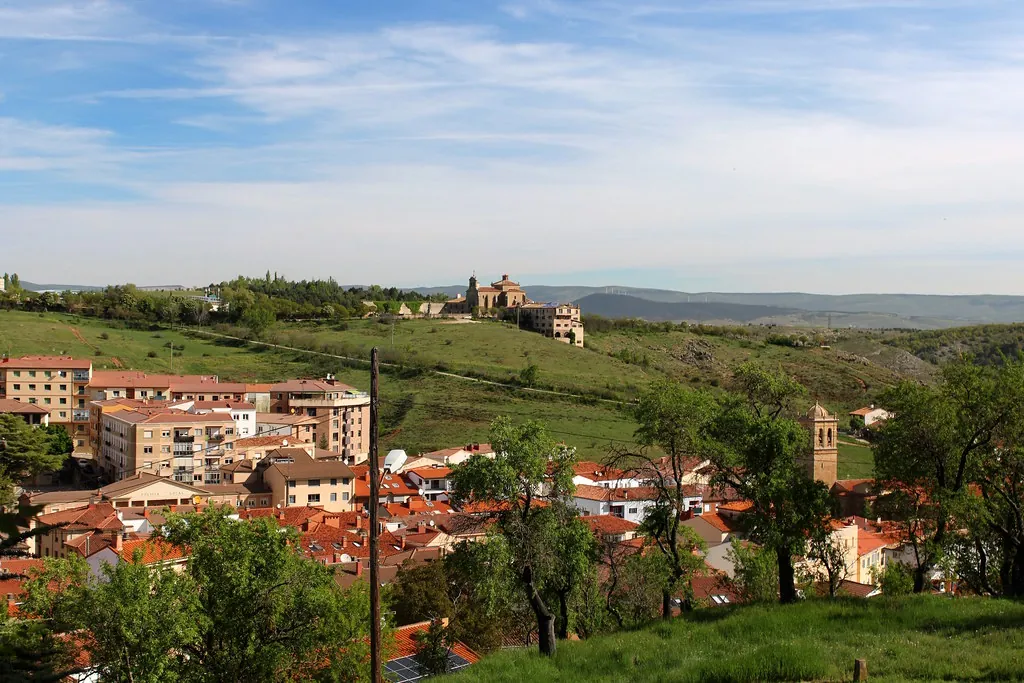
The church bell strikes noon, yet nobody appears. Not a single shop door opens, not one cigarette smoked beneath the stone arcade. This is Tordómar at midday in July: 32 °C in the shade, the air vibrating over cereal stubble, and a stillness so complete you can hear your own pulse. Five thousand people live here, but you’d swear the village had been evacuated—until nightfall, when the square refills with families, the bar terraces glow, and the place remembers it has a pulse of its own.
At 800 m above the Meseta, the altitude buys cool dawns and a sky the colour of bleached denim. Frost is common in December; in August the wind still carries a knife. That thin air sharpens the smell of wet straw after the harvest and carries the clang of tractor buckets farther than seems reasonable. The surrounding plateau is not dramatic—no jagged sierras or river gorges—just an ocean of wheat and barley that changes from electric green to pale gold in the space of a fortnight. What the landscape lacks in theatre it repays in scale: 270-degree horizons, clouds that cast shadows the size of counties, and silence that makes a mobile-phone notification feel like sacrilege.
Stone, Mud and a Bell that Rules the Day
The village fabric is humble: granite footings, adobe walls the colour of digestive biscuits, timber doors softened by centuries of sun. The parish church of San Andrés rises only one storey taller than its neighbours, yet its tower is the compass point from which every lane is measured. Inside, the air smells of candle wax and bruised thyme; the single nave ends in a retablo gilded so thickly that the saints appear to be melting. Sunday Mass still draws a respectable crowd, though these days the sermon is amplified by a crackling Bluetooth speaker balanced on the pulpit.
Walk the grid of four principal streets and you will pass three stone coats of arms, relics of families who left for Valladolid or Madrid when the railway arrived elsewhere. Their mansions are now divided into modest flats; washing hangs from the balconies, and a 1990s Renault 5 rusts politely beneath a 16th-century arch. There is no ticket office, no interpretation board, no guide with a flag. The heritage is simply lived in, which, after the selfie-stick circuit of larger cities, feels almost radical.
Bread, Lamb and the Cheese that Smells of Cellars
Order lunch before 14:00 or you will go hungry. The only restaurant—simply called Mesón—opens when the owner, Saturnino, finishes his morning deliveries and locks again once the roasts are sold. The set menu runs to four courses and costs €14. First arrives a bowl of sopa castellana: garlic, paprika, stale bread and a poached egg that tastes of wood smoke. Then a slab of roast suckling lamb, the skin blistered into a crisp that shatters like toffee. Dessert is usually rice pudding dusted with cinnamon, unless Saturnino’s wife has made leche frita, squares of custard fried in olive oil and scented with lemon peel. The wine is from Aranda del Duero, 40 km south; ask for the young crianza and you will pay €2.50 a glass, poured from a bottle with no label.
Buy supplies at the Punto de Encuentro supermarket, the only commerce open year-round. They stock a cheese called Pata de Mulo, sheep’s milk aged six months until it develops crunchy salt crystals and a whiff of cave damp. Locals slice it paper-thin and drizzle with honey from apiaries that migrate south in winter. If you arrive in April you might catch the annual Día del Cordero, when half a dozen families dig pits behind the football pitch, line them with vine cuttings, and slow-roast whole lambs overnight. Entry is free; you pay €8 for a plate, €1.50 for a plastic cup of claret, and you will be expected to help carry the tables.
Tracks that Beg for an OS Map
The GR-14 long-distance footpath skirts the village, but the real pleasure lies in the unsigned farm tracks that radiate towards abandoned threshing circles. A 9-km loop north-west brings you to the ruins of Ermita de la Virgen del Campo, a 12th-century chapel roofed now by sky and inhabited by kestrels. From the doorway you can see the snow-dusted cordillera of the Picos de Europa—100 km away yet floating like a mirage on clear days. Take water; there is none between the village and the horizon.
Mountain-bike hire is theoretically possible at the petrol station on the N-623, but the mechanic, Manolo, keeps irregular hours. Better to bring your own and ride the tarmac lane to Poza de la Sal (12 km), where salt pans have been worked since the Romans. The gradient is gentle, the traffic two cars per hour, and the descent back to Tordómar delivers a panorama that unfurls like a medieval tapestry—if tapestries smelt of chamomile and diesel.
When to Come, When to Stay Away
Spring is the kindest season. By late April the wheat is ankle-high and neon-green, storks commute overhead, and the temperature hovers around 18 °C at midday. September repeats the trick, with added plumes of dust from the combine harvesters and the bonus of the grape harvest in neighbouring Aranda. Summer nights are star-struck and balmy, but days can top 36 °C with no shade outside the narrow streets. Winter is honest: bright mornings, iron-cold shadows, and the possibility of being snowed in for 48 hours if the northeasterly picks up. The village has one small hotel—six rooms above the bar—heated by radiators that clank like radiators did in 1978.
Getting Here Without a Car (and Why You Might Still Want One)
From Burgos, the ALSA coach leaves at 07:45 and returns at 19:10; the journey takes 55 minutes and costs €4.35 each way. The bus stop is a metal pole beside the cemetery; ring the bell or the driver will breeze past. A hire car from the airport shortens the trip to 35 minutes on the N-623 and gives you freedom to reach the canyon of La Yecla or the dinosaur footprints at Salas de los Infantes, both within 40 km. Petrol is cheaper than in the UK, but fill up before Sunday—every pump within 30 km closes at noon on Saturday and reopens Monday with the languor of someone who knows the week is already too short.
The Part They Leave Off the Brochures
There is no cash machine; the nearest is in Huermeces, 8 km away. Mobile coverage is patchy inside stone houses—step into the square if you need four bars. English is rarely spoken, yet hesitation is interpreted as politeness rather than ignorance. If you attempt Spanish, voices soften; if you persist, someone will fetch a cousin who spent a season in a Northamptonshire warehouse and still remembers the swear words.
Even in fiesta week the village retires by 02:00; the silence that follows is so absolute it rings in your ears. Some visitors find the vacuum unnerving. Others, standing beneath a sky still powdered with Milky Way, discover that quiet can be the loudest sound of all.