Full Article
about Torrecilla Del Monte
Ocultar artículo Leer artículo completo
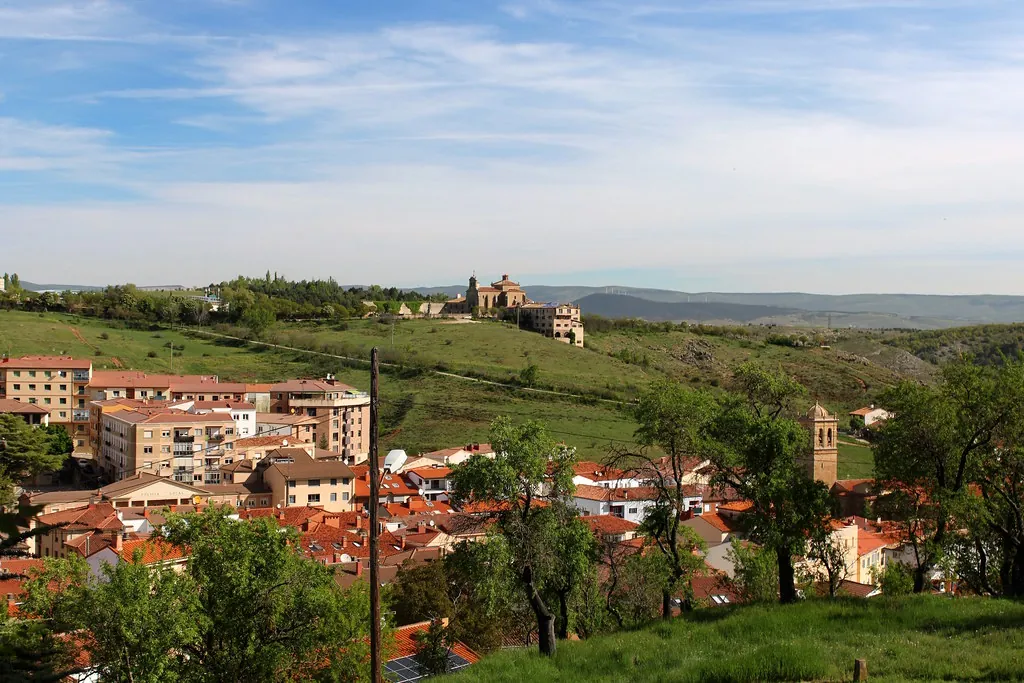
The morning bus from Burgos drops you at the crossroads, then turns back toward the city. From here the road climbs another four kilometres before the cereal fields part and Torrecilla del Monte appears—stone houses huddled against a ridge at 940 metres, high enough for the air to taste thin if you’ve just flown in from sea-level Britain. At this altitude, Castile’s endless wheat ocean suddenly ripples; the grain silos of the plateau give way to modest pastures and the occasional holm oak. Even in July, the wind carries a reminder that the Meseta is, in truth, a high plateau where nights drop to 14 °C regardless of the midday thirty-something.
A Ridge That Forgot the Century
Torrecilla’s main street, Calle Real, is barely two vehicles wide. Adobe walls two-feet thick shoulder against limestone corners quarried from the same ridge the village sits on. Look up and you’ll notice wooden balconies painted the colour of oxidised iron—an earthy red that hides decades of sun and frost. There are no souvenir shops, only a single mixed business open from 09:00-13:30 and 17:00-20:00 (the siesta is non-negotiable). Bread arrives Monday, Wednesday and Friday in a white van that toots its horn; if you miss it, the next option is a 12-km drive to the supermarket in Melgar de Fernamental.
The parish church of San Andrés closes its doors at sunset. The key is kept by Don Cesáreo who lives opposite number 17—knock twice, state your nationality, and he’ll usually oblige. Inside, the nave is colder than the street; the stone floor slopes gently downhill, a reminder that the building has followed the ridge’s tilt since the sixteenth century. A British flag on the visitors’ book shows three signatures in the past year. Weekday Mass is at 19:00; tourists are welcome to sit at the back, but cameras stay off once the bell stops ringing.
Walking on Historical Boundaries
Three way-marked footpaths start from the concrete trough at the village’s upper edge. The shortest (6 km, yellow way-marks) loops past abandoned grain threshing circles and returns along a sheep drift where merino ewes still wear traditional copper bells. The mid-length route (11 km, white-green marks) climbs to the Puerto del Soto (1,175 m) where an unmanned refuge offers shelter; on a clear day you can pick out the Picos de Europa 120 km away—snow on their northern faces even in May. The third path, unway-marked but obvious on the ground, follows the Roman road that once linked Clunia with the Cantabrian coast; after 4 km it passes a limestone monolith locals call “La Peña del Moro,” a favoured roost for griffon vultures. OS-style mapping is non-existent; the tourist office in Burgos sells a 1:25,000 sheet (€8) that stops 5 km short of Torrecilla, so download the free Mapas de España app before leaving Wi-Fi.
Winter hiking brings a different set of rules. The ridge catches Atlantic fronts and snow can fall from November to March; drifts close the access road two or three times each year. The village keeps a small tractor for clearing, but priority goes to farmers with livestock. If you’re staying in one of the three rental cottages, the owners will warn you to park at the lower plaza when snow is forecast—saves digging the car out later. Spring, by contrast, is the reliable season: daytime 15-20 °C, green wheat vibrating like a low-frequency rumble, and stone curlews calling at dusk.
Food Meant for Field Workers
There is no restaurant. Eating hinges on two village bars that open when the owners feel like it—generally weekends and fiesta days. Order the lechazo (milk-fed lamb) only if you’re hungry enough for half a kilo of meat; it arrives sizzling on a clay dish, crackling already salted. A sensible alternative is the plato combinado: morcilla de Burgos (rice-black-pudding), fried egg, chips and a strip of red pepper, €9 including toothpick-wrapped bread. Vegetarians get tortilla de patatas sliced from the aluminium tray on the bar; ask for it “sin cebolla” if onion isn’t your thing. Local cheese is ewe’s milk, semi-cured, sold in 700 g wheels—buy it at the bar and they’ll vacuum-seal it for the flight home.
Wash food down with tinto de la casa, poured from a plastic two-litre bottle kept in the fridge; it costs €1.80 a glass and tastes better than any house red at a British chain pub. If you need coffee, specify “café solo” unless you want the default instant with milk. Tap water is safe but high in calcium—kettle users will be descaling every morning.
Getting There, Staying There
The nearest airport with UK flights is Valladolid (VLL), served twice weekly from London Stansted by Ryanair in summer. From Valladolid, Torrecilla is 90 minutes by hire car: A-62 to Burgos, exit at junction 145, then follow the CL-634 and BU-530 through Melgar. Roads are single-carriageway but quiet; watch for wild boar at dawn. Burgos airport (RGS) also handles the occasional UK charter, though schedules change yearly. Without a car, the journey becomes an overnighter: train to Burgos Rosa de Lima, local bus to Melgar (one daily), then hope the school-driver minibus is running the final 12 km—don’t bank on it outside term time.
Accommodation is limited to three self-catering houses booked through the municipal website (English available, payment by bank transfer only). Expect stone walls, wood-burning stoves, and Wi-Fi that copes with email but buckles under iPlayer. Prices hover around €80 per night for a two-bedroom house, minimum two nights. There is no hotel; the nearest hostal is in Melgar, €45 for a double with bathroom, thin towels guaranteed. Bring slippers—traditional floors are chilly even in June.
Fiestas and the Off-Season Lull
The main fiesta honouring San Andrés falls on the last weekend of November. Saturday night is the quema de la cesta: a three-metre-high wicker basket stuffed with pine branches dragged through the streets then torched in the plaza. Stand up-wind or the sparks will pepper your fleece. Sunday morning, residents breakfast on chocolate caliente and fried doughnuts in the school gym; outsiders are welcomed but must buy a €3 ticket from the bar two days prior—cash only, no exceptions.
Outside fiesta periods the village slips into hush. August feels abandoned by day as locals work fields at dawn and retreat indoors by noon. In January you might share the entire lane network with a single shepherd and his two dogs. The upside is silence so complete you can hear wing beats of passing ravens; the downside is that the bakery van breaks down and no one repairs it until payday. Plan accordingly: pack a spare loaf, fill the petrol tank, and accept that Torrecilla del Monte will not adapt to you—it’s the other way round.