Full Article
about Tubilla Del Agua
Ocultar artículo Leer artículo completo
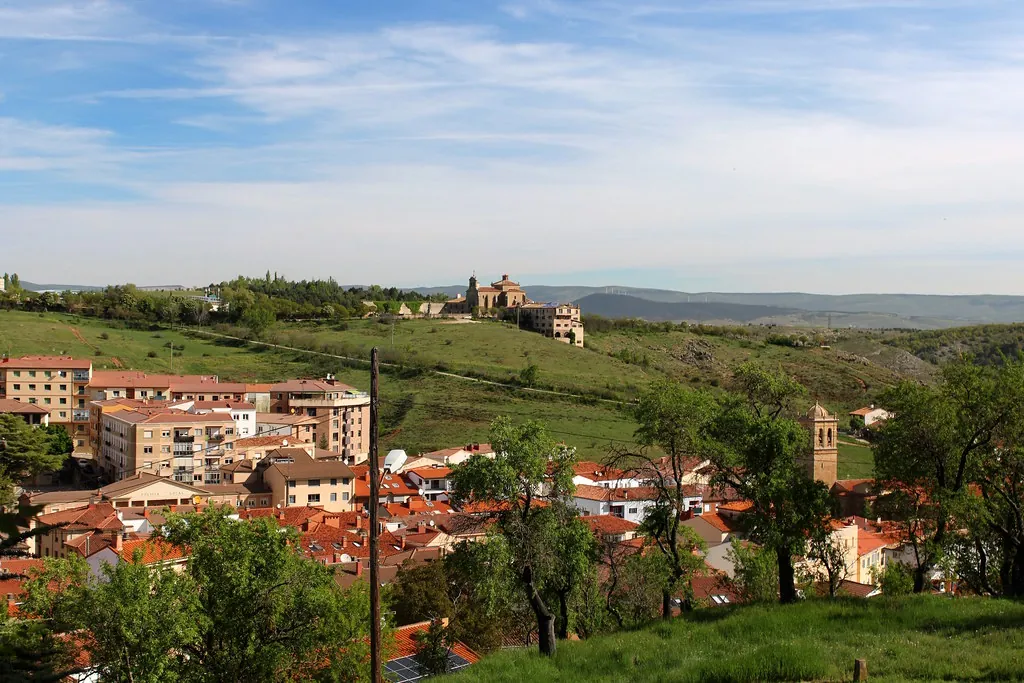
The first thing that strikes you is the sound. Not tractors, not chatter, but water—constant, insistent, trickling through limestone channels that line the single main street. At 800 metres above sea level, Tubilla del Agua sits high enough for the air to carry a sharp edge even in May, and the river has spent millennia carving that altitude into something stranger: petrified waterfalls that look like frozen meringue, branches turned to stone mid-sprout, moss locked behind a calcium veil.
Drive south from Burgos on the N-623 for forty minutes and the meseta’s wheat ocean suddenly dips. Oak scrub replaces cereal, the road tilts downward, and the village appears—no dramatic approach, just a scatter of stone houses clutching a narrow valley floor. Parking is free along the street; coaches squeeze in after 13:30, so aim earlier or you’ll be reversing half a kilometre while day-trippers from Santander watch.
What the Rock Record Keeps
The limestone here is young, geologically speaking, and the river is still at work. Follow the unsigned path upstream from the last house and within fifteen minutes you’re clambering over tufa dams the colour of old bone. Each layer traps leaves, twigs, the occasional phone case dropped by a careless visitor—tomorrow’s fossils in waiting. Trainers are essential; the stone is porous when dry, slick as ice when wet. There is no ticket office, no handrail, no gift shop. Just the smell of damp rock and the faint click of cameras trying to do justice to something that looks like it belongs in Pamukkale yet sits an hour from the A-1.
Back in the village the architecture refuses to compete. Houses are built from whatever the river refused to carry away: chunky blocks of grey-brown caliza, timber beams darkened by centuries of hearth smoke. The parish church squats at the top of the lane, its bell tower barely taller than the school opposite. Inside, the air is cool enough to make you zip your jacket; the retablo is plain, almost severe, as if Baroque never made it this far inland.
Lunch at the Edge of the Meseta
By 12:30 the only restaurant, Un Rincón de Tubilla, has filled every table. The set menu costs €14 and arrives without ceremony: roast lechazo so tender it parts from the bone at a stern glance, followed by queso fresco dribbled with local honey that tastes of thyme and dust. House red from Ribera del Duero is smooth enough to convert even the “I don’t drink red” crowd; a second bottle runs to €14 and the staff will happily cork the remainder for the road. Vegetarians get a plate of grilled pimientos and a resigned shrug—this is lamb country, take it or leave it.
Finish eating by 15:00 because the kitchen closes whether you’re mid-bite or not. The village follows suit soon after; shutters clatter, the bakery pulls its metal gate, and the water keeps talking to itself. There is no pub, no evening economy, nowhere to sleep. Tubilla is a lunch stop, not a sleepover.
Walking It Off
Two waymarked loops leave from the church door. The shorter (3 km, yellow dashes) climbs through holm oak to a mirador that frames the valley like a cinema screen—stone roofs in the foreground, tufa cliffs glowing upstream, buzzards planing overhead. The longer route (7 km, white-and-red) links a string of natural springs where villagers still fill plastic carafes, convinced the calcium-rich water keeps arthritis at bay. Both trails are unsigned at junctions; download the free IGN map before you set off or you’ll end up in somebody’s potato field.
Spring brings the heaviest flow and the greenest moss, but also the muddiest going. October trades volume for colour—ochre poplars, scarlet brambles, the stone warmed by low sun. Mid-summer can hit 34 °C at midday, though nights drop to 14 °C, so bring a fleece even in August. Winter is stark: frost feathers on the petrified cascades, the lambing sheds steaming at dawn, the road occasionally white-over between November and March. Chains are rarely needed, but the council does not rush to grit.
Getting There, Getting Away
Public transport is a theoretical concept. The nearest ALSA stop is 8 km away in Hoz de Anero, with two buses a day from Burgos—timetables that assume you’re a retired local with infinite patience. Fly to Santander (Ryanair from Stansted or Manchester), pick up a hire car, and you’re 45 minutes south on the A-1, exit 203. Bilbao is equally doable: 75 minutes west on the A-8 then south. If you must stay overnight, head 20 km south to Lerma: the Parador occupies a Ducal palace, doubles £110–£140, and the staff speak fluent English. Cheaper is the three-star Villa de Lerma at £65–£85; both offer secure parking for the hire car you’ll need the next morning to escape.
The Honest Verdict
Tubilla del Agua will not change your life. It has one decent meal, a scramble of geological oddities, and a soundtrack of running water that makes you realise how rarely you hear it back home. What it does offer is a perfect puncture in a longer northern-Spain itinerary: drive from Burgos to Santander, pause for two hours, walk off the lamb, photograph something that looks like it belongs on a geology syllabus, and be back on the motorway before the coaches even arrive. Come expecting a hill-town fantasy and you’ll leave disappointed; come prepared for a quiet, half-wild corner where stone is still a work in progress and the valley keeps its own slow time, and the place earns its keep.