Full Article
about Valdezate
Ocultar artículo Leer artículo completo
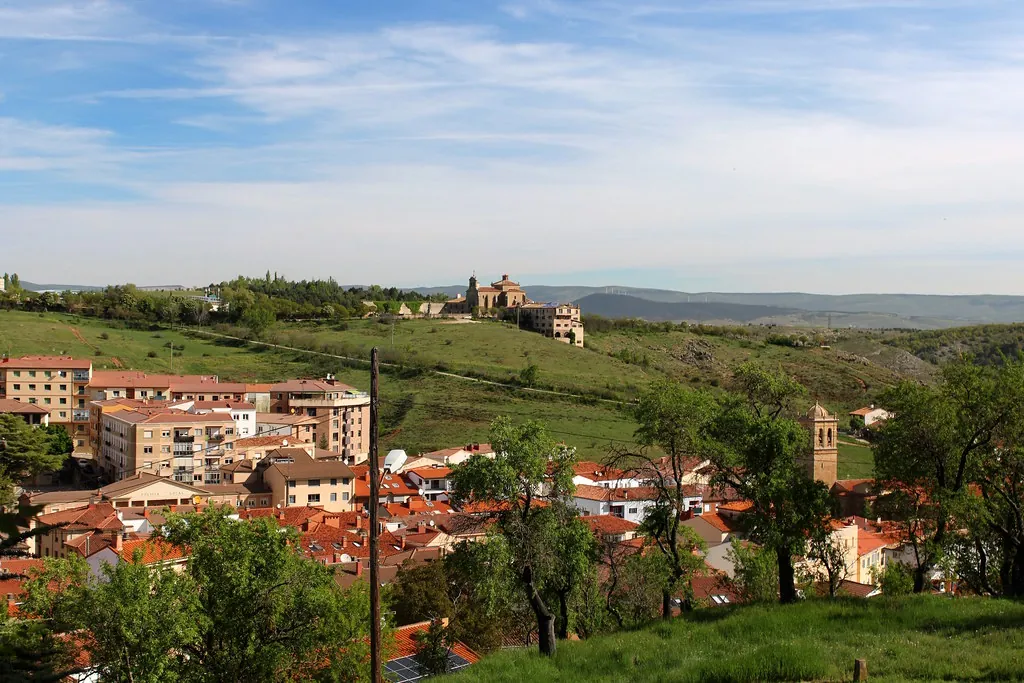
At 945 metres above sea level, Valdezate wakes to frost three mornings out of five in February. The thermometers outside the single bar on Calle Real register minus six, yet the wine ageing three metres beneath the pavement stays a steady twelve degrees all year. That underground constant is why families still dig bodegas out of the limestone, extending warrens first hacked in the 1700s. The village sits on a rolling spine of high plateau between the Arlanza and Duero valleys, 35 minutes south of Burgos, ringed by vineyards that glow ochre long after the sun has dropped behind the Sierra de la Demanda.
Stone, Adobe and the Smell of Cereal
Houses here are the colour of dry earth: lower courses of honey-coloured stone, upper walls of adobe brick washed the same shade. Many carry small heraldic shields carved in the 1600s, but the effect is matter-of-fact rather than grand. The streets run parallel to the grain of the land; when the wind picks up, straw chaff from the wheat stubble skitters across the tarmac. Population hovers just under 170, so silence is the default soundtrack, broken mainly by the mechanical clank of a distant pivot irrigator and, at weekends, the single-note exhaust of a 1990s Seat Ibiza heading to the bakery.
The parish church of San Pedro closes its doors at 1 p.m. sharp. Inside, the Baroque retablo is gilded with American gold that never quite made it to Madrid; the sacristy will open if you ask at number 14 across the square, where the sacristan keeps the key on a hook behind the bread bin. Allow twenty minutes – the nave is short, the side chapels few – but look for the medieval masonry scars near the base of the tower where the 14th-century version collapsed during a Castilian succession war.
Caves Without Neon Signs
There is no ticket office for the underground cellars. Instead, phone Señor Castaño (his number is taped inside the bakery window) and suggest 11 a.m. tomorrow. He will lead you to a garage door, prise it open with a tyre iron and descend a flight of stairs that ends in a limestone corridor smelling of oak and CO₂. The ceiling drops to 1.8 metres – tall visitors duck – and the walls bear chisel marks still sharp after two centuries. Thirty clay tinajas, each large enough to bathe in, lie half-buried in the floor; the family stopped using them in 1983 but the new barrels next door hold tempranillo bottled under the Valdezate label, all 1,200 bottles of it. Tasting is free; purchase is expected at €9 a bottle, cash only. Bring your own bag.
If Castaño is busy with his sheep, try the municipal oven at the top of the hill. Built in 1948 and retired in 1975, it has been repurposed as a small interpretation centre. Opening hours are officially Saturday 10–2, but the mayor (who doubles as caretaker) sometimes forgets. Knock at the town hall opposite; if the lights are on, someone will let you in.
Walking the Calibrated Earth
The GR-14 long-distance footpath skirts the village, threading 28 km of farm track between Aranda de Duero and Covarrubias. Head west and within ten minutes the tarmac gives way to a chalky tractor road flanked by trellised vines planted at 2,800 plants per hectare – the legal maximum for Ribera del Duero DO. Posted waymarks are sporadic; download the track before leaving home. In April the soil smells of rain and iron; by July the same dust coats your boots biscuit-brown. Mid-October brings the vendimia: lorries edged with purple grape skins crawl to the cooperative, and the air carries a faint yeasty scent you can taste two kilometres away.
Carry water – there is none between hamlets – and expect to step aside for the occasional John Deere. The reward is a ridge 4 km out that gives sight lines west to the stone village of Tubilla del Agua and, on very clear days, the telecommunications mast atop the Montes de Oca 40 km away. Sunset here is twenty minutes later than in the valley; the altitude buys daylight but also wind, so pack an extra layer even in June.
Roast Lamb and the No-Menu Lunch
Valdezate itself has no restaurant. The bar opens at 7 a.m. for the farm crews and serves coffee, packaged crisps and little else. To eat, drive ten minutes north to Aranda, where Asador de la Villa will sell you quarter of a lechazo (milk-fed lamb) roasted in a 250 °C wood oven, carved at the table with a plate of judiones (butter beans) and a glass of crianza for €24. Vegetarians get roasted piquillo peppers and not much sympathy; this is Castile, not Brighton.
Back in the village, the bakery (open 8–1) bakes a respectable hogaza, the dense-crusted country loaf that keeps for four days and doubles as a truncheon if stale. Stock up before bank holidays; when the owner visits her daughter in Bilbao, the shutters stay down for the week.
Getting There, Staying Over
Burgos Rosa de Lima station handles trains from Madrid in 1 h 30 min; from there, Aranda is 35 min by regional bus. A hire car is essential for the final 12 km – there is no public transport into Valdezate and taxis refuse the return journey empty. Roads are gritted promptly after snow, but after heavy winter storms the last 2 km can stay icy until noon; carry chains if travelling between December and February.
Accommodation within the village limits amounts to two rural houses: three-bed La Casa del Tío Alberto (€90 per night, minimum two nights) and two-bed La Bodega Vieja (€75). Both sit beside working farms, so expect tractor noise at dawn and the smell of slurry when the pig unit cleans out. Booking is direct by WhatsApp; neither takes cards on arrival. Alternatives cluster in Aranda, where the three-star Hotel Villa de Aranda has doubles from €55 and underground parking high enough for a Land Rover.
When the Fiesta Shatters the Hush
For fifty weekends of the year Valdezate is quiet enough to hear the church clock strike three counties away. The exception is the second weekend of August, when the fiesta patronal brings back every emigrant within a 200 km radius. Pop-up bars serve mojitos from paddling pools, the village square hosts a foam party, and Saturday's paella feeds 800 – four times the resident population. Rooms are booked nine months ahead; if you value sleep, avoid these dates. September's vendimia weekend is tamer: grape-stomping for children, an open-air dance and free-flowing wine from plastic cups. You still need to reserve, but prices stay sane.
Winter delivers the inverse attraction. January highs of 4 °C keep most visitors away, yet the low sun throws long shadows between the vines and the air is so clear you can pick out individual pine trees on the distant Moncayo massif, 130 km south. The bakery sells churros on Sunday only; buy an extra portion – the drive back to Burgos feels longer when the dashboard thermometer blinks minus eight.
Come March the storks return, nesting on the church tower with a clatter of bills that sounds uncannily like billiard balls. The vines remain skeletal until mid-April, but the soil is already being turned, and the underground wine – undisturbed by frost, heat or tourism brochures – continues its slow, centuries-old conversation with the rock.