Full Article
about Valdorros
Ocultar artículo Leer artículo completo
The wind arrives before anything else. It sweeps across the meseta, rattles the wheat stubble, and announces Valdorros from half a kilometre away—a low, steady rush that drowns out the car engine the moment you stop. There is no dramatic sierra backdrop, no river gorge, just the plain beginning to ripple like a blanket someone has shaken. At 900 m above sea level the air is thin enough to make British lungs notice, and the horizon is so wide that a Bedfordshire field looks like a pocket handkerchief by comparison.
A Village That Refuses to Pose
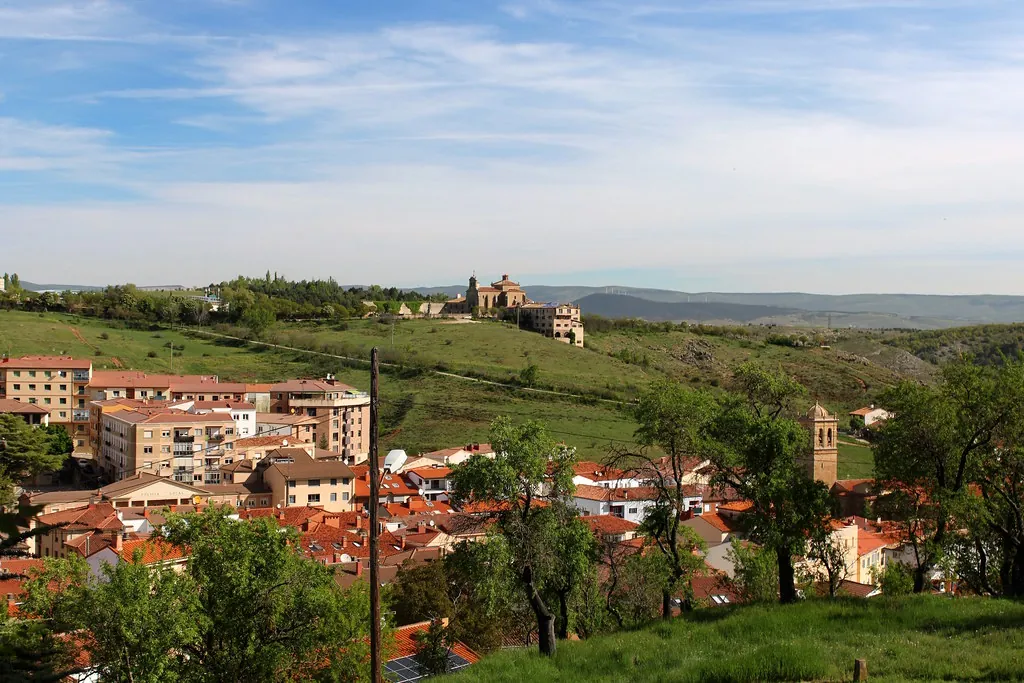
Valdorros keeps its back to the road. Houses are arranged in the usual Castilian formula—church tower highest, everything else lower, no obvious front door facing the visitor—so the first impression is of walls the colour of dry biscuits and garage doors that have taken forty summers of sun. Stone, adobe and the occasional brick are patched together in the same terrace; nothing has been “restored” to please the tourist office, and that is the point. This is a place that still earns its living from soil rather than selfies.
Walk the single main street at 11 a.m. and you will meet more dogs than people. The bar opens when the owner finishes feeding the chickens; if the chalkboard says “hay morcilla” you are in luck, because the blood sausage was made three villages away and arrives still warm. Coffee is €1.20, served in glasses thick enough to survive a dishwasher that last worked in 1998. Try to pay by card and you will be directed to the cash machine in Melgar de Fernamental, 18 km east—bring coins.
What the Fields Teach You
Leave the tarmac and the ground immediately turns into a lattice of farm tracks. They are wide enough for a tractor tyre and edged with poppies in May, then bleached the colour of lions by July. There are no waymarks, so the safest tactic is to keep the village tower in sight and note the angle of the giant concrete grain silo on the opposite ridge. A circular trudge of 5 km will take you past a ruined threshing floor, a working well with a hand-cranked bucket, and a patch of vines trained so low they look like lying-down cacti. Cloud shadows move faster than you do; when one passes over the temperature drops two degrees and you understand why locals wear jackets at midday.
Bird life is understated but constant. Skylarks rise like lift-off fireworks, and red-legged partridges whirr away sounding faintly offended. If you are patient you can spot a little bustard standing so still it might be plastic; binoculars help, as the colours are tweed-on-tweed. Bring water—there is no kiosk, no fountain, and the only shade is the lee side of a cereal silo.
When to Arrive, When to Leave
April and late September are the sweet spots. In spring the soil is dark and the wheat looks almost Irish; in autumn the stubble fields glow like toast. Mid-summer is furnace-hot: 35 °C by noon, and the wind feels as if someone is pointing a hair-dryer at the back of your neck. Winter is bright but brutal—night frosts of –8 °C are routine, and the road can be glazed with “la cencellada”, a thin ice sheet that turns hire-car tyres into ornaments. Accommodation within Valdorros itself is limited to two rooms above the bakery; most visitors base themselves in Burgos (45 min drive) or Belorado (20 min) and day-trip in.
Food That Doesn’t Apologise for Itself
There is no tasting menu. Order cordero chuletón and you receive a single rib of milk-fed lamb that covers the plate, plus half a loaf of bread that could double as a building material. The meat is charcoal-grilled outdoors in an oil-drum barbecue whose hinges have been replaced with wire; the smoky fat drips onto the coals and flares like a minor Guy Fawkes. A bottle of uncomplicated local tempranillo is €8 and tastes as if it has been listening to the same wind you have. Vegetarians can have judiones—giant butter beans stewed with paprika—though the ham stock is non-negotiable.
If you crave pudding, hope the baker has made “hojuelas”, thin sheets of fried dough dusted with anise sugar. They arrive in a paper bag already translucent with oil; eat them within ten minutes or the wind will sand-blast them inedible.
The One Thing That Isn’t Obvious
On the north-western edge of the village stands a semi-subterranean wine cellar, bodega cueva number 14, belonging to the García family. The door is only shoulder-high; stoop inside and the temperature drops ten degrees. The walls are hand-hewn chalk, flaking like old school blackboards, and the ceiling is a smoke-blackened arch that smells of “velas y vino”—candles and wine. Fourteen barrels lie in a row, each chalk-marked with the year of planting of the family’s own vineyard: 1983, the same summer Spain joined the EU. Ask politely and you may be poured a thimble of last year’s red; it is sharp, tastes of graphite, and costs nothing. Donations towards the barrel fund are accepted in the jam-jar by the door.
The Honest Catch
Valdorros will not entertain you. There is no interpretation centre, no artisan cheese shop, no Sunday craft market. If it rains you will get wet; if you arrive after 3 p.m. you will find every shop shuttered until 5, or until someone feels like returning. Mobile signal is patchy—Vodafone works on the church steps, EE gives up entirely. What the village does offer is a chance to calibrate your sense of scale: fields bigger than counties, skies that make the UK feel upholstered, and a quiet so complete you can hear your own pulse while the wheat sways.
Drive away at dusk and the tower recedes into a silhouette cut from cardboard. The wind keeps talking, but now it is at your back, pushing you towards the main road and the next place that knows how to smile for a photograph. Whether you call that escape or abandonment is up to you.