Full Article
about Valle De Las Navas
Ocultar artículo Leer artículo completo
The tractor headlights appear first, bouncing across the wheat fields like fireflies on steroids. By half seven, the entire valley glows with them—farmers returning to scattered hamlets after a day working soil that sits 900 metres above sea level. Welcome to Valle de las Navas, where the plateau’s clock still runs on sowing seasons rather than Instagram likes.
A Valley, Not a Village
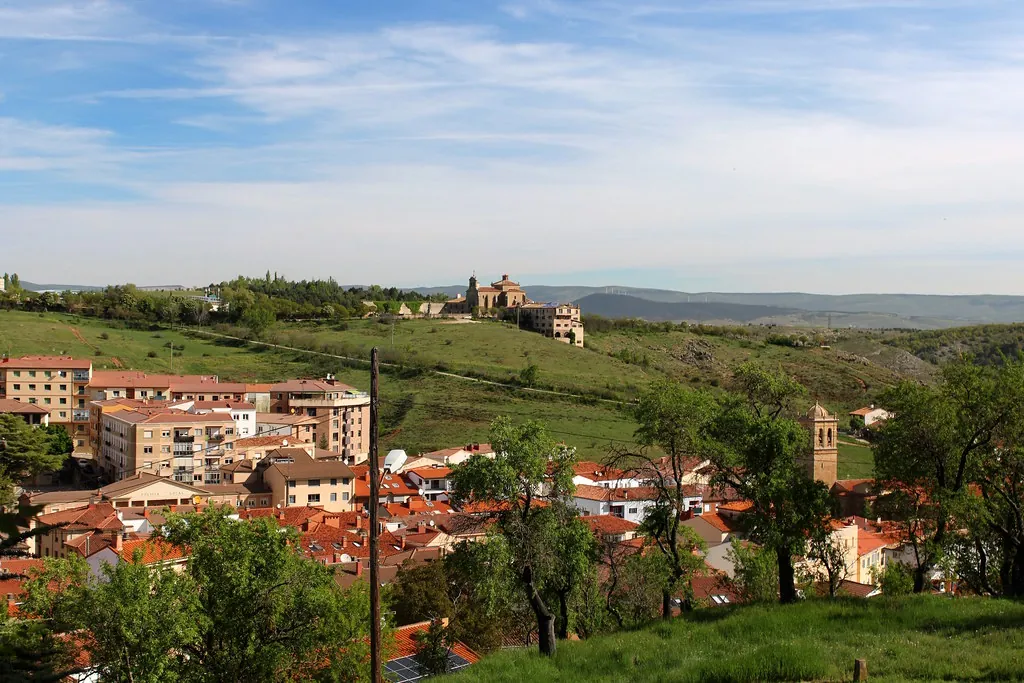
Forget the usual Spanish fantasy of whitewashed lanes tapering to a church square. Valle de las Navas is an administrative patchwork of tiny settlements—La Vid, Navas del Marqués, Valdelaguna—strung along agricultural tracks that feel more Norfolk than Andalucía. The council counts 5,000 souls, but you’ll rarely see more than a dozen at once unless it’s fiesta weekend. Stone-and-adobe houses slump comfortably into the landscape; some have clay roof tiles the colour of burnt toast, others sport satellite dishes that glint like misplaced mirrors. Everything here is low-rise, low-key, and resolutely functional.
That altitude matters. Summers deliver fierce ultraviolet and temperatures that brush 35 °C, yet the air stays dry enough to stop the sweat from sticking. Come December, the thermometer can plunge to –8 °C and the wind whipping across the cereal plains feels Arctic. Snow isn’t guaranteed, but when it arrives the access lanes from the BU-550 become entertainingly slick; a set of winter tyres beats prayer every time.
Walking the Work Routes
The tourist office doesn’t exist, so maps are photocopied A4 sheets taped to the door of the Ayuntamiento in Navas del Marqués. The marked trails follow the same tracks farmers use to check their crops—wide, stony, mercilessly exposed. A typical circuit south-east to Valdelaguna is 7 km return, dead flat, and offers zero shade. Take more water than you think necessary; the café in La Vid opens when the owner feels like it, and that might be after the harvest.
What you get instead of way-marked selfie spots is space. Larks overhead, hares zig-zagging through barley, and horizons that appear curved thanks to the earth’s own geometry. Spring brings a brief, almost Irish green that fades to bronze by late June. In autumn the stubble fields look like corduroy under low sun. Photographers allergic to dramatic peaks often find this minimalist palette addictive; just remember the golden hour starts early because nothing taller than a poplar interrupts the sky.
Cyclists fare better on the gravel service roads that parallel the irrigation channels. A 25 km loop north towards Hontoria de Valdearados is rideable on 35 mm tyres, though the surface varies from packed clay to fist-sized limestone. GPS is reliable—phone signal is surprisingly good on the plateau—but carry a spare tube; thorny burnet bushes have no mercy.
Roast Lamb and the Pig Cycle
The valley’s culinary calendar still follows the matanza. January weekends smell of wood smoke and rendered pork fat as families gather to slaughter one or two pigs, turning everything into chorizo, salchichón and morcilla. Outsiders sometimes receive an invitation if they ask politely at the bakery; bring a bottle of decent Rioja and refuse the offer of a freshly fried piece of ear at your peril.
The rest of the year, food is straightforward Castilian fuel. Cordero asado—whole young lamb slow-cooked in a clay dish—appears on Sunday menus at Bar La Platea in Navas del Marqués for €18 a portion (phone 947 54 10 55; they only roast six, so reserve). In spring, look for menestra de verduras, a chunky stew of peas, artichokes and potatoes that tastes of soil rather than supermarket polytunnel. Vegetarians can survive on tortilla and pimientos del padrón, but expect sympathetic shrugs rather than dedicated dishes.
When the Valley Comes Home
August 15 changes the soundscape completely. Cars with Madrid number plates snake back to childhood homes, bullocks appear in a makeshift ring, and the village square hosts an orchestra that plays until the Guardia Civil suggest everyone go to bed. The fiestas patronales aren’t staged for visitors; you’re simply allowed to watch. Bring cash for the raffle—the top prize is usually a ham—and don’t wear flip-flops if you intend to follow the procession; the cobbles have been warming under fierce sun since ten in the morning.
Smaller gatherings happen on 3 February (San Blas) and 15 May (San Isidro Labrador), but these are half-day affairs centred on mass followed by bowls of chocolate and churros. Tourists who time their arrival wrong often find everything shut by two o’clock; plan a picnic backup.
Getting Here, Staying Sane
Valle de las Navas sits 40 km south-east of Burgos city. There is no railway; the daily ALSA bus from Madrid drops at the edge of the A-1 at 14:35, leaving you a 12 km walk unless you’ve pre-booked a taxi (€35 from Burgos). Hiring a car at the airport remains the sensible option: take the A-1 north, exit at junction 235, then follow the BU-V-5001 for 19 km of empty road. Petrol is cheaper at the Carrefour on the Burgos ring-road—fill up, because the valley’s single pump closes at 18:00 and only takes cash.
Accommodation is thin. Three village houses have been patched up as legal rural lets: two in La Vid (€65 a night, two-night minimum) and one in Navas del Marqués with Wi-Fi that flickers when the microwave goes on. Book through the provincial tourism board website; Airbnb’s map location is usually 500 m optimistic. Campers can pitch discreetly beside the Arroyo de la Vid, but open fires are banned in summer and the farmer will charge €5 for the privilege.
The Honest Verdict
Valle de las Navas will not change your life. There is no Michelin-starred chef, no Roman aqueduct, no boutique hammam. What it offers is a chance to calibrate your own rhythm against one of Europe’s emptier landscapes. If you need constant stimulation, stay in Burgos and do a day-trip. If you can entertain yourself with a pair of boots, a field path and the smell of wet earth after rain, the valley repays the effort. Just remember to wave at the tractors—ignoring them is the fastest way to feel like an intruder rather than a welcome anomaly.