Full Article
about Vallejera
Ocultar artículo Leer artículo completo
The church bell strikes seven and the village loudspeaker crackles alive. Not for an emergency—just the daily price of wheat and the overnight rainfall measure. In Vallejera, 840 m above sea level on the Burgos plateau, this counts as rush-hour news. Most visitors are still blinking over their coffee in Salamanca, 63 km away, unaware that the real Castilian day has already started.
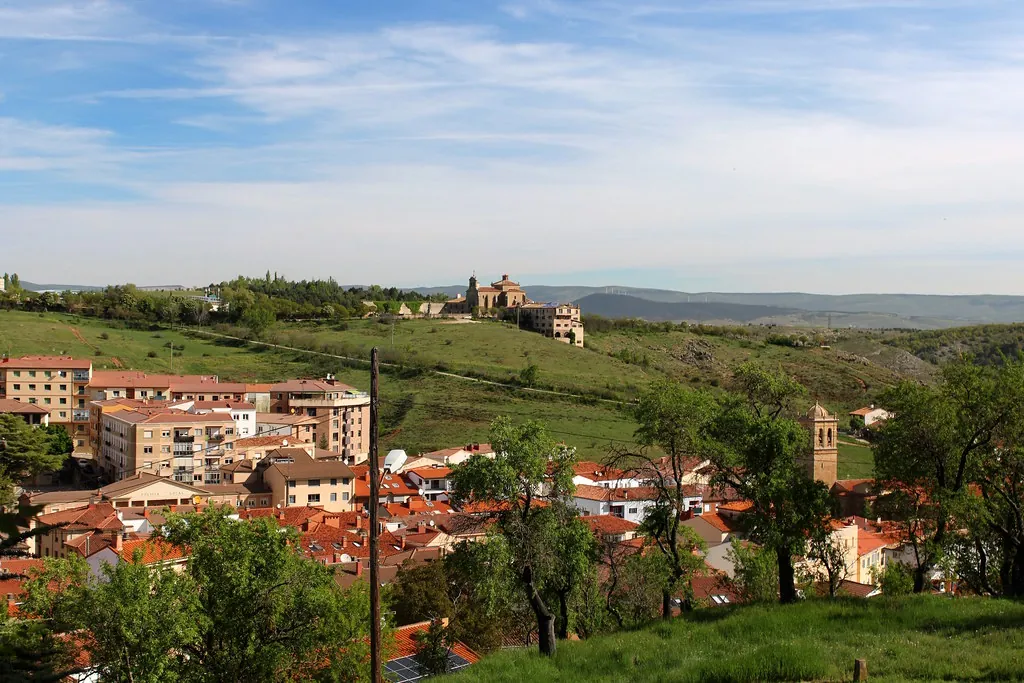
Vallejera sits where the endless cereal ocean begins to ripple into low hills. One road in, one road out, both flanked by stripe after stripe of barley and wheat that shift from electric green in April to biscuit gold by late June. The village itself is a single blink: stone houses shoulder-to-shoulder, roofs the colour of weathered leather, all facing inward like a herd against the wind. There is no centre in the British sense—no market square with benches and hanging baskets—just a widening of the lane outside the church where delivery vans can turn round.
Stone, Adobe and the Scent of Chimney Smoke
Walk the short main street at nine in the morning and every third doorway is open. Through them you glimpse clay-tiled floors polished by decades of clogs and the copper glow of a brasero table heater still glowing under a lace cloth. Walls are thigh-thick; summers stay cool and winters demand that wood smoke reek which drifts out of squat limestone chimneys. New aluminium windows sit inside ancient stone frames, the compromise between comfort and conservation that most households have reached. A few facades still carry the ghost of 1950s sky-blue plaster, now flaking like old ship paint—an accidental memorial to the days when the cooperatives sold the same colour at discount.
The parish church of San Pedro keeps watch from the highest point. Its belfry is a chunky masonry box, repaired so often that the original Romanesque lines survive only in the lower course of blocks the size of cider crates. Inside, the nave smells of incense and grain dust—Sunday worship and Monday grain-trading share the same space. If the door is locked, ask at the house opposite with the green roller blind; the caretaker keeps the key in her flour tin and is happy to let strangers step in, provided they wipe their feet on the mat that says "Bienvenidos a nuestro rincón"—a welcome mat that feels almost subversive in a place without souvenir stalls.
Roads that Remember Oxen
Tracks radiate from the village like bicycle spokes, wide enough for a tractor with folding mirrors. Centuries of hooves and iron tyres have sunk them a metre below the fields; in April the base is chalky mud patterned with tyre threads, by August it is concrete-hard and fissured. Walk south-east for twenty minutes and you reach the Arroyo de Valdecasa, a stream that thinks it is a ditch until spring storms turn it into a latte-brown torrent. A concrete slab bridge, date-stamped 1968, replaces the ford where oxen once paused to drink. Pause here and red kites materialise overhead, wings crooked like broken umbrellas, scanning for the small mammals flushed out by combine harvesters.
Cycling is easier than hiking if you want to cover ground: gradients are gentle, surfaces reasonable, and the only traffic is the occasional white van labelled "Piensos Juan" delivering feed. Mountain bikes can be rented at Cubino rural house (€20 a day) along with a hand-drawn map that marks where the asphalt ends. Do not trust phone mapping apps; coverage drops to one bar whenever a field of tall rye intervenes.
What the Day Tastes Like
There is no restaurant, only a bar whose opening hours are announced on a blackboard that changes daily. Mid-week lunch might be a bowl of sopa castellana thick enough to hold a spoon upright: ham-bone stock, pimentón, day-old bread and a poached egg bobbing like a yellow buoy. The owner keeps a chalk tally of how many portions remain; when the column reaches zero, the kitchen closes. Evenings are simpler: tortilla, cheese from the cooperative in Aranda, and a carafe of Ribera del Duero that costs less than a London pint. If you want vegetables, order the menestra—whatever came up from the huerta that morning, which in July means Swiss chard so fresh it still holds the dawn chill.
For self-caterers, the tiny supermarket opens 09:00–13:00 and 17:00–20:00. Stock arrives on Tuesdays: crates of courgettes still furred with soil, legs of lamb vacuum-packed in Burgos, and those fierce local chorizos that bleed bright orange fat into the pan. British visitors note: no oat milk, no fresh ginger, one brand of tea and it is not Yorkshire.
Festivals that Refill the Streets
The fiesta mayor happens around 15 August, when the population quadruples. Returning grandchildren string hammocks between pear trees in back gardens, and every household rolls industrial-sized paella pans onto the street for the communal dinner. At 23:00 the brass band strikes up; by midnight the single traffic light at the entrance flashes uselessly while couples dance underneath it regardless. Book accommodation a year ahead—or, better, make friends with a local in April and you might bag a camp bed in a cousin's garage.
Smaller but more atmospheric is the matanza weekend in late February, when three family pig killings become an open-air demo of sausage-making and black-pudding boiling. The aroma of scalded pork skin drifts through the frosted streets at dawn; vegetarians should plan a day trip to the Sierra de la Demanda.
Where to Sleep (and Why it Might be Full)
Cubino has five rooms above the bike shed, beamed ceilings, radiators that clank like a submarine, and a breakfast of churros fetched still warm from the fryer in Melgar de Arriba. €55 a night, two-night minimum. The municipal hostel, Albergue Vallejera, opens only when groups reserve in advance—schools use it for ecology weekends—so ring before you arrive. Hotel OroConfort sits 4 km out on the main road, a 1970s brick block with faster Wi-Fi than anywhere in the village; handy if you need to answer work emails, soulless if you came for the night sky.
Bring a jumper even in July. At this altitude the mercury can fall to 8 °C once the sun drops, and no one has installed central heating in a village where people still shut the wooden shutters and go to bed early.
Getting Here, Getting Away
Fly to Salamanca (63 km) or Valladolid (162 km) and collect a hire car; public transport stops at Melgar de Fernamental, 18 km north, where one bus a day connects to Burgos at an hour that suits no one. The last 12 km twist through wheat fields so wide you can see tomorrow's weather approaching like a bruise. In winter the road is gritted but never first priority—if snow is forecast, carry blankets and a full tank.
Leave before 10:00 on Sunday and you will meet tractors heading home after the weekly market in Aranda. They travel at 25 km/h and will not pull over; patience and a gap in the oncoming barley are your only options. Flash your lights in thanks when they finally wave you past—rural courtesy still counts for something here.
Vallejera will not change your life. It offers no souvenir boutiques, no Michelin stars, no sunset viewpoints labelled on Instagram. What it does give is the chance to calibrate your watch to a quieter metronome: the rhythm of grain ripening, of church bells that mark the hours farmers still recognise, of a community that measures distance not in kilometres but in how many beers you are offered between here and the next threshing floor. Arrive with that expectation and you might leave, reluctantly, just after the morning loudspeaker signs off.