Full Article
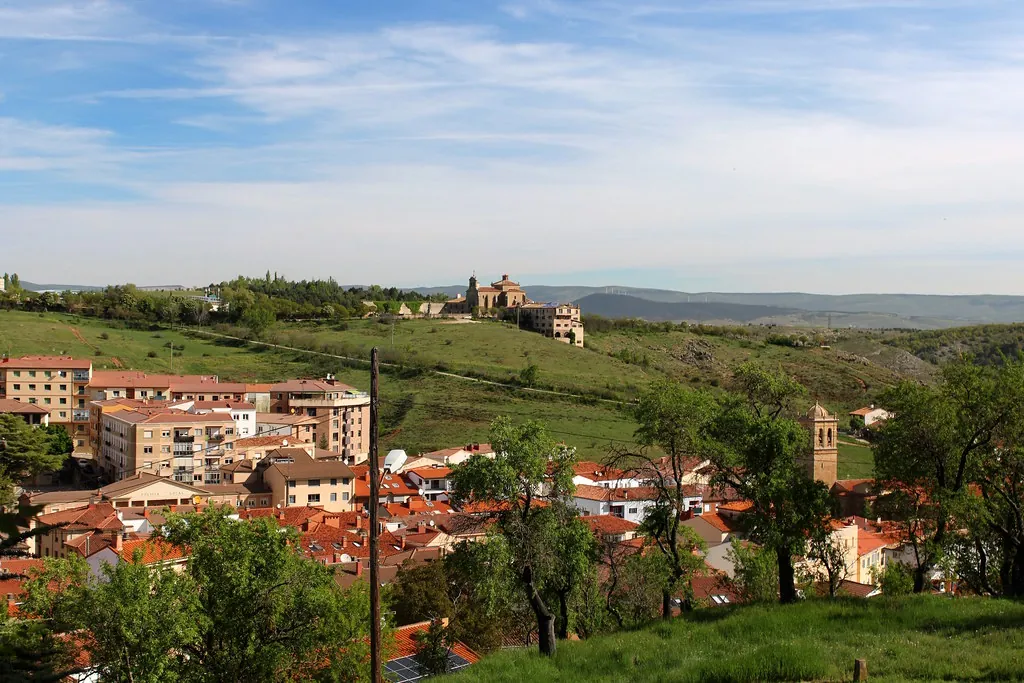
about Velilla de la Sierra
Church of the Snows
Ocultar artículo Leer artículo completo
The only traffic jam in Velilla de la Sierra happens at dusk when a farmer shifts his forty sheep from the lower meadows back through the stone arch that once served as the village gate. Drivers – all two of them – wait politely, engines off, because nobody here honks at livestock. At 1,050 m above sea level the air is thin enough to make the animals’ bells sound metallic and crisp, a noise that carries farther than any car stereo.
Twenty-six residents are officially on the books, though on a weekday you might count only half that number leaning against doorjambs or perched on the bench outside the grocery-cum-ATM. The rest are out on the surrounding plateaux, checking rain gauges, mending dry-stone walls or guiding their cattle between scattered plots of land that can be reached only by dirt tracks. Outsiders tend to arrive with the same question: “What is there to do?” The honest answer – walk, look up, breathe – usually baffles people who have driven the 115 km from Madrid expecting a souvenir shop.
Stone, wind and 360-degree skylines
Every house is the colour of the ground it stands on: ochre limestone chipped from the ridge above the village. Roofs sag like well-used saddles, the original beams replaced piecemeal whenever a farmer could afford a new length of pine. There is no architectural trail, no QR code to scan; instead you wander, read the date carved above a doorway (1778 on Calle de los Caños, 1892 on the old bakery) and work out for yourself why windows are the size of shoe-boxes – winter drifts here can snuff out a badly placed pane.
The single church keeps its tower door padlocked unless the priest drives over from Abejar, fifteen minutes away. Peer through the iron grille and you’ll see a nave no larger than a Surrey parish hall, walls painted the same municipal green favoured by Spanish primary schools in the 1970s. What matters is the stone bench that runs round the porch: on Sunday mornings it becomes the unofficial parliament where men debate rainfall figures and women compare notes on whose grandson has finished teacher-training.
Look south and the land drops 400 m to the Cidacos valley; look north and you stare across the province of Soria until the pale line of the Moncayo massif scribbles itself across the horizon. Sunrise throws a slab of orange over these slopes; sunset drains colour so gradually you hardly notice the temperature plummet until your teeth confirm it. At night the Milky Way is not a poetic flourish but a broad stripe that can make mobile-phone cameras over-expose in automatic mode.
How to arrive without turning round
The closest railway is Calatayud, 70 km east on the Madrid–Zaragoza line. From there a pre-booked hire-car is simplest: take the A-2, then the N-122 past crop circles of wheat and isolated grain silos that look like rockets waiting for permission to launch. The final turn-off is signposted “Velilla de la Sierra 9 km” and the tarmac narrows to a single lane that still carries the 1950s road number in faded white paint. In winter the last 3 km can ice over; carry chains even if the hire desk shrugs and says “not usual”. Buses leave Soria at 07:45 and 17:30, timed for school and surgery runs. Miss the return and you are staying the night – full stop.
No taxi rank exists. If you phone Soria Radio-Taxi (975 222 333) the driver will want a 20 € flat fare paid in cash and may ask you to wait at the junction rather than in the village “because the turn-around is easier”. Accept; he is doing you a favour.
Walking tracks that expect you to think
Maps: the 1:50,000 “Montes de Vicort–Moncayo” sheet from the Spanish civilian survey (IGN) actually shows Velilla, a rarity for a place this size. Three waymarked footpaths fan out:
- PR-SO 23 to Abejar, 8 km, follows the old laundry path down an escarpment where griffon vultures circle at eye-level.
- SL-SO 80 loops 5 km through abandoned threshing circles; you finish on the ridge used by shepherds driving flocks to winter pasture in Extremadura until the 1960s.
- An unmarked but obvious farm track strikes west to Villar del Ala, empty since 1968; stone terraces still hold the outlines of vegetable gardens now grazed by wild boar.
Carry water – there are no fountains once you leave the village – and remember that mobile coverage is patchy. Movistar users get one bar on the ridge; anyone on a UK roaming plan should expect the odd “SOS only” message.
What passes for lunch
The only public eating place is Asador La Fuente, open Friday evening through Sunday lunch out of season, every day in August. Order media ración of torrezno – Soria’s answer to pork belly – and you receive half a dozen strips of crunchy, paprika-dusted rashers that can be shared without shame. Lamb chops come by the kilo; the kitchen will happily split a portion for two, though you still get eight ribs. Vegetarians survive on revuelto de setas when wild mushrooms are in, or a potato-and-pepper stew the owners’ children call “the Monday pan” because it uses whatever is left from the weekend. House red is young tempranillo served at cellar temperature – ask for “un clarete” if you want something closer to a dark rosé.
Outside opening hours you shop at the ultramarinos: tinned tuna, rubbery but edible tortilla wrapped in cling-film, and a local cheese made from a blend of cow and sheep milk that tastes faintly of rosemary if you let it warm in your rucksack. The shop doubles as the cash machine; on Saturdays it can run out of 20 € notes, so bring coins for coffee.
Seasons when the village remembers it has visitors
May brings colour back to the broom-covered hillsides and daytime temperatures hover around 18 °C – ideal for walking without the furnace-blast that hits the Meseta by July. October is mushroom month; locals greet strangers with “¿Ha visto rebollones?” (Have you seen any penny buns?) rather than “hello”. Both periods coincide with Spanish puente weekends, when emigrant families return and empty houses suddenly sprout laundry on the line. Expect three cars in the street instead of one, and book the asador the day before.
In January thermometers can read –12 °C at dawn. The village is breathtakingly beautiful after snowfall, but unless your rental has winter tyres you will be stuck until the council tractor clears the access road, usually after lunchtime. Bring chains, a thermos and a sense of humour; the grocer opens late anyway because his front door is frozen shut.
Parting advice
Velilla de la Sierra will not entertain you. It offers instead a measuring stick for how much noise you normally tolerate and how thoroughly you have forgotten what constellations look like. If that sounds like hard work, stay on the A-2 and keep driving towards the coast. If it sounds like a relief, switch the engine off, listen for the sheep bells and remember to look up before the Milky Way clocks off for the night.