Full Article
about Villaciervos
Church of San Juan Bautista;Clock Tower
Ocultar artículo Leer artículo completo
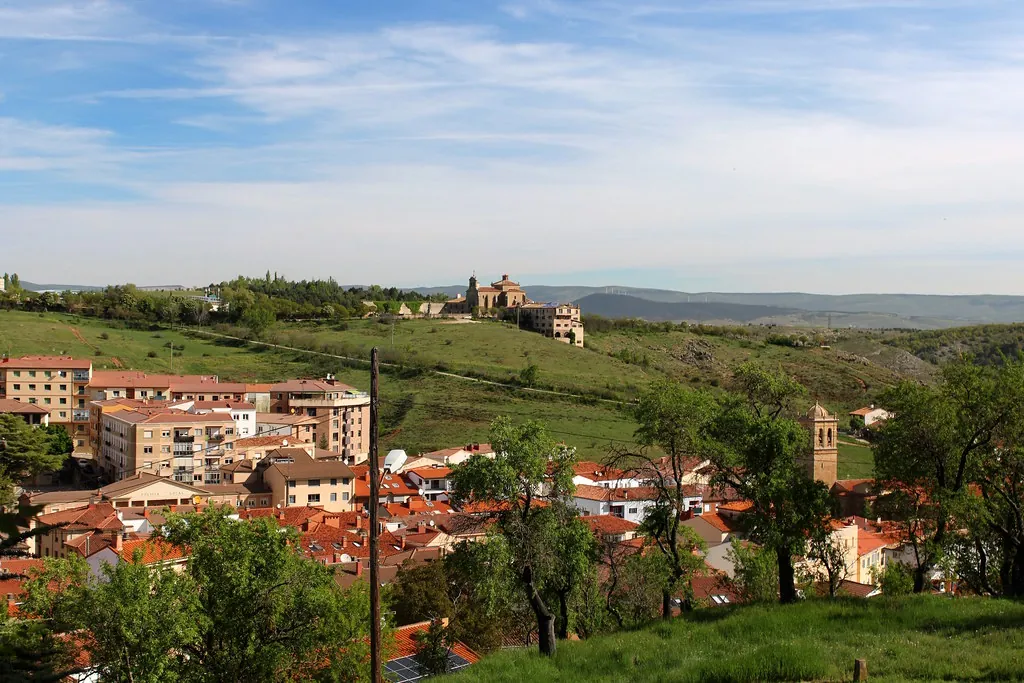
At 1,183 metres, Villaciervos sits high enough that your ears might pop on the final approach. The village's eighty-odd residents share their address with booted eagles that ride the thermals above cereal plains stretching towards Soria, thirty-five kilometres south. This is Spain's elevated meseta at its most matter-of-fact: stone houses built for winters when the wind arrives straight from the Duero valley carrying knife-sharp air, and summers when the sky feels heavy enough to press the wheat flat.
The place name translates loosely as "Deer Village", though you're more likely to spot roe prints in the dusty verges than the animals themselves. What you will notice immediately is the quiet. Traffic consists of the occasional farmer's pickup and the church bell marking the hour with a tone that suggests it's been at it since the 1700s. Mobile signal drops in and out; the soundtrack reverts to wheat rustling and, when the wind swings north, the distant hum of a combine harvester you can't yet see.
Stone, Slate and Silence
Villaciervos grew in a loose grid around its parish church, a modest stone rectangle whose bell tower doubles as the only vertical punctuation for miles. No-one has bothered to date the building precisely; local consensus says "parts of it are medieval", which in these parts could mean anything from the 12th to the 17th century. The south doorway shows Romanesque hints, the interior smells of candle wax and old timber, and the priest arrives from a neighbouring village on rotation. Step inside mid-morning and you'll catch sunbeams falling through alabaster windows onto pews polished smooth by generations of jackets.
The houses follow a template: walls of honey-coloured rubble, rooflines of weathered slate, wooden doors painted either ox-blood or indigo. Many still have the family name chiselled into the lintel and a stone bench built into the façade where grandparents survey passing strangers with unhurried curiosity. Several properties stand empty, their shutters padlocked, roofs patched with corrugated sheets that rattle when the temperature drops. This is not a museum piece; it's a working hamlet negotiating the thin line between survival and abandonment.
Walk the single main street at 15:00 in July and heat radiates from the stones. Shade is scarce—three plane trees in the plaza and whatever the houses throw across the lanes. By November the same street can lie under blown snow, the only footprints your own and a dog's. Villagers appear at doorways wearing quilted jackets regardless of month; nights up here stay cold even when midday hits thirty degrees.
Paths that Remember Harvest Carts
Every road out of Villaciervos turns quickly into a farm track. The signposts are wooden slats nailed to fence posts, hand-painted with fading arrows: "Ctra. Corral de Ayllón 7 km", "El Burgo 12 km". None mention viewpoints, picnic sites or visitor centres. Instead you get wide verges where red poppies spring between barley rows, and skylarks rising in vertical song-flight until they vanish against the pale sky.
Circular walks of six to ten kilometres are easy to improvise using the agricultural lanes. Head north-east and you reach a shallow limestone ridge where griffon vultures cruise at eye-level. Go west and the land dips into a seasonal pool loud with frogs after spring rain. The going is flat, boots merely advisable rather than essential, but carry water: there are no cafés, no fountains, and farm dogs regard the track as theirs. Early May turns the fields an almost violent green; by late June the colour drains to gold and the air fills with cereal dust that hangs like smoke behind harvesters.
Winter walking is a different contract. Daytime highs hover just above freezing, snow lingers in wheel ruts, and the wind finds every gap in your clothing. The compensation is light—low, amber, and so clean that distant ranges appear in 3-D clarity. Set out after fresh snowfall and hare tracks stitch geometric patterns across the white; return to the village to find someone has brushed a clear path to the only open bar.
Eating: Bring Flexibility
Villaciervos does not do lunch service. The single grocery opens for two hours morning and evening, stocking UHT milk, tinned peppers, and locally made chorizo that costs €4 for a loop the size of a bracelet. If you want a sit-down meal you drive ten minutes south to Calatañazor, where a restaurant serves roast suckling lamb at weekends, or twenty minutes to Soria city for a full choice of menús del día around €14 including wine. Plan accordingly: buy bread and tomatoes, pack a knife, and picnic on the stone tables beside the church—there are worse dining rooms.
The village's own Hotel-Restaurant El Ciervo does feed guests, though calling ahead is wise. British visitors on TripAdvisor call it "quiet, clean, familiar… you feel at home", praise that translates to three guest rooms above a dining room where the set dinner might feature torrezno (crisp pork belly), local pinto beans, and a half-bottle of Ribera del Duero poured at the correct eighteen degrees. Prices sit a notch below city levels—expect €25-30 for three courses—because the owners know their clientele is mainly passing truckers and the occasional rambler who miscalculated distances.
Arriving and Staying
Public transport is theoretical. The Monday-to-Friday bus from Soria to El Burgo de Osma stops at a crossroads 6 km away if the driver remembers; from there you thumb a lift or walk the farm road carrying your rucksel like a pilgrim. Everyone else drives: take the N-122 out of Soria towards Burgos, turn off at Calatañazor, and follow the CL-114 for another 18 km of empty two-lane blacktop. Petrol stations are scarce—fill up before you leave the capital.
Accommodation options cluster in three categories. El Ciervo offers the only beds actually inside Villaciervos; book early in August when emigrant families return for the fiesta. Five minutes south, Calatañazor has two small guesthouses occupying restored stone houses, both around €60 a night with breakfast. Or base yourself in Soria and day-trip: the city has a four-star Parador perched above the Duero, often under £90 if you catch a weekday deal, plus a handful of two-star hotels aimed at travelling sales reps and increasingly, birdwatchers en route to the nearby Gallocanta lagoon.
When the Village Comes Back to Life
For fifty weekends a year Villaciervos dozes. Then, usually the second weekend of August, cars with Madrid number plates nose into every gap between houses. The fiesta programme is printed on a single A4 sheet taped to the church door: Saturday evening open-air dance with a cumbia band from Almazán; Sunday mass followed by a procession where the statue of the Virgin is carried once round the plaza; Monday communal paella supervised by the same three women who organise everything from harvest suppers to pension paperwork. Visitors are welcome but not announced—buy a €5 raffle ticket for the ham and you'll be folded into conversations about rainfall, wheat prices, and which cousin has finally found work in Zaragoza.
September brings the romería, a shorter repeat with added handbags of hazelnuts harvested from the valley orchards. After that the exodus resumes, shutters bang shut, and the village shrinks back to its winter self. If you want to see Villaciervos pretending to be busy, these are your windows. Come outside them and you'll have the lanes, the sky and the stone houses to yourself—plus whatever weather 1,183 metres decides to throw at you.