Full Article
about Villafruela
Ocultar artículo Leer artículo completo
Morning Light on Adobe Walls
The church bell strikes seven and the first tractors rumble out towards the wheat fields. In Villafruela's main square, locals emerge from stone doorways to claim the benches that catch the early sun. There's no café open yet – this isn't that sort of place – but the baker's van will arrive soon enough, honking twice to announce fresh loaves and sugary sobaos.
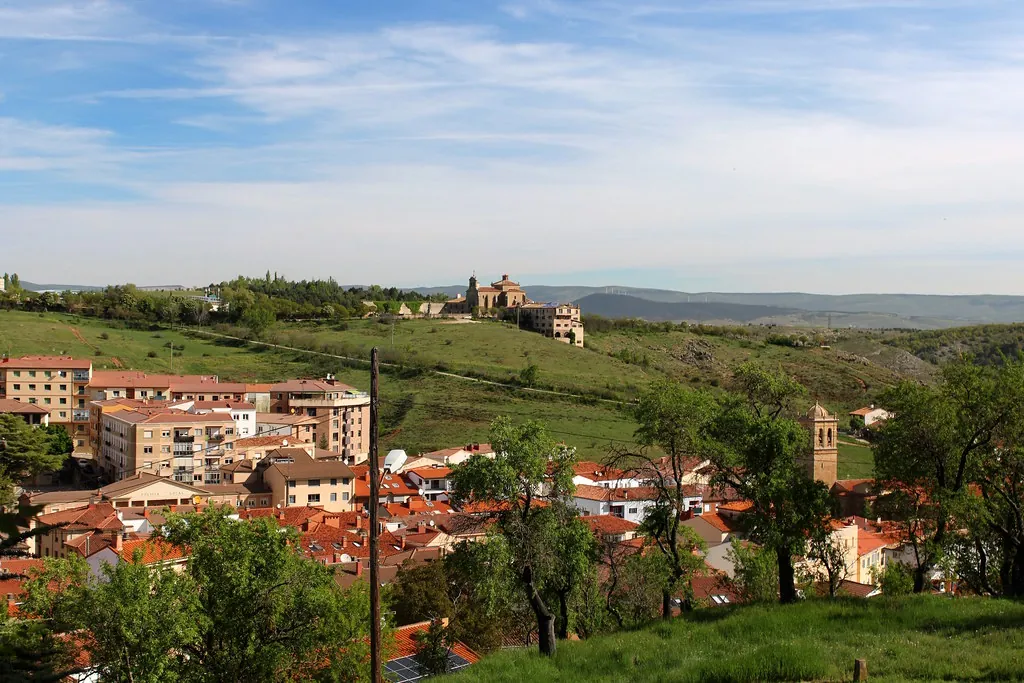
Five thousand souls call this Burgos village home, though you'd never guess it from the quiet. The houses, built from local stone the colour of dry earth, stand shoulder-to-shoulder along streets just wide enough for a Land Rover. Their wooden doors, some dating to the 1800s, still bear the scars of centuries: iron studs, weather-worn carvings, the occasional bullet hole from civil war days.
This is Spain's Meseta Central at its most honest. No medieval walls, no Renaissance plazas, no tour buses disgorging selfie-stick wielding hordes. Just a working village where agriculture dictates the rhythm and the horizon stretches forty kilometres in every direction. At 940 metres above sea level, the air carries a sharpness that makes even September mornings feel distinctly autumnal.
The Architecture of Everyday Life
Start at the Iglesia Parroquial, whose squat tower serves as landmark for anyone who's wandered too far into the surrounding paramo. Built piecemeal between the 16th and 18th centuries, it showcases Castilian rural architecture at its most pragmatic: thick walls to keep out summer heat, small windows to deter winter cold, and a simple Latin cross floor plan that required minimal skilled labour.
The real interest lies in the ordinary houses lining Calle Mayor and Calle del Medio. Constructed from locally quarried limestone and adobe bricks, they represent centuries of trial-and-error in a harsh climate. Ground floors originally housed animals – note the larger doorways – while families lived above, closer to the heat that rose through wooden floors. Many still retain their corrales, small courtyards where chickens once pecked and pigs rooted.
Peer through the iron grilles of number 14 Calle Mayor and you'll spot a bodega carved into the bedrock. Before refrigeration, these underground cellars maintained steady temperatures for wine and cheese production. perhaps twenty remain intact, though most now store garden tools rather than tinto. The village's last proper wine producer closed in 1987, a victim of industrial agriculture and changing tastes.
Walking the Horizontal Landscape
Villafruela sits on a slight elevation – slight being the operative word in terrain this flat. The surrounding countryside, a patchwork of cereal fields and fallow land, offers walking that's more meditative than challenging. Follow the dirt track southeast towards Villanueva de Teba and you'll pass through cereal in spring, leguminosas in rotation, and the occasional olivar where ancient olive trees survive despite winter frosts that can hit minus fifteen.
Birdwatchers should pack binoculars. The open fields attract sky larks and calandra larks in their hundreds, while stone curlews haunt the rougher ground near caminos. Booted eagles circle overhead, particularly during August thermals, and you'll almost certainly spot great bustards if you walk quietly towards the Dehesa de Santa Ana, three kilometres west.
Cyclists find the going easy – perhaps too easy. The N-234 lies fourteen kilometres north, meaning traffic on local roads amounts to the occasional tractor and Sunday driver. But the wind, unimpeded by any geographic feature between here and the Cantabrian coast, can turn a gentle twenty-kilometre loop into serious exercise. Plan accordingly, and perhaps avoid August when temperatures regularly exceed 35°C and shade exists only in village centres.
What Actually Matters Here
Food arrives as it always has: seasonal, local, unpretentious. The village supports two small grocers, a butcher, and a bakery that operates from a garage on Tuesday and Friday mornings. For anything beyond basics, Miranda de Ebro lies forty minutes east – though why would you need more when alubias from nearby Ibeas make perfect winter stews and local lamb appears at the butcher every Thursday?
Eating out requires planning. Restaurante Casa Cayo, on the road towards Belorado, opens weekends only and serves roast lamb for €18. Otherwise, ask at the town hall about comidas populares – communal meals often organised during fiestas. The September Feria del Queso brings producers from across the province, while December's Matanza weekend offers morcilla tastings and chorizo-making demonstrations that would horrify health inspectors but delight food traditionalists.
The patronal fiesta, honouring the Virgen del Rosario, transforms this quiet settlement for three days each October. Suddenly those empty streets fill with peñas (local social clubs) serving calimocho from plastic barrels, brass bands blast out pasodobles until 3am, and temporary fairground rides appear in the main square. Book accommodation months ahead – the nearest hotel beds fill with returning expats and descendants of emigrants who've made Birmingham or Geneva home but return for these crucial October days.
The Reality Check
Let's be clear: Villafruela won't suit everyone. Art galleries? None. Nightlife? A vending machine outside the pharmacy. Public transport? Two buses daily to Burgos, none on Sundays. The village makes no concessions to tourism beyond a basic information panel in the square, and English is rarely spoken outside the younger generation who've learned it at school.
Winter bites hard. From November through March, thick fogs roll in from the surrounding fields, reducing visibility to metres and making those country walks distinctly treacherous. The wind, relentless across this exposed plateau, drives straight through inadequate British clothing. Even locals retreat indoors, emerging only for essential tasks and the daily paseo around the square before lunch.
Yet for travellers seeking Spain beyond the Costas and camino crowds, Villafruela offers something increasingly rare: authenticity without artifice. Come prepared – rent a car, learn basic Spanish, pack layers regardless of season – and you'll discover a village where tradition isn't performed for visitors but lived daily, where the medieval street pattern survives because it works, not because UNESCO demands it.
The wheat fields turn golden in late June, creating horizons that could have been painted by Velázquez. Swallows gather on telegraph wires throughout August, preparing for African migrations. And on clear winter nights, the stars appear with an intensity impossible anywhere near urban light pollution. These moments require no entrance fee, no guided tour, no gift shop exit through which to funnel visitors. Just show up, walk quietly, and let Castile reveal itself at its own deliberate pace.