Full Article
about Villahoz
Ocultar artículo Leer artículo completo
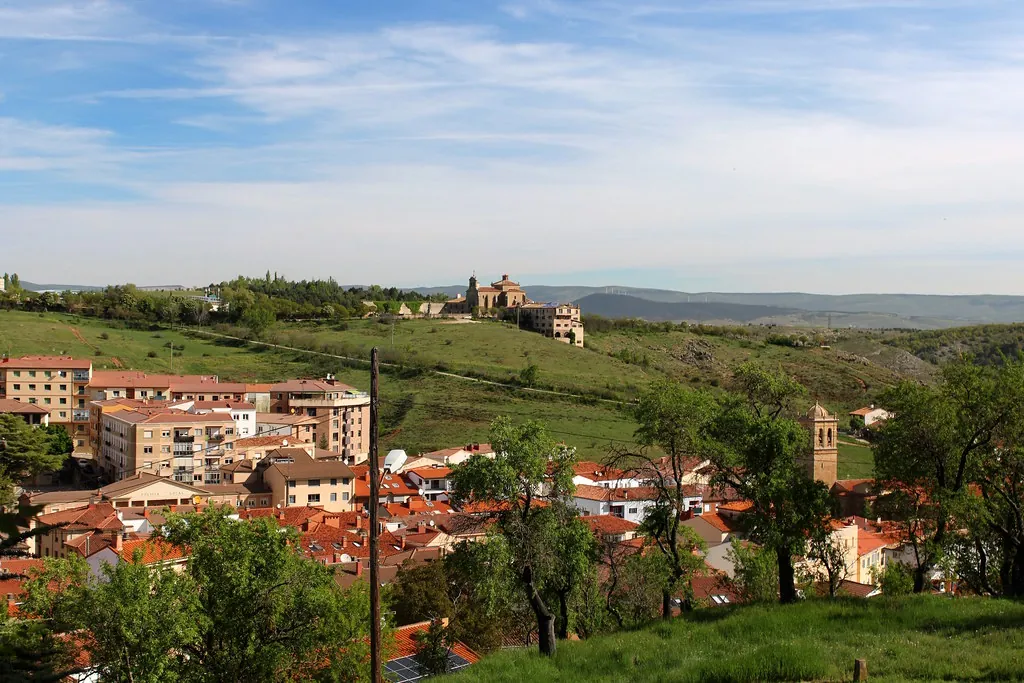
The thermometer drops three degrees the moment you step out of the car. At 940 metres above sea level, Villahoz sits high enough for the air to carry a sharp edge, even in late May. The village crests a gentle rise in the cereal plateau of northern Castilla y León, and from the southern edge you can watch wheat and barley run uninterrupted to the horizon, the colour shifting from silver-green to gold depending on the hour.
This is Spain stripped of postcards. No souvenir stalls, no flamenco bars, no coach parks—just stone houses the colour of dry earth, a church tower that still calls the hours, and a population of roughly five hundred who greet strangers without the weary smile of the over-visited. Villahoz appears on so few English-language itineraries that Google returns barely two pages of results. For travellers who measure value in silence and space, that absence is the first attraction.
A village that never hurried
The centre is a loose grid of eight streets. Traffic is light enough for dogs to nap in the road; the occasional tractor or elderly Seat Ibiza is obliged to steer round them. Houses are built from local limestone and adobe, their wooden doors painted ox-blood red or deep green, many still sporting the family name in iron letters above the lintel. Grander façades carry weather-worn coats of arms—evidence of the minor nobility who once administered the surrounding grain estates. Nothing is manicured; walls lean, plaster flakes, and the effect is honest rather than romantic.
The parish church of San Andrés closes between services, so turn up at 11:00 on Sunday if you want to see the sixteenth-century retablo without tracking down the key-keeper. Otherwise, wander the back lanes until you hear voices: the small social club next to the ayuntamiento keeps irregular hours but usually has someone inside willing to unlock the nave for visitors. Inside, the air smells of candle wax and old paper; the stone floor dips where centuries of boots have worn it away.
Walking the plateau
Villahoz is a launch pad rather than a destination. Marked footpaths strike out across the fields, following medieval drove roads that once funnelled sheep from summer pastures in the Cantabrian mountains down to winter grazing in Extremadura. The GR-88 long-distance trail brushes the village boundary; a nine-kilometre circuit heads south-east to the abandoned hamlet of Arconada, returning along a ridge that gives views west towards the Montes de Oca. The route is flat, but the altitude means sun is fierce; carry more water than you think necessary—there is no shade and no bar until you are back.
Spring brings colour: crimson poppies between the wheat, bee-eaters overhead, and the occasional Iberian hare lolloping into the stubble. By July the land turns khaki and the wind feels as though it has crossed a thousand kilometres of meseta; early starts are essential. Winter is a different proposition. Night frosts are common from October onward, and when snow sweeps in from the Sierra de la Demanda the approach road from the A-1 can close for half a day. The upside is crystalline air and the chance to photograph threshing circles outlined in white.
What you will (and will not) eat
There is no restaurant in the village itself. The sole bar, La Esquina, opens Thursday to Sunday and serves coffee, beer, and a decent tortilla should the owner feel like making one. Self-catering is the safest strategy. The Día supermarket in Lerma, fifteen kilometres south, stocks everything from Maldon salt to chorizo; local butchers will vacuum-seal a shoulder of milk-fed lamb if you order a day ahead and point to the cut you want with sufficient enthusiasm.
When the bar is closed, eating options are a ten-minute drive away. In Lerma, Mesón de la Cueva does lechazo—slow-roast suckling lamb—in a wood-fired oven. A half portion feeds two, arrives sizzling on a clay dish, and is served with a simple salad and a glass of DO Arlanza tempranillo whose soft tannins won’t challenge anyone raised on Rioja. Expect to pay €22–25 per head for lunch including wine, less if you stick to the menú del día.
Beds, beams and patchy Wi-Fi
Accommodation is limited to two rural houses. Casa Rural El Gerbal sleeps six around a central courtyard where swallows nest in the eaves; the owners, a bilingual couple who once worked in Madrid, leave a bottle of local red on the kitchen table and instructions for the coffee machine that actually work. The pool is unheated—fine in August, bracing in June. A smaller cottage, La Casa del Cura, has been restored with under-floor heating and a roof terrace that catches the evening sun; mobile signal drifts in and out depending on which corner of the terrace you stand in. Weekend nights from €90, mid-week discounts available. Both properties fill quickly during the August fiestas and again at Easter, so book early rather than hope for a walk-in.
Turning up at party time
Fiestas begin on 15 August with a midday mass followed by a procession in which the village virgin is carried, slowly, around three blocks while residents shower her with rose petals. What happens next is less religious: a foam cannon in the square for children, sacks of crisps emptied onto trestle tables, and an evening dance that drags a generator-powered sound system onto the basketball court. Visitors are welcome, though you will be asked where you come from and whether you knew anyone born here. The answers “England” and “No, but I like your village” are enough to secure a plastic cup of beer and directions to the fireworks launch field.
If you prefer quieter tradition, come in late September for the fiesta de la vendimia. A tractor drags a wooden cart through the finished vineyards at nearby Fuentenebro, grapes are tipped into an ancient stone lagar, and everyone takes turns barefoot to tread them. The resulting juice is rough, purple, and alcoholic within days; locals top up plastic bottles and freeze them for winter stews. Tourists are rare enough to be offered a glass without hesitation.
Getting here, getting out
No train reaches Villahoz. From the UK the simplest route is a flight to Madrid, then a two-hour dash north on the A-1 toll motorway—keep an eye out for speed cameras just before Aranda de Duero. Car hire is essential; buses from Burgos reach the county town, Melgar de Fernamental, eight kilometres away, but services are sporadic and taxis non-existent on Sundays. Allow €35 for fuel each way from Madrid airport.
Leave time for the return leg to include a stop in Lerma. The ducal palace—now a parador—presides over an arcaded plaza where you can drink a cortado beneath stone balconies without feeling you have strayed onto a film set. Order a plate of queso de Burgos, the region’s mild, crumbly fresh cheese, and spread it on toasted mollete bread with a drizzle of honey. It tastes of sheep’s milk and thyme, and makes a gentle re-entry to the world beyond the meseta.
Villahoz offers no postcard moment, no single sight to tick off. What it gives instead is the rare sensation of space uncluttered by expectation: the chance to walk until the only sound is wind combing through barley, to sit in a plaza where the clock is the church bell, and to remember that travelling can still feel like arriving somewhere rather than simply passing through.