Full Article
about Villalbilla De Burgos
Ocultar artículo Leer artículo completo
The First Breath After Burgos
Seven kilometres east of Burgos cathedral, the landscape changes. Apartment blocks give way to wheat fields, and the city's hum fades into tractor engines and the occasional delivery van. Villalbilla de Burgos sits at 860 metres above sea level, marking the point where pilgrims on the Camino Francés finally step onto the open plateau that will accompany them for the next 150 kilometres.
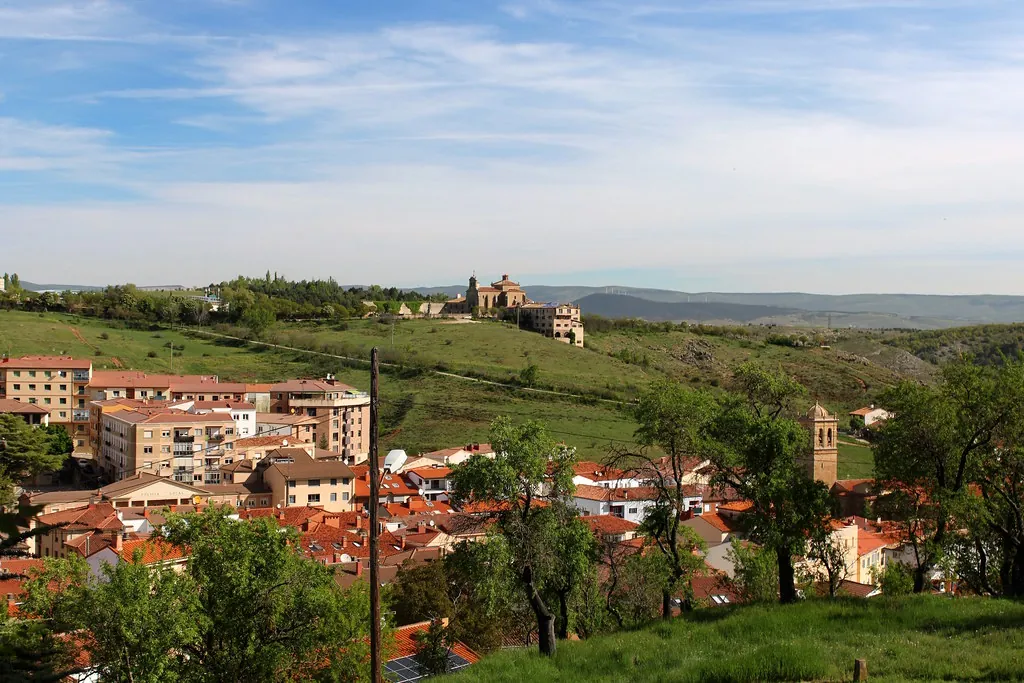
The village appears suddenly. One moment you're passing industrial estates on the Burgos ring road; the next, you're looking at a horizon so flat it could have been drawn with a ruler. Stone houses cluster around a church tower that seems taller than necessary for a population of 500, until you realise it's designed to guide walkers across these vast cereal fields.
Monday Morning, Market Day
Visit on a weekday morning and you'll catch the village at its most animated. The small supermarket on Calle Real does steady trade in bread and lottery tickets. Farmers gather at the bar for coffee strong enough to strip paint, discussing rainfall and wheat prices in rapid Castilian. Nobody's in a hurry – the cereal harvest won't speed up for anyone.
The bar, simply named "Bar" in fading paint, serves as village hub. From 07:00 it fills with locals having breakfast and pilgrims fortifying themselves before the day's walk. A toasted baguette with tomato and olive oil costs €1.80, the coffee's decent, and they'll fill your water bottle without charge. The menu del día runs €12-14, featuring reliable grilled pork, chips, and flan – nothing revolutionary, but welcome after Burgos' prices.
Sunday's different. The supermarket shuts at 14:00 and might not reopen until Tuesday. The bar kitchen closes mid-afternoon, and by 17:00 the place can feel deserted. Plan accordingly – this isn't somewhere to arrive hungry at 20:00 expecting dinner.
Stone, Adobe and Satellite Dishes
A slow circuit takes twenty minutes if you dawdle. Start at the sixteenth-century Church of Nuestra Señora de la Asunción, its weathered stone warm in afternoon light. Inside, simple whitewashed walls contrast with elaborate gold leaf on the altar – typical Castilian restraint meeting baroque exuberance. The bell tower houses storks' nests; their clattering accompanies Sunday mass.
The surrounding streets reveal layers of rural architecture. Stone cottages butt against adobe houses crumbling gently back to earth. Modern aluminium windows sit uncomfortably in medieval walls. Satellite dishes bloom from every façade – reminders that even here, nobody watches the evening news at the neighbour's anymore.
Look for the small Roman milestone embedded in a wall near the church. It's nothing spectacular, just a carved stone marking distance to ancient towns whose names have changed beyond recognition. Villalbilla itself only appears in records from the twelfth century, when these fields marked the frontier between Christian and Moorish Spain.
Walking Into Nothing
The real attraction lies beyond the houses. Agricultural tracks radiate across the plateau, following property boundaries older than most European countries. Walk south for ten minutes and village sounds disappear completely. The silence isn't absolute – wheat whispers in wind, larks provide occasional commentary – but it's profound after urban noise.
These paths offer easy walking on level ground. Spring brings green wheat creating ocean-like waves; July turns everything gold; post-harvest stubble gives a military haircut to the landscape. Autumn ploughing reveals rich red soil, dark against pale sky. Winter strips everything back to essentials – earth, sky, and the church tower visible for miles, your constant reference point.
Bring a hat. At this altitude, sun burns even when temperatures seem mild. Wind arrives unimpeded from the Atlantic, 200 kilometres west. Rain turns tracks to clay that clings to boots like concrete. When weather closes in, the village can feel bleak – grey sky merging with grey stone, few people about, nothing to do except wait it out in the bar.
Where Pilgrims Rest
The municipal albergue opens at 13:00, offering 24 beds for €8. It's clean, basic, and fills quickly during peak season. Hospitalero Juan, who volunteers for two-week stints, remembers every walker by nationality and complaint. "The British always want tea," he laughs, producing industrial-strength coffee instead.
Walking poles lean against walls like oversized chopsticks. Boots line the porch, their owners comparing blisters inside. Someone's always charging a phone, someone's always wondering if they should push on to Tardajos, someone's always grateful for a bed after discovering Burgos' hostels full.
Evening brings the albergue's real function – information exchange. Walkers heading east warn about crowded stages ahead. Those arriving west share tips about Burgos' best tortilla. It's social media reduced to actual social interaction, facilitated by shared hardship and cheap wine from the village shop.
Practical Matters
Getting here requires planning. Buses from Burgos run twice daily Monday-Friday, once on Saturday, never on Sunday. The journey takes 25 minutes through industrial estates and new housing developments that feel like they're trying to escape the city. Driving's simpler – take the N-120 east, turn right after the Repsol station. Parking's free everywhere, though finding shade for summer visits requires optimism.
No cash machine exists. The nearest bank sits back in Burgos, so withdraw before you leave. Cards work in the supermarket and bar, but the albergue takes only cash. The single taxi serving the area charges €30 for the return trip to Burgos – expensive, but cheaper than three nights in a city hotel if you miss the last bus.
When to Come
May and September provide ideal conditions – warm days, cool nights, fields at their photogenic best. July and August bring fierce heat and the village fiestas, when returning emigrants double the population and organise late-night parties that shake window frames. November through March offers solitude and spectacular storms, plus the possibility of being snowed in for a day or two.
Spring means green wheat and migrating storks. Summer brings harvesters working through night to beat thunderstorms. Autumn offers mellow light and mushroom season in nearby pine plantations. Winter strips the landscape to fundamentals – perfect for photographers who like their horizons uncompromising.
The Edge of the Meseta
Villalbilla de Burgos won't change your life. It offers no Instagram moments, no souvenir shops, no Michelin stars. What it provides is transition – from city to plateau, from tourist to traveller, from rushing to arriving. Here, the Camino stops being about Burgos cathedral and starts being about the long walk ahead.
Stay for lunch, walk the fields, watch wheat shimmer like water under wind. By evening you'll understand why pilgrims remember this unremarkable village with disproportionate fondness. Sometimes the places that demand nothing become the ones you recall most clearly – not despite their simplicity, but because of it.