Full Article
about Villalbilla De Gumiel
Ocultar artículo Leer artículo completo
The tractors start at seven. Not the polite purr of a city gardener's ride-on mower, but the proper diesel growl of machines that cost more than most houses in Villalbilla de Gumiel. By eight, the first pickers appear between the rows, fluorescent vests glowing against the bronze vines. This is harvest season in the Ribera del Duero, and the village of 120 souls suddenly feels busy.
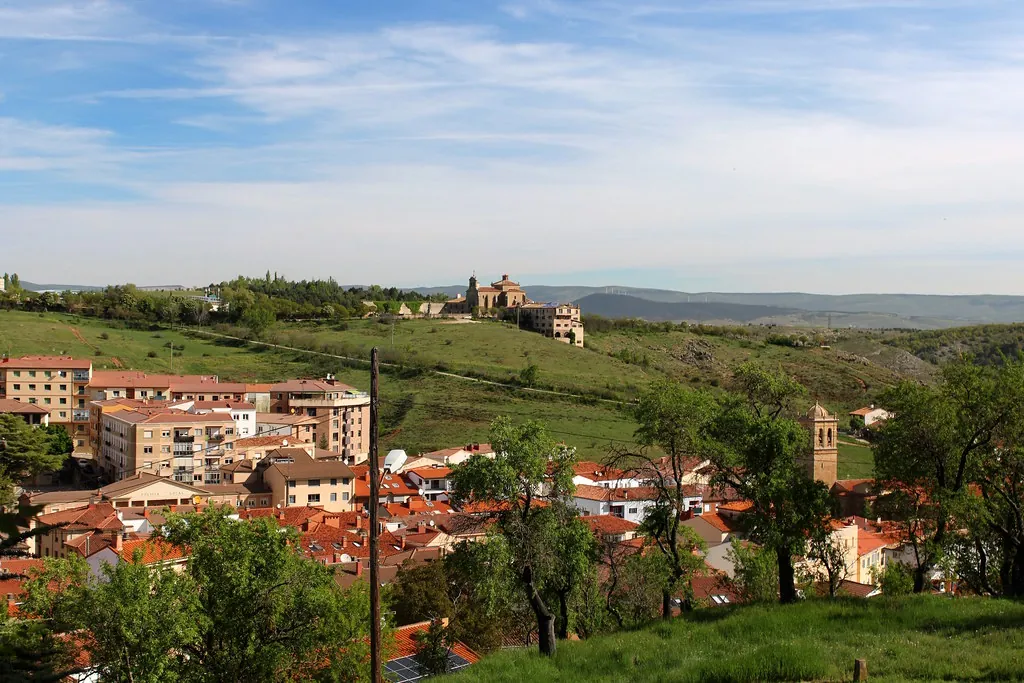
Villalbilla sits 850 metres above sea level on Spain's northern plateau, where the meseta starts its rolling descent towards the Duero valley. The altitude matters. It means cold nights even in July, and mornings when September mist pools so thickly between the vines that you could lose a combine harvester. British visitors expecting Andalucían heat often pack wrongly—bring layers, and something windproof for the plateau's afternoon breezes.
The village itself stretches along a low ridge, its terracotta roofs interrupted by the occasional solar panel. Adobe walls the colour of burnt sugar line narrow streets where parked cars have to tuck half-up onto pavements built for donkeys, not Daihatsus. There's no centre as such, just a cluster of buildings around the church and a bar that opens when the owner's grandson feels like it. This isn't rudeness—it's arithmetic. When your population wouldn't fill a London primary school, opening hours become flexible.
What Passes for a High Street
The Church of San Juan Bautista squats at the village's highest point, its squat tower more functional than decorative. Inside, the walls bear the water stains of centuries and the pews retain the carved initials of teenagers who've been bored here since the 1800s. It's open most mornings, though the key lives with María three doors down if the door's locked. She'll insist you see the 16th-century retablo, then ask whether England's really as expensive as her daughter claims from Madrid.
The real architecture here is agricultural. Palomares—dovecotes—dot the surrounding fields like stone mushrooms, their conical roofs pierced for birds that once provided fertiliser, meat and messages. Most stand roofless now, home to barn owls rather than pigeons, but they mark the landscape with a rhythm that pre-dates GPS. Between them, the vineyards dominate absolutely. Tempranillo grapes ripen on bush vines so low you could mistake them for scrub, their gnarled trunks thicker than your thigh and older than your grandmother.
Walking tracks radiate from the village in three directions, all unmarked but followable if you remember the basic rule: keep the vines on your left heading out, on your right coming back. The shortest loop takes forty minutes and delivers you to an abandoned shepherd's hut with views across to Aranda de Duero's industrial estates. It's hardly wilderness, but the silence feels complete after Burgos or Valladolid's constant traffic.
The Wine That Pays the Bills
Villalbilla owns no bodegas itself—the nearest commercial winery sits three kilometres towards Gumiel de Izán, its stainless-steel tanks visible from the road like agricultural spacecraft. But the village's grapes fetch premium prices, particularly from Bodegas Torres and Vega Sicilia who buy fruit by the parcel rather than the tonne. Walk the vineyards in October and you'll spot winery scouts tasting berries, their clipboards noting sugar levels that determine whether this year's harvest becomes £8 supermarket plonk or £80 collectors' investment.
For tastings, Aranda de Duero provides the obvious base. Ten minutes by car brings you to underground cellars carved from limestone cliffs, where tasting notes mention "graphite" and "liquorice" with straight faces. The Wine Route association runs English-language tours if you book ahead, though the most interesting visits are often the smallest—family operations where grandfather still foot-treads the grapes because "machines don't know when to stop."
Try the local whites too. Albillo mayor, once dismissed as a blending grape, now appears as crisp, mineral wines that pair surprisingly well with fish. British drinkers used to New Zealand sauvignon blanc might find them subtle, but at €8 a bottle they're worth the experiment.
Where to Lay Your Head
Accommodation options divide cleanly between "in the village" and "near enough." Casa Rural La Pacheca occupies a renovated farmhouse on Villalbilla's edge, its beams salvaged from a 17th-century granary and its kitchen better equipped than most London rentals. Three bedrooms sleep six comfortably, though the single bathroom requires negotiation. At €120 nightly mid-week, it undercuts equivalent properties in the Cotswolds by factors of three.
Hotel alternatives cluster around the A-1 motorway, ten minutes distant. Finca Torremilanos offers vineyard views and a pool where you can float while watching harvesters work the slopes below. Its restaurant serves competent lechazo—milk-fed lamb roasted in wood-fired ovens until the skin crackles like pork crackling. Vegetarian options exist, though requesting them produces the same facial expression you'd get asking for decaf in a builder's caff.
The practical stuff matters more here than in most Spanish destinations. Villalbilla has no supermarket, cash machine, or petrol station. The nearest shop sits six kilometres away in Gumiel de Izán, closes for siesta, and won't accept cards for purchases under €10. Stock up in Aranda before arrival, or prepare for emergency drives along unlit country roads where wild boar appear suddenly and without insurance details.
Eating Without Strategy
The village bar serves coffee and basic tapas when open—think tortilla slices and chorizo chunks with toothpicks. For anything more substantial, you're driving. Aranda's cellars provide the obvious choice: Casa José, three floors underground in a 16th-century cave, where suckling lamb feeds four comfortably and the wine list runs to 400 Ribera del Duero labels. Book weekends—Spanish families treat Sunday lunch as sacred, and tables fill by 2 pm.
Lighter options exist. La Casona del Judío occupies a former Jewish merchant's house, its menu mixing Castilian staples with more refined touches. Try the morcilla de Burgos—blood sausage with rice that tastes like black pudding's sophisticated cousin—followed by queso de oveja curado that crumbles like good cheddar but tastes of sheep's milk and time.
Breakfast presents the biggest challenge. Spanish schedules mean most places open at 10 am minimum, by which time British stomachs expect lunch. The motorway services at Peñafort provide an unlikely solution—their café serves credible coffee and tostada from 7 am, accepting that some people need feeding before the sun hits the yardarm.
Timing Your Visit
Spring brings mustard-yellow flowers between the vine rows and temperatures that hover around 18°C—perfect walking weather, though nights drop to 5°C and rural houses take time warming up. September through October offers harvest activity and autumn colours, but book early—wine tourism means rooms fill fast, particularly weekends.
Winter hits hard. January temperatures regularly drop below -5°C, and the plateau wind carries Arctic bite. Many rural houses close November to March, their owners sensibly heading to coastal apartments. If you do come, bring proper coats and expect frozen pipes—Spanish plumbing wasn't designed for British winters.
The village fiesta in mid-August transforms everything. Population quadruples as former residents return from Bilbao and Barcelona, bringing city attitudes and volume levels. Street discos run until 4 am, fireworks start early, and the church bell rings with enthusiasm rather than necessity. It's either magical or unbearable, depending on your tolerance for being woken by brass bands.
Villalbilla de Gumiel won't change your life. It offers no epiphanies, no Instagram moments that haven't been photographed a thousand times before. What it provides is simpler: the chance to understand how wine gets made, how villages function when tourism isn't the point, how Spanish rural life continues whether you're there to witness it or not. Come for the vineyards, stay for the silence, and leave before you need a decent cup of tea.