Full Article
about Villaldemiro
Ocultar artículo Leer artículo completo
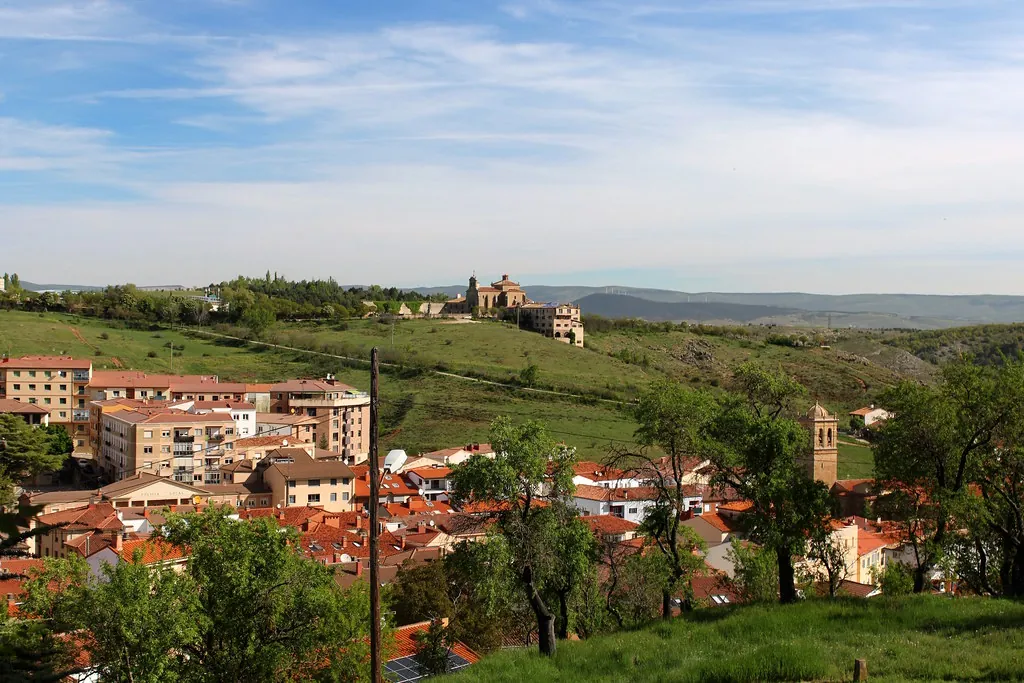
The church bell strikes noon, and every dog in Villaldemiro starts barking at once. It's the only thing disturbing the wheat fields that stretch to every horizon, rippling like the sea across the province of Burgos. Five thousand souls call this home—though "call" might be generous, since half the houses stand shuttered until August when emigrants return for the fiestas.
What Passes for a Centre
There's no plaza mayor here, just a widening of the main street where the bar used to be. The building's still there, metal grille pulled down since 2019, its Coca-Cola sun-fade a reminder that rural Spain's decline isn't romantic—it's economic. Opposite, the ayuntamiento flies a flag at half-mast for someone's grandfather. This is village life stripped of tourism brochures: real, ageing, stubborn.
The Iglesia de San Pedro rises from this modest hub, its stone walls thick enough to survive another Moorish invasion. Twelfth-century base, sixteenth-century tower, twentieth-century concrete patch where the roof gave way. Inside holds the usual gold-leaf Virgin, but the real treasure sits outside: a Romanesque capital reused as a holy water stoup, its carved warriors now blessing babies whose parents emigrated to Bilbao. The church stays locked except for Sunday mass at 11:30. Arrive early and you'll find the keyholder—usually the woman in the green house who keeps chickens—though she'll insist you view it quickly because "la luz está carísima."
Walking the Agricultural Chessboard
Three roads lead out of town, all unpaved after the first kilometre. Take the one signed "Quintanadiez 8 km" and you'll understand why Castilians talk about landscape as architecture. Wheat plots square off against barley like a giant chessboard, with margin strips of poppies providing illegal colour. The EU's subsidy maps show through the planting patterns—every perfect rectangle tells you who inherited what from Franco-era land reforms.
Walk twenty minutes and the village shrinks to a dark smudge. Another twenty, and even that disappears behind the swell of land. This is when you notice the birds: crested larks tumbling overhead, a pair of lesser kestrels hovering where the track meets a power line. If you're lucky—and quiet—you might spot a great bustard stalking through the crop, though locals will tell you they're "más raros que un político honesto."
The paths form a figure-eight around Villaldemiro, meaning you can loop back without retracing steps. Total distance: 7.3 kilometres. Total ascent: basically nothing. Bring water—there's no fountain after the cemetery, and summer temperatures touch 38°C. Spring brings wild asparagus pushing through verge thistles; autumn smells of wet earth and burning stubble. Winter? Best avoided unless you enjoy horizontal rain driven across bare plains at fifty kilometres per hour.
What People Actually Eat Here
Food arrives via the mobile shop, a white van that honks its horn Tuesdays and Fridays at 10:30 sharp. Locals cluster around the back discussing potato prices while the driver—inevitably someone's cousin—unloads bread still warm from the provincial bakery. For anything fancier, it's a twenty-minute drive to Melgar de Fernamental where SuperSol stocks quinoa and other foreign luxuries.
The village's last proper restaurant closed when Señora Crespo died in 2021. Now eating options consist of:
- Bar Los Amigos in Villanueva de los Corchos (12 km), serving cocido montañés that could stun a ox
- Asador El Cántaro in Osorno (18 km), where lamb chops cost €18 and come with views of a motorway junction
- Your own picnic, bought in Burgos before you set out
If someone invites you for tapas, say yes. Acceptable gifts: decent wine (nothing from La Mancha), or flowers for the mantelpiece. Conversation topics: wheat prices, who's marrying whom, why Madrid ignores rural Spain. Avoid: Brexit comparisons, property prices, the politics of hunting.
Timing Your Visit (Or Why August Is a Mistake)
Come in late May and the plateau glows emerald, wheat heads still milky when squeezed. June adds gold to the palette; by July the harvesters are out, creating dust clouds visible from space. These are the photogenic months—and everyone knows it. Spanish weekenders clog the secondary roads with spotless SUVs, stopping suddenly when a stork flies overhead. Photography tip: shoot into the sun at 7 pm when the cereal turns translucent and every ear becomes a filament of light.
October brings mushrooms and solitude. The fields lie stubbled and brown, revealing medieval drove roads that disappear under crops the rest of year. Temperatures drop to a civilised 20°C; you can walk all day without meeting another soul. January? The landscape becomes a sepia photograph, sky and earth merging at a horizon you can taste. It's beautiful in the way Siberia might be beautiful—best admired through a car window with the heater on full.
Getting There (and Away Again)
Burgos bus station, bay 14, 9:15 coach to Palencia. Ask the driver to drop you at the Villaldemiro junction—he'll grunt acknowledgment. From there it's a 3-kilometre hike along a road with no pavement. Alternatively, hire a car at Burgos airport (€45/day for a Fiat 500) and navigate the CL-623 south for 47 kilometres. Turn left at the ruined farmhouse with the nesting storks; if you reach the nuclear plant, you've gone too far.
Petrol stations become scarce after Castrojeriz—fill up. Phone signal drops to one bar somewhere between Quintana del Puente and Villaldemiro; download offline maps. The village has neither cash machine nor contactless payment, so bring actual euros. Twenty should cover coffee and empathy.
The Honest Verdict
Villaldemiro won't change your life. There's no boutique hotel, no artisan cheese maker, no Instagram moment unless you're willing to work for it. What you get instead is Spain before the tourists arrived: agricultural rhythms, neighbours who know everyone's business, a landscape that demands patience and rewards it with subtlety. Come if you're passing, stay if you need reminding that civilisation once measured time in harvests rather than notifications. Leave before you start finding the silence unnerving—usually around day three.