Full Article
about Villamayor De Trevino
Ocultar artículo Leer artículo completo
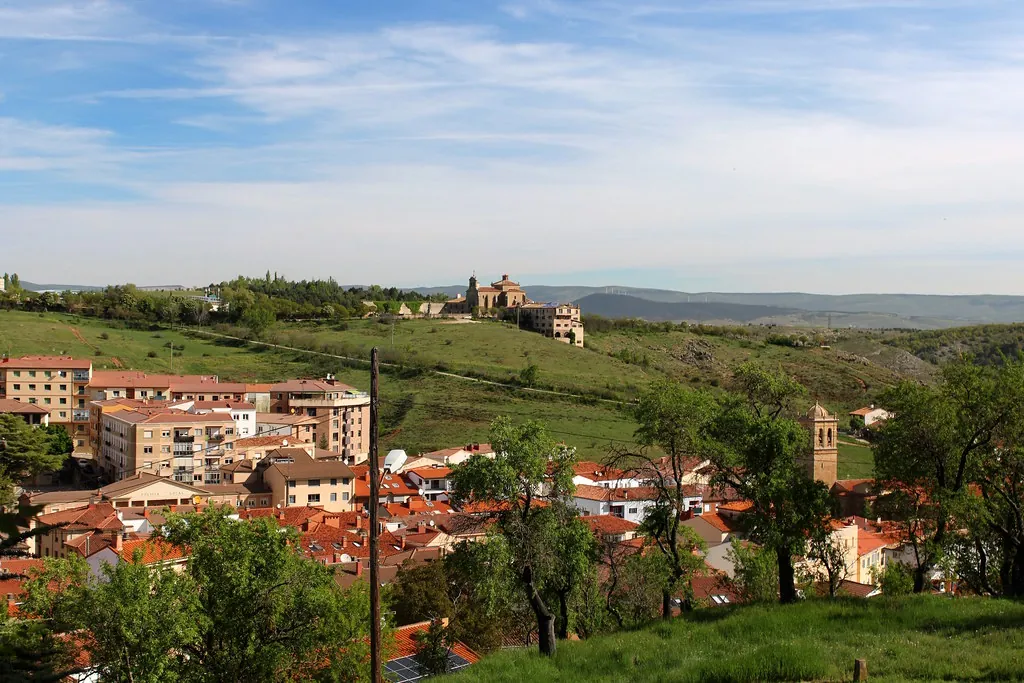
The road to Villamayor de Treviño climbs 400 metres above the cereal plateau north of Burgos. At dawn in April the thermometer reads 6 °C—three degrees cooler than the city forty kilometres behind you—and the wheat stubble still carries a rim of frost. Stone houses appear first as silhouettes, then as solid granite rectangles packed tight against the wind. No coach parks, no multilingual fingerposts, just a hand-painted board that gives the population as 5000 although locals say the true figure hovers nearer 120.
A village that never bothered with a makeover
Inside the single-lane ring of streets the plan is medieval: church, plaza, grain store. The Iglesia Parroquial de San Andrés lifts its squat tower above the roofs, stone the colour of weathered barley. Push the south door at Mass time and you step straight into the nave—no porch, no ticket desk—where the smell is of candlewax and the stone floor dips from five centuries of feet. A Romanesque capital serves as holy-water stoup; the font is fifteenth-century, still in use for the handful of baptisms each year. Sunday service is at eleven; arrive ten minutes early and someone will lend you a missal in Spanish.
Houses keep to the same practical grammar: ground floor for animals, external staircase to the living level, loft above for straw. Iron-grilled windows face south; the north walls are blind against winter. Many granite lintels carry a date—1786, 1823, 1899—carved by masons who were paid in wheat. A few still show the original owners’ initials, half-erased by driven ice. Restoration here means replacing a roof tile when it cracks, not sand-blasting the façade for Instagram. The result is neither pretty nor atmospheric; it is simply still alive.
Walking east along Calle del Medio you pass a barn whose doors could admit a hay wagon with centimetres to spare. Inside, a tractor from 1977 stands next to a stack of last year’s beet. The farmer, if he is there, will nod but will not offer a tour. This is storage, not heritage.
Plateau light and plateau distances
At the village edge the tarmac gives way to a camino of packed clay. From here you can complete a nine-kilometre loop that links Villamayor with the hamlet of Revilla de Treviño and returns via the Arroyo Boedo. The elevation gain is 120 metres—enough to feel in the thighs, nothing that requires poles. In May the verges flare with crimson poppies; by July every plant is the colour of burnt paper. There is no shade: carry water because the only bar lies back in the plaza and it shuts at three.
Cyclists use the same network of farm tracks. A quiet day’s route strings together Villamayor, Valle de Santibáñez and Treviño itself, 14 km west across the border into Álava. Gradient rarely tops four per cent; surface varies from gravel to bare earth after the plough. A hybrid tyre is adequate, though goat-head thorns demand spare inner tubes. Expect to share the path with a solitary quad bike and, in autumn, the combine harvester that crawls home at dusk with headlights blazing.
The plateau sky deserves a warning: it is enormous. Sunsets last forty minutes because the horizon sits so far away; when the wind swings to the north you see the weather half a day before it arrives. Photographers arrive hoping for golden cereal waves and leave with pictures of cracked mud and rusted seed drills. The place refuses to perform.
What you eat when the day folds in
There are two food outlets. The Bar Plaza opens at seven for coffee and churros, serves a fixed-menu lunch (€12) at two, then closes when the last customer leaves. Wednesday is rice day, Friday brings bacalao al ajoarriero. The alternative is the panadería, which doubles as grocery: tinned peppers, threshold cheese, local chorizo at €18 a kilo. If you want lamb roasted in a wood oven you need to drive 25 minutes to Miranda de Ebro or phone ahead to Asador Marta in Treviño—they only slaughter what they have sold.
Buy a bottle of Cerrato, the village wine cooperative’s red. It costs €4.50, tastes of iron and black cherry, and will stain the plastic glass. Drinking it on the plaza bench at ten pm you hear the single church bell strike the hour, then nothing—no traffic, no playlist, only dogs exchanging news across the rooftops.
When the year turns sharp
Winter arrives overnight, usually between 20 October and 5 November. The first frost seals the soil; by December night temperatures drop to –8 °C and diesel cars grizzle before starting. Snow is light but wind drifts it into roadside channels that freeze solid. The council grades the main street, yet side roads can stay white for a week. If you plan a February visit carry snow chains—the N-232 is cleared, the last nine kilometres of BU-536 sometimes are not.
Spring compensates with excess. From late March wheat shoots 10 cm in a week and the air smells of ammonia from fertiliser spread before dawn. Migratory lapwings circle overhead, calling like rusty gates. By June the day temperature reaches 30 °C; the village wakes at six to finish fieldwork before noon, then sleeps behind shuttered windows until five. August nights remain above 20 °C—perfect for sitting outside, hopeless for sleeping without a fan.
The fiesta mayor is held on the third weekend of July. The population doubles as emigrants return; the plaza hosts a temporary bar that sells litre bottles of beer for €3 and plays 1990s Spanish pop until four am. If you require silence, book elsewhere. The rest of the year the village keeps its usual decibel level: wind, dogs, the combine when it sets out at eight.
Getting there, getting out
There is no railway. ALSA runs one bus a day from Burgos at 14:15, returning at 06:30 next morning; the fare is €5.40 each way, cash only, and the driver will stop in Villamayor if you ask. Otherwise you need a car. Petrol is cheaper in Burgos city than on the motorway; fill up before leaving the ring road. Phone coverage is patchy—Vodafone works on the plaza, Orange requires a walk to the cemetery hill.
Accommodation inside the village amounts to two village houses signed as "alojamiento rural". Casa de la Plaza charges €70 per night for the entire three-bedroom house, minimum two nights. Heating is by pellet stove; instructions are in Spanish on the wall. Bring slippers: stone floors are cold even in May. There is no reception, just a key box; the owner lives in Miranda and will meet you if the box jams, which it does when the temperature falls below zero.
If that is full, the nearest hotel is in Treviño (15 km), a modern hostal with twenty rooms and a restaurant that closes Sundays. Booking ahead is wise during hunting season—October to December—when parties shoot red partridge on the surrounding estates and drink brandy afterwards in the bar.
Leave the map in the car
Walk to the cemetery at dusk. From the ridge the plain stretches north until the land curves out of sight; the only lights are a scatter of farmsteads and, on clear evenings, the distant glow of Vitoria 60 km away. No monument charges admission, no guide recounts legends. The village offers space, seasons and the small sounds of a place that has never needed to advertise. Take them or keep driving—the BU-536 rejoins the motorway in eight minutes and Burgos is half an hour south.