Full Article
about Villamedianilla
Ocultar artículo Leer artículo completo
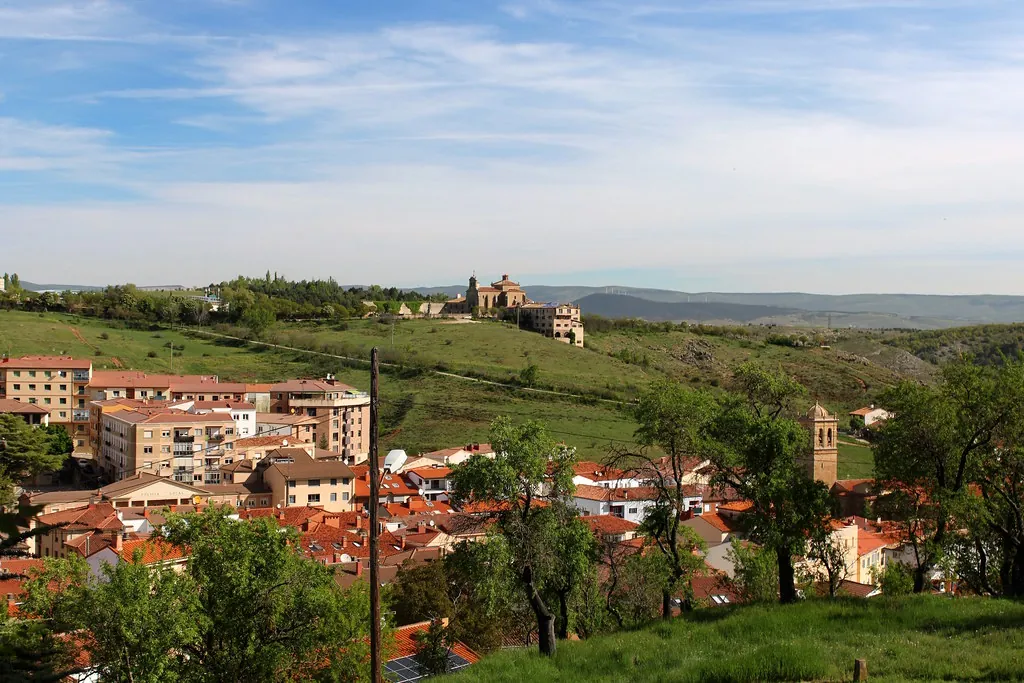
The church bell strikes noon, and the only other sound is grain shifting in a metal hopper. At 850 metres above sea level on the Burgos plateau, Villamedianilla operates on agricultural time. Mobile reception flickers. The nearest dual carriageway is half an hour away. For visitors fresh from Stansted shuttles and Oyster cards, the adjustment is immediate: nothing here runs to a timetable except the sowing calendar.
Stone, Adobe and Silence
Forty-one kilometres south-east of the provincial capital, the village appears as a low, grey smudge among wheat circles. Closer up, the houses reveal their formula: thick stone bases, adobe upper walls, tiny street-facing windows, and interior patios designed to trap cool air in July and shut out January winds. Rooflines sag like well-worn saddles; timber beams have carried snow loads since the 1920s. There is no formal heritage trail, so exploration is a DIY affair. Start at the plaza, where the parish church lifts its modest tower, then duck down Calle de la Fuente to see a row of 19th-century granaries propped on mushroom-shaped stones to keep out rodents.
Outside the August fiestas, roughly two-thirds of the houses stand shuttered. Their owners live in Burgos city or Valladolid and return only for harvest or family baptisms. This demographic truth has a practical consequence for travellers: if you expect a pint of milk after 20:00, bring it with you. The last grocery shop closed in 2018; the nearest supermarket is a 20-minute drive in Cabañes de Burgos.
Walking the Cereal Ocean
Villamedianilla sits in the centre of an undulating sea of grain. Farm tracks, graded twice a year by the local cooperative, radiate out like spokes. They make perfect walking routes: wide, mostly stone-free, and shared only with the occasional John Deere. A circular tramp south towards Poza de la Sal takes two hours; you’ll pass stone shepherd huts, a ruined railway bridge from the 1930s, and, in May, verges splashed with crimson poppies. Take water—shade is non-existent and the altitude sun bites even in spring.
Cyclists can follow the same web of tracks, but tyre choice matters: after heavy rain the clay sets like concrete, then ruts into corrugations that rattle fillings. Mountain bikes with 40 mm tyres cope; skinny road rubber does not. There are no bike shops for repairs, so pack a mini-pump and two spare tubes.
What Passes for Gastronomy
Food here is dictated by what fits in a wood-fired oven and what can be stretched to feed six harvest hands. Expect roast lamb shoulder (cordero lechal), chickpea stews heavy on morcilla, and, if you time it right, migas—fried breadcrumbs riddled with garlic and pancetta. The village itself has no restaurant, but two kilometre-zero options exist within ten minutes’ drive. Asador Casa José in Cabañes serves lechal for €22 a half-kilo; booking is essential at weekends when Burgos families descend. Closer, the roadside bar La Parada de Villariezo opens Friday to Sunday and will grill a T-bone (chuletón) the width of a railway sleeper for €28, including patatas fritas and a basic salad.
Vegetarians face slim pickings: most stews start with a ham bone, and “ensalada mixta” means tinned asparagus and tomato. Self-catering is simpler. The Saturday market in Aranda de Duero (35 min) sells local cheese (queso de oveja) at €8 a wedge and jars of piquillo peppers that taste of charcoal rather than vinegar.
Light, Climate and the Lack of People
At 850 m, nights stay cool even in July. Daytime July-August peaks hover around 28 °C; mornings can start at 12 °C, so pack a fleece whatever the forecast says. Frost arrives mid-October and lingers into April; January mean minimums dip to –4 °C. Snow is sporadic but when it lands, the provincial gritter treats the BV-3301 as priority three. If you’re staying in a rural cottage, arrange a 4×4 taxi from Burgos rather than trusting a hire Corsa.
The altitude plus negligible light pollution delivers star fields you simply don’t see from Surrey. On moonless nights the Milky Way shows dust-cloud detail; shooting stars are common enough that making a wish becomes tiring. Bring a tripod and a remote shutter release—long-exposure photography here needs no light-trail compensation.
Where to Lay Your Head
Accommodation within the village limits totals seven rooms. Villa Ferrera Posada Rural occupies a 1920s manor house on Calle Real; beams are original, Wi-Fi is theoretical, and doubles run €70 including a tray of churros and coffee brought to your room because there’s no communal breakfast lounge. Two kilometres south, Hotel Rural Las Brujas offers under-floor heating and an honesty bar stocked with local Ribera del Duero reds from €18 a bottle. Both places will collect you from Burgos bus station if asked politely a day ahead—public transport stops at the village boundary and the walk in with luggage is uphill.
Cheaper options lie in the surrounding wheat belt. Casa Rural La Abuela, a converted labourer’s cottage for four, costs €90 per night entire property, minimum two nights. The catch: you’ll need to phone the key-holder when you arrive; Spanish helps, charades doesn’t.
When Silence Isn’t Golden
Come August, the population quadruples for the fiesta patronal. A sound system appears in the plaza, bull-running (no killing) takes place at 07:00, and cider flows until the small hours. Accommodation books out six months ahead; if you crave quiet, avoid the third weekend. Conversely, visiting between January and March delivers maximum solitude—and the risk of being snowed in. Spring (mid-April to mid-June) gives green wheat, mild afternoons and empty roads. Autumn (September-October) brings stubble fields the colour of burnt toast and the grape harvest in neighbouring Aranda, but shuttered houses outnumber inhabited ones.
Leave the phrase-book optimism at home: English is rarely spoken. A few courtesies—”Buenos días”, “¿Me puede indicar…?”—oil the wheels, yet the transaction will probably finish in mime. Cards are accepted nowhere; the nearest cash machine is in Cabañes and it runs out of €20 notes on Friday evenings. Fill up in Burgos: petrol stations close at 20:00 and Sunday service is non-existent.
Villamedianilla will never feature on a “Top Ten Spanish Villages” list. It offers no souvenir shops, no audio guides, no sunset kayak tours. What it does give is a yardstick against which to measure the speed of your normal life. Stand on the wheat edge at dusk, listen to a hoopoe calling from a telegraph pole, and the revelation is simple: some places still tick to the rhythm of soil, cloud and bell tower. If that sounds like enough for a day or two, come. If you need espresso on demand and a choice of three brunch menus, keep driving towards the coast.