Full Article
about Villangomez
Ocultar artículo Leer artículo completo
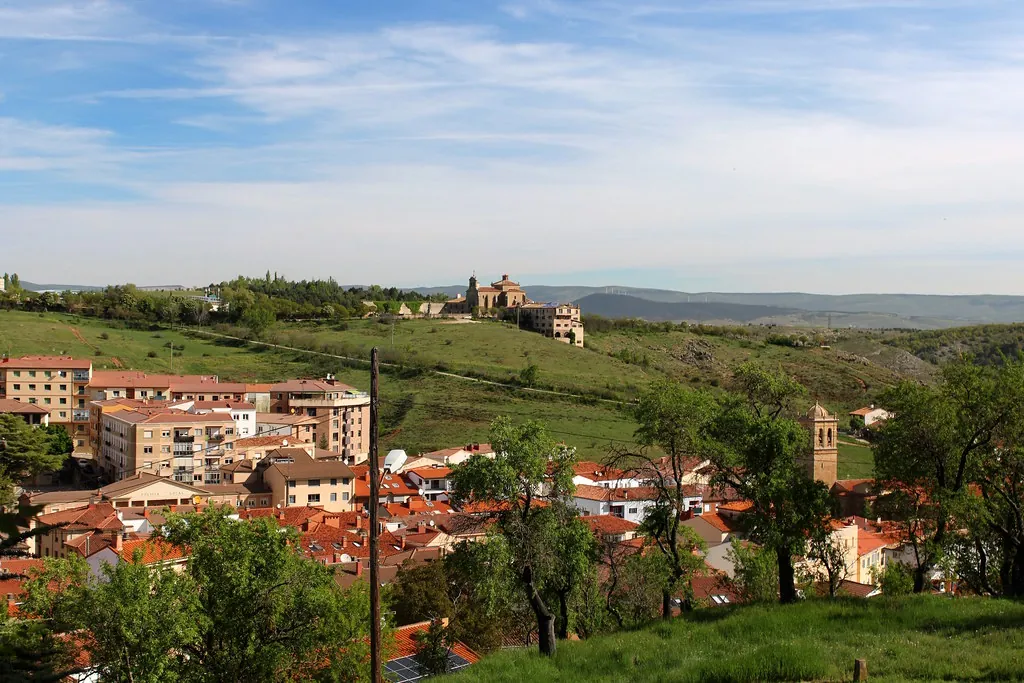
The church bell strikes noon and the only other sound is wheat rustling. Villangómez doesn't announce itself—it simply exists, twenty-three kilometres northeast of Burgos, where the provincial road narrows and the horizon widens into a textbook example of Spain's central plateau. No motorway signs point here. No coach parks wait at the edge. If you arrive, it's because you meant to, or because you missed the turn for somewhere else.
Stone, Adobe, and the Smell of Thyme on the Wind
The village grid is barely four streets deep. Houses the colour of dry biscuits shoulder up to one another, their lower courses in limestone, the upper ones in adobe brick that has been patched, replastered, left to flake, then patched again. Wooden doors—some centuries old, some 1970s replicas—sit slightly askew in their frames. A single bar, El Caserón, keeps erratic winter hours; in August it spills tables onto the dust because every returned grandson expects at least one cold beer on tap.
Start at the plaza, really just a widening in the road, where the parish church of San Andrés anchors the sky. The tower is twelfth-century Romanesque; the nave received a Gothic elongation after a fire in 1525; the porch is pure 1950s brick practicality. Push the heavy door at 11 a.m. on a weekday and it may be locked. Try again after the 12 p.m. mass and you'll catch the caretaker polishing brass. Inside, the stone is cool enough to make you wish you'd brought a jumper even in July. Look for the fragment of fresco above the side altar—Christ in a vermilion tunic that still clashes with the ochre wall.
From the church, wander south along Calle Real. Half-way down, a 1760 manor sports the remains of a coat of arms: two lions wearing crowns no one remembers. The house beside it belongs to a farmer who parks his combine harvester in the yard, its green paint faded to the exact shade of the adjoining olives. There is no museum ticket booth, noQR code to scan. The reward is simply the pleasure of noticing.
Walking the Unfenced Plain
Villangómez sits at 860 metres, high enough for the air to feel thin if you've just come from the coast. The surrounding fields belong to the cereal belt that keeps Spain in bread: wheat, barley, occasional oats. When the crop is high in late May, the colour is not the Instagram gold of Andalusian sunflowers but a more restrained, chalk-toned blond. After harvest, stubble turns silver and the soil cracks into pale hexagons. It is minimalist scenery, and it either calms you or sends you running for wooded hills.
Three footpaths leave the village. The easiest is the Ruta de los Cercados, a nine-kilometre loop that follows farm tracks to an abandoned stone sheep pen and returns along a drovers' lane lined with hawthorn. The way-marking consists of two tin discs nailed to fence posts; if you miss them, keep the telecom mast on your left and you'll find the track again. Spring brings larks and the odd hoopoe; September smells of crushed fennel and dust. There is zero shade—bring water, a hat, and realistic expectations of phone coverage.
Cyclists can link Villangómez with the signed Vía Verde de la Demanda, forty minutes away by car at Salas de los Infantes. From there, a disused railway tunnels through pine forests to Aranda de Duero, making a pleasant contrast to the treeless meseta.
What Arrives on the Table
Forget tasting menus. Local food is what you'd expect where winters hit –8 °C and pig fat is survival currency. In the village itself, options shrink to one bakery (opens 7 a.m., sells out by 10) and a pantry section in the tiny grocer where vacuum-packed morcilla de Burgos sits next to washing-up liquid. For a sit-down meal you'll need to drive seven kilometres to Villoruebo and the restaurant La Casona, where a three-course menú del día costs €14 and the lentils arrive in a clay bowl big enough to use as a helmet.
Back in Villangómez, ask at the bakery when the next batch of galletas de agua—crisp, anise-scented biscuits—will emerge. They are still made to the recipe that travelled with shepherds moving flocks to winter pastures; dunk them in strong coffee and you understand why no one bothered updating it.
Fiestas, Fireworks, and the Annual Population Spike
For eleven months the village counts maybe ninety permanent residents. During the fiestas patronales (around 15 August) the number rockets asreturnees pitch tents in allotments and grandparents lease spare rooms to second cousins. The programme is proudly low-tech: a foam party for children in the plaza, a paella popular cooked in a pan two metres wide, and a disco that finishes at 6 a.m. because the farmer DJ has day-job milking hours. Visitors are welcome—turn up, buy a €5 ticket for the paella, and someone will explain why the brass band keeps playing the same paso doble.
Smaller but equally telling is the Día de la Matanza in February, held in a modern barn on the outskirts. The actual slaughter is private, but the public part involves tasting freshly filled chorizos and watching white-coated neighbours judge whose morcilla has the right balance of rice and onion. If you're squeamish about where sausages come from, give it a miss; if you want to see rural food culture that predates supermarkets, it's worth an early start.
When to Come, and When to Stay Away
April–mid-June is the sweet spot: daytime temperatures hover around 20 °C, the wheat is green, and the wind still carries a trace of winter softness. September runs a close second, with stubble fields turning bronze and migrant bee-eaters passing overhead. Mid-July to mid-August is hot—34 °C is normal—and services operate on summer siesta logic: the bar may open at 6 p.m. or it may not. November–March is for the hardy. The cold is dry but relentless, and when the cierzo wind blows from the north you will understand why local stone walls are a metre thick. Snow is rare; horizontal hail is not.
Rain cancels walks instantly: clay paths become glue that clogs boot soles and vehicle tyres alike. On grey days, pivot to Burgos city (25 minutes by car) for the cathedral and a plate of lechazo roast lamb. Villangómez won't mind—it's used to people leaving after breakfast and returning for supper.
Logistics Without the Gloss
Getting here: No train line. From Burgos bus station, Linecar operates one daily service to Villangómez at 14:15, returning at 07:10 next morning (€3.40 each way, cash only). Hiring a car is simpler: take the A-1 motorway, exit at kilometre 245, and follow the CL-126 for 14 km; parking is wherever you see a gap wide enough for a Fiesta.
Staying: There is no hotel. The closest beds are in Melia Recoletos in Burgos or, for something closer, the rural apartments at Quintanaélez (10 km). Wild camping is tolerated if you ask at the town hall first, but facilities equal a cold tap in the plaza.
Money: Cards are useless. Bring cash even for coffee.
Leave before dark and you'll miss nothing—sunset here is a slow fade from white to pearl, without drama. Stay until the stars come out and you might understand why locals say the meseta is not empty; it's simply unwilling to shout. Villangómez offers no postcard moment, but it does something rarer: it lets you calibrate your own sense of scale against a landscape that has been cultivating patience since the Romans left.