Full Article
about Villanueva De Argano
Ocultar artículo Leer artículo completo
The church bell tolls at 875 metres above sea level, its sound carrying across wheat fields that stretch beyond the horizon. In Villanueva de Argaño, altitude isn't just a number—it's the village's defining characteristic, shaping everything from the sharp morning air to the crystalline night skies that attract amateur astronomers from Burgos city, twenty-five minutes away by car.
The Geometry of Flatness
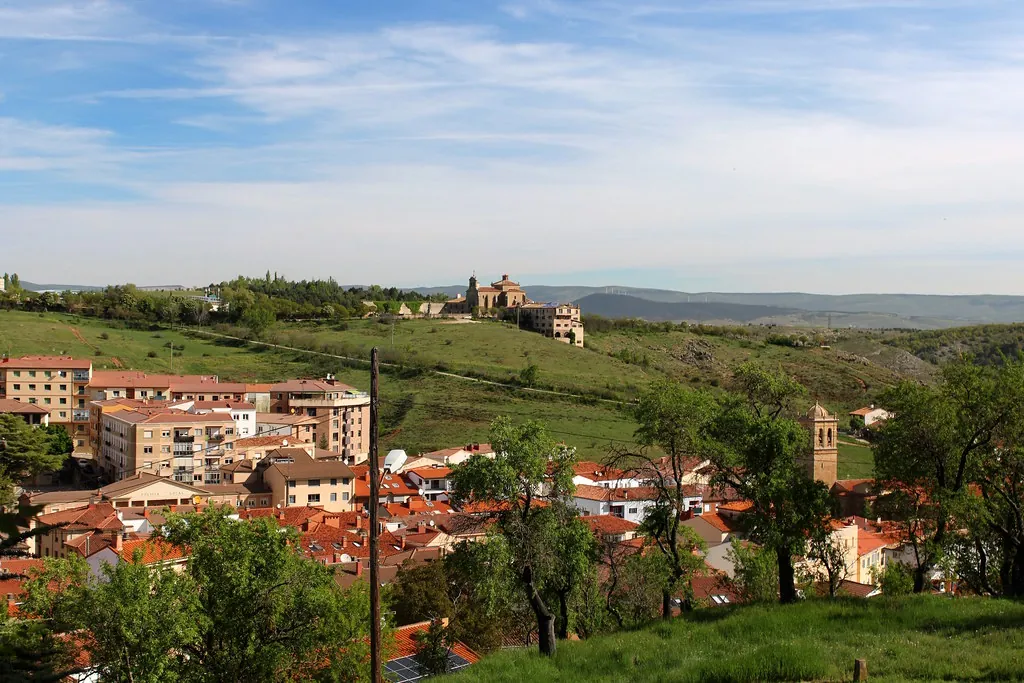
Standing at the village edge, the landscape performs an optical illusion. The land appears perfectly flat, yet Villanueva de Argaño sits noticeably higher than the provincial capital. This elevated position on the northern meseta creates microclimates that surprise first-time visitors. Summer mornings arrive cool and crisp, even when Burgos swelters. By midday, temperatures soar with the relentless Castilian sun, but evening brings rapid cooling that has locals reaching for jackets while coastal Spain still bakes.
The altitude manifests in subtle ways. Bread rises differently here. Wine tastes sharper. The municipal swimming pool—open only July through August—feels properly cold, not the lukewarm bathwater of lower elevations. Even conversation seems affected; voices carry further in the thin air, though with only 150 permanent residents, there aren't many conversations to overhear.
Winter transforms the village entirely. When snow falls on the meseta, Villanueva de Argaño becomes an island in a white sea. The access road, BU-901, closes at the slightest provocation. Locals stockpile supplies in October, knowing isolation could last days. The upside? Cross-country skiers from Valladolid arrive when conditions permit, following farm tracks between snow-laden wheat stubble.
Stone, Adobe, and the Art of Nothing Much
The parish church of San Pedro stands solid against the wind, its Romanesque base modified so many times that architectural historians struggle to date it accurately. Inside, the temperature remains constant year-round—cool in summer, bearable in winter. The building serves as informal community centre, meeting hall, and refuge from extreme weather that hits harder at altitude than in the valley below.
Domestic architecture follows pragmatic principles. Two-storey stone houses with adobe upper floors maximise heat retention. Wooden balconies face south, catching winter sun while summer's harsh rays hit the thicker northern walls. Doorways sit lower than British standards—centuries of shorter inhabitants adapting to available materials. Many properties stand empty, their owners having migrated to Burgos or Madrid decades ago. Restoration proceeds slowly; local builders charge €800 per square metre, materials included, but finding skilled workers proves challenging.
The village layout defies modern planning logic. Streets narrow toward the centre, creating wind tunnels that provide natural air conditioning. Public spaces—what few exist—cluster around the church and the single bar, closed Tuesdays and whenever owner Paco visits his daughter in Bilbao. The absence of tourist infrastructure isn't oversight but calculation. Villanueva de Argaño never sought visitors. Those who arrive come despite the village, not because of it.
Farming the Sky
Agriculture operates on an almost continental scale. Individual plots exceed fifty hectares, worked by combines that take hours to complete single circuits. The dominant crop rotates between wheat and barley, with sunflowers appearing in wetter years. At 875 metres, growing seasons shorten dramatically. Planting occurs later, harvesting earlier. Yields remain modest—three tonnes per hectare in good years, half that in drought seasons that strike every four or five years.
The village cooperative, founded 1958, owns most machinery. Membership costs €2,000 annually, payable in instalments. Non-members must transport equipment from Burgos, adding €200 per day to farming costs. This economic reality drives consolidation; smallholders sell or lease to larger operators, accelerating rural depopulation that began in the 1960s.
Sheep farming persists marginally. Flocks of 200-300 Churra breed graze stubble fields post-harvest, their milk travelling to a cheese factory in Melgar de Fernamental, forty kilometres north. The altitude produces particularly rich milk—higher fat content compensates for shorter lactation periods. Local cheese, when available, costs €12 per kilogramme, sold from farmhouse refrigerators to those who know to ask.
Practicalities for the Curious
Reaching Villanueva de Argaño requires commitment. ALSA buses connect Burgos to nearby Melgar de Fernamental twice daily, but the final twelve kilometres demand taxi (£25) or pre-arranged lift. Car hire from Burgos airport—mostly manual transmission—starts at £35 daily. Petrol stations close at 22:00; fill up before leaving the A-1 motorway.
Accommodation options remain limited. The village lacks hotels entirely. Two houses offer rural tourism under the Castilla y León quality scheme, charging €60-80 nightly for two-bedroom properties. Booking essential; neither appears on major platforms. Alternative: Melgar de Fernamental hosts Hotel Rural El Molino, converted watermill with rooms from €85, including breakfast featuring local morcilla.
Dining follows agricultural rhythms. Bar Restaurante El Mesón opens 07:00-16:00, closing evenings except Friday-Saturday. Menu del día—three courses with wine—costs €14. Specialities include cordero lechal (milk-fed lamb) roasted in wood ovens, and sopa de ajo (garlic soup) particularly welcome during cold months. Summer visitors should carry water; the village fountain dried up during 2022's drought, though normal service has resumed.
The Weight of Emptiness
Villanueva de Argaño challenges contemporary tourism's assumptions. There's no Instagram moment, no tick-box attraction, no souvenir shop flogging fridge magnets. The village offers instead something increasingly rare: genuine silence, unpolluted night skies revealing the Milky Way in all its glory, and conversations with people whose families have lived this altitude, this isolation, this particular relationship with the land for longer than anyone can document.
The altitude that makes life difficult—winter isolation, short growing seasons, harsh climate—also preserves something precious. When the wind drops and the wheat fields stretch golden toward every compass point, visitors understand they've encountered not a destination but a way of being. Whether that's worth the journey depends entirely on what you're seeking. Come prepared for thin air, thin choices, and the particular clarity that altitude brings to both landscape and thought.