Full Article
about Villaquiran De Los Infantes
Ocultar artículo Leer artículo completo
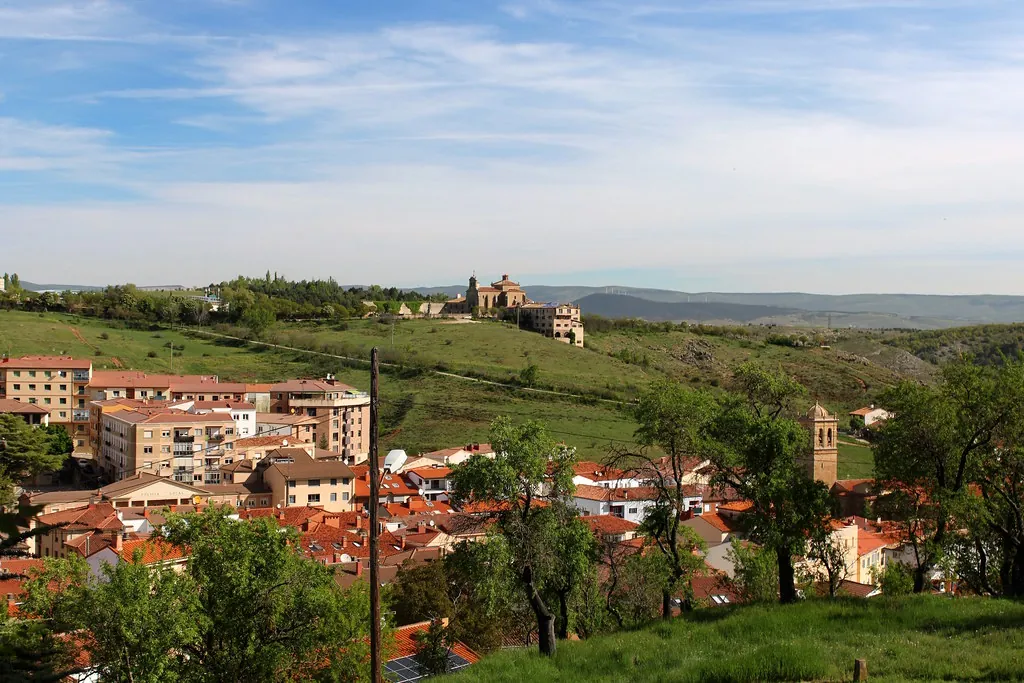
The church tower rises first, visible from three kilometres out across the pancake-flat cereal plains of northern Castile. Nothing else interrupts the horizon except the occasional poplar and the slow drift of storks riding thermals. Then come the russet roofs, the adobe walls the colour of burnt biscuit, and finally the single main street that is Villaquirán de los Infantes—population five hundred, give or take the odd grandchild who has emigrated to Burgos or Madrid.
Drive slowly. The cobbled lanes were laid for mules, not mirrors. On a quiet afternoon you can hear the click of the town clock echoing off stone porticoes while a tractor idles outside the only bar, its driver inside nursing a caña and a plate of morcilla that costs €2.40. The barman will not speak English; he will not need to. Pointing works. So does “¡otra!” when the first beer disappears.
A village that refuses to perform
There is no ticket office, no interpretive centre, no multilingual audioguide. What you get instead is the real, slightly dented Spain that package brochures promise but rarely deliver. Houses are still whitewashed with cal, not boutique grey. Laundry hangs from wrought-iron balconies; at dusk old men shuffle to the bench outside the pharmacy to discuss rainfall and football in the same breath. The effect is oddly grounding. After the themed plazas of Seville or the selfie scrum in Segovia, Villaquirán’s refusal to perform for visitors feels almost radical.
The single monument, if you insist on ticking boxes, is the parish church of San Juan Bautista. Parts of the nave date to the twelfth century, though most of what you see is later, patched and repatched as stone became available. Step inside and the air smells of candle wax and centuries-old incense. The retablo is provincial Baroque, gilded to within an inch of its life, but look left and you will spot a dusty Union Jack laid flat in a side chapel—left by a Lancashire regiment that paused here in 1937 during the Civil War. No plaque explains it; the sacristan simply shrugs and says, “Cosas de la guerra.” History in Villaquirán is conversational, not curated.
Walking nowhere in particular
The real itinerary is the village itself plus the grid of farm tracks that radiate into wheat and barley. Set out early, when dew silver-plates the roadside thistles, and you can complete a nine-kilometre loop north-west to the abandoned hamlet of Revenga in just over two hours. Storks nest on the ruined mill; a boot-printed path continues to a ridge where the Duero basin suddenly drops away. Mobile reception dies halfway up—Vodafone UK anyway—so download the route on Wi-Fi before leaving. The reward is a 180-degree sky so big it makes the Cambridgeshire fens feel cluttered.
Spring is the kindest season: green shoots, mild afternoons, nights cold enough to justify the village’s open-fire cooking. By July the palette turns to bronze and the thermometer can flirt with 38 °C; siesta then becomes less tradition than survival. Autumn brings stubble fields the colour of pale ale and the smell of freshly pressed grapes drifting over from the Ribera del Duero bodegas twenty minutes east. Winter is monochrome—ochre earth, graphite sky—and the bars haul out ancient braseros so locals can sit with feet under a blanket of glowing coals. Every season has its wind, a constant dry breeze that scours the plain and carries the distant bark of sheepdogs.
How to eat without a menu del día
There is no restaurant as such, only the bar on Plaza de España and a social club that opens for weddings and funerals. Arrive at 14:00 hoping for lunch and you will be told the kitchen closed at 13:30; return after 21:00 and you will find half the village demolishing plates of lechazo—milk-fed lamb slow-roasted in a wood-fired oven until the skin crackles like pork. A half-rack feeds two; expect to pay €22-25 per person including a bottle of local crianza that tastes of blackberry and cedar for under €12. Vegetarians can usually coax out setas a la plancha (wild mushrooms) in season or a judión bean stew enriched with pimentón. Dessert options are flan or flan; order coffee and you will get a glass of complimentary liqueur the colour of engine oil—patxaran, sloe-based, an acquired taste.
Stocking up requires forward planning. The tiny supermarket bolts its doors at 14:00 and does not reopen until 17:00; on Sundays it is lottery whether anybody turns up at all. Bread arrives in a white van at 10:00 sharp—queue early or go without. There is no cash machine; the nearest is eighteen kilometres away in Aranda de Duero underneath the N-1 service station. Fill the tank while you are there: diesel is usually four cents cheaper than on the autopista, and you will not see another garage until Burgos.
When the village throws a party
Fiestas patronales shift date slightly each year but generally land on the second weekend of August. The population quadruples as grandchildren, great-grandchildren and the merely curious descend from Valladolid, Bilbao, even Munich. A sound system appears in the square, pumping 1980s Spanish pop until 05:00; locals pretend to complain while dancing barefoot on the cobbles. A brass band—more enthusiasm than tuning—leaves the church at noon on Sunday, processing behind a statue of the Virgin decked in flowers that wilt within minutes under the Castilian sun. Visitors are welcome, though nobody will explain what is happening; the trick is to stand where everyone else stands and move when they move.
Holy Week is quieter: a single drum corps, women in black lace veils, the scent of beeswax and orange blossom drifting through narrow streets. Temperatures can dip close to freezing after dark; bring a coat. December counters the cold with pig-slaughter gastronomy. If you are offered a plate of “prueba”—fresh pork liver flash-fried with garlic and bay—say yes. It costs nothing and tastes like the farmyard smells on a warm day, in the best possible way.
The practical bit, woven in
Getting here without a car is possible but joyless. Ryanair flies Stansted to Valladolid twice weekly; from the airport it is 75 minutes on the A-11 and CL-101, the last twenty across arrow-straight wheat roads that test concentration after an early flight. Car hire desks close for siesta too, so book ahead and allow buffer time. Alternatives include the Bilbao route—more flights, two-hour drive—or the high-speed train to Burgos followed by a 45-minute taxi at €70. Once arrived, park on the edge of town; the interior streets are a mirror-scraping maze.
Accommodation is limited to three guest rooms above the bar and a small casa rural sleeping six. Expect Wi-Fi that copes with email but wilts under Netflix, beds firmer than British backs consider polite, and a dawn chorus not of birds but of the baker’s van reversing. Prices run €45-60 per double including breakfast—strong coffee, churros bought in frozen then reheated, and a glass of fresh orange juice if the delivery truck made it up the N-1 on time.
A parting note without the hard sell
Villaquirán will not change your life. You will leave with the same suitcase, the same faults, the same phone full of photos that look oddly like the ones everybody else takes: the tower against a rinsed-blue sky, a stork on a telegraph pole, an old man in a flat cap staring down the lens. What the village offers instead is a calibration device—a reminder that somewhere between the wheat and the wind, daily life continues at a pace set by seasons rather than algorithms. Visit, walk, eat, listen. Then drive away slowly; the mirrors matter.