Full Article
about Villar del Ala
Church of the Assumption
Ocultar artículo Leer artículo completo
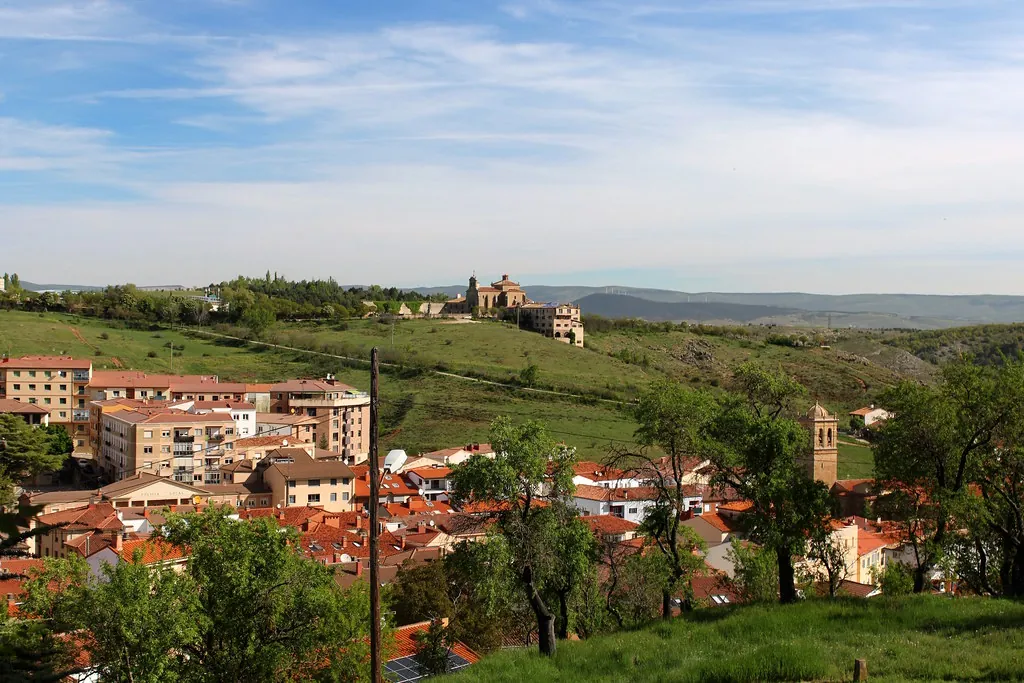
The thermometer reads eight degrees cooler than Soria city, thirty-five kilometres away. At 1,200 metres above sea level, Villar del Ala’s evening air carries the scent of pine resin and sheep bells, not tapas bars. Half a hundred residents remain year-round, enough to fill the stone church on Sunday and leave the rest of the narrow lanes echoing. This is Castilla’s high plateau stripped of marketing gloss: no gift shops, no boutique hotels, just a grid of thick-walled houses built to outlast January’s minus twelve.
Stone, Wind and Winter Wheat
Architecture here is defensive by nature. Granite blocks the colour of storm clouds rise straight from the earth, windows the size of shoe-boxes, roofs weighted with slabs that have shrugged off Atlantic storms since the 1700s. The church tower, Romanesque in its bones but patched in every century since, keeps watch over wheat fields that turn metallic gold in late June. Tractors outnumber cars three to one; number plates from Soria province are still considered “foreign”.
Walk twenty minutes south-west along the unpaved Camino de la Dehesa and the village shrinks to a charcoal smudge. The path climbs gently to 1,350 m where Scottish-style dry-stone walls divide cereal plots from sheep pasture. Red kites circle overhead, easily mistaken for buzzards until they tilt and the forked tail gives them away. Mobile signal dies at the first bend; download the IGN Spain map beforehand or take the old-fashioned precaution of remembering where you came from.
A Menu that Follows the Frost
Villar del Ala itself offers no cafés, no Sunday roast, not even a bakery. The last grocer closed when the proprietor retired in 2018. Instead, shopping is done fifteen kilometres away in Ágreda: the Condat supermarket sells local Morcilla de Burgos for €3.20 a ring, and the Saturday market brings in goat’s cheese from the Urbión foothills at €14 a kilo. If you are staying in one of the three self-catering cottages, the owners (all cousins) will deliver a box of seasonal vegetables for €12: tomatoes that taste of sun, peppers thin-skinned enough to char under a grill, and potatoes still flecked with red earth.
Eating out means driving. In nearby Ólvega, Asador Casa Paco grills lechazo – milk-fed lamb – over holm-oak embers until the skin crackles like parchment. A quarter portion feeds two Brits comfortably and costs €19. Vegetarians should head to Berlanga de Duero where Tinto y Oro serves a roast piquillo-pepper stuffed with mushroom rice for €13; book ahead, they only prepare twelve portions a day.
When the Road Turns White
Access changes with the season. From May to October the A-15 and the regional SO-20 are kept clear; the final seven kilometres from Ólvega to Villar del Ala are single-track but paved. Between December and March the same stretch is ploughed only after twenty centimetres have fallen, and the tarmac ices over by dusk. Chains are not advice, they are admission. Spring brings the most reliable weather: migrant birds return by mid-April, wild thyme flowers along the verges, and the risk of a freak snow dump drops below ten percent. Autumn is cheaper—cottages fall from €90 to €65 a night once the cereal harvest ends—and the surrounding poplars flare yellow against dark pine, but September storms can arrive with cinematic speed.
Public transport is academic. One weekday bus leaves Soria at 07:15, reaches Ólvega at 08:05, and turns straight back. A taxi for the remaining distance costs €22 if you can persuade the driver from his cortado. Hiring a car at Madrid airport (two hours on the A-2) remains the least painful option; fill the tank before the provincial border, service stations thin out dramatically afterwards.
Walking Without Way-Marks
Forget the idea of signposted circuits. What Villar del Ala offers is permission to wander: head north across the cereal plateau and you will reach the abandoned hamlet of Aldealafuente in forty minutes, roofless houses now used as sheep shelters. Continue another hour and the land folds into the Cañón del Río Alhama, limestone cliffs dropping 200 m, griffon vultures riding thermals at eye level. Total distance from door to river and back: 12 km, 350 m ascent, zero entrance fees.
Maps in Spanish call any path a “sendero”, but locally the term is “carril” – a farm track wide enough for a tractor. If a gate blocks the way, leave it exactly as you found it; the farmer who owns it will know every walker by the prints in the mud. Water is scarce beyond the village; carry a litre per person in summer, more if you plan to picnic among the holm oaks where shade is patchy and the Iberian sun still bites at 1,000 m.
Fiestas that Rely on WhatsApp
The patronal fiesta happens on the second weekend of August, dates confirmed only in June depending on who is coming back from Zaragoza or Madrid. Events centre on the plaza: a mass, a communal paella cooked over pine branches, and a late-night dance powered by two speakers and a laptop. Visitors are welcome but there are no wristbands, no programmes, just an assumption that you will bring your own chair and a bottle to share. Fireworks are modest—six rockets fired from a beer crate—yet the echo against stone walls feels suitably medieval.
Winter brings the opposite: the Fiesta de la Matanza in February, now observed more than practised. One family still slaughters two pigs, inviting neighbours to help make chorizo and morcilla in a garage warmed by a wood-burner. Tourists sometimes ask to watch; permission is granted if you arrive bearing a contribution—two bottles of Rioja usually suffices—and don’t flinch when the work starts at dawn.
Leaving Without the Gift-Shop Moment
By nine o’clock most evenings the village is dark enough to read the Milky Way. Light pollution registers zero on the Bortle scale; bring a coat even in July. What you will not find is a souvenir stall, a guided tour, or a craft workshop. Villar del Ala survives because it refuses to impersonate anything other than a working grain-and-sheep settlement that happens to rent out spare houses. Take it or leave it, the place seems to say, just remember to shut the gate on your way out.