Full Article
about Villariezo
Ocultar artículo Leer artículo completo
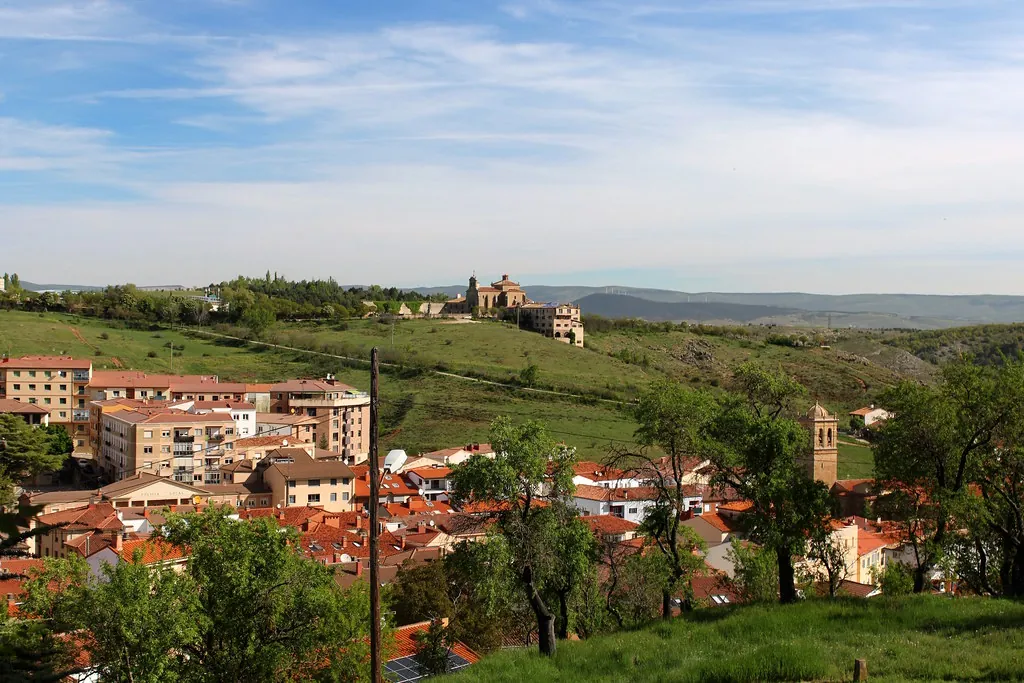
The church bell strikes noon and a tractor, not traffic, rumbles past the stone houses. Somewhere behind an iron gate, a radio murmurs the day's grain prices. In Villariezo, twelve kilometres south-east of Burgos, the loudest sound is often the wind combing through wheat.
This is cereal country: a slow swell of ochre fields that starts at the village edge and rolls east until the sky takes over. There is no dramatic sierra on the horizon, no river gorge, no Instagram-ready mirador. Instead you get space, sky and a working village whose 500 inhabitants still organise the week around the livestock market in the capital and the colour of the stubble.
Stone, Adobe and the Smell of Bread at Dawn
Villariezo's single main street, Calle Real, runs for 400 metres and finishes at the parish church of San Andrés. The tower is 16th-century; the nave was rebuilt after a fire in 1897. Step inside and the air is cool, faintly incense-laden, the floor worn into shallow ruts by centuries of work boots. Outside, the stone is the same honey-grey you will see in Burgos cathedral, but here it is unpolished, lichen-spotted, patched with iron staples where the frost has nibbled.
The houses are low, one or two storeys, many still roofed with curved terracotta tiles handmade in nearby Villagonzalo. Adobe walls bulge gently; wooden balconies sag but hold. Some doorways retain the original family names carved in serifed capitals—Hnos. Santos, M. A. Castrillo, 1924. Restoration grants have started to appear, yet half the village is still lived-in rather than curated. A front garden contains last year's seed drill, a pile of colour-faded seed sacks, and a ginger cat that refuses to be photographed.
There is no souvenir shop, no guided walk, no brown tourist panel. The nearest bar, La Cantina, opens at seven for coffee and churros, closes at three, reopens at eight for beers and a game of mus. A menu del día costs €12 and might include roast suckling lamb, local morcilla and a half-bottle of Ribera del Duero. If the owner, Jesús, is in a good mood he will bring out a plate of his mother's ajoarriero, salt-cod pounded with garlic and paprika, once the portable lunch of muleteers on the drove roads to León.
Field Paths and the Pleasure of Getting Nowhere
Walk 200 metres past the last house and the tarmac gives way to a wide farm track. The land is so flat you can see the combine harvesters moving like slow beetles three kilometres out. In April the wheat is ankle-high, emerald, edged with crimson poppies; by mid-July it turns butter-gold and the air smells of straw dust and warm pine resin from the scattered pinares planted as windbreaks.
Signposting is minimal—an occasional yellow splash on a fence post—so navigation is old-school: keep the church tower over your left shoulder, aim for the pylon, turn at the stone pile. A circular shuffle of 6 km brings you to the abandoned casilla (a 19th-century field shelter) where shepherds once stored hay and brandy. The roof has gone, but the walls make a passable windbreak for a sandwich. Skylarks rise and fall; a Montagu's harrier quarters the field, wings kinked like a broken clothes-peg.
Cyclists find the same tracks ideal for gravel bikes: hard-packed, virtually traffic-free, gently rolling. Carry water—once you leave the village the only fountain is at the agricultural co-op in neighbouring Cardeñajimeno, 4 km north, and it is often padlocked.
When the Village Remembers Itself
The population doubles on the first weekend of August when the fiestas de San Andrés get underway. A sound system appears in the plaza, children chase foam from a hired cannon, and the smell of chuletón—cowboy-sized beef chops—drifts from roadside barbecues. Saturday night ends with a disco under the plane trees that finishes at six, just in time for the baker to light his ovens. If you want quiet, come the week before; if you want to see how a Castilian village negotiates the 21st century, arrive on Friday and bring earplugs.
The rest of the year the calendar is agricultural. In late September tractors towing grain trailers queue outside the cooperative while the sky fills with red kites waiting for spilled barley. January brings the matanza: family pigs slaughtered and converted into chorizos, salchichones and the prized manteca colorá—lard spiced with pimentón that smears country toast the colour of a British pillar box.
Getting There, Staying There, Leaving Again
Burgos is the nearest hub. From the UK, Ryanair flies direct from London Stansted; the flight is just under two hours. A taxi from the airport to Villariezo costs €25–30 and can be booked in advance—there is no rank. Alternatively, catch the hourly Linecar bus (line 215) from Burgos bus station; the journey takes 25 minutes and costs €1.65. Buses stop at the entrance to the village, beside the cement bus shelter painted with a faded advert for 1980s brandy.
Accommodation is limited. There is one rural guest house, Casa de la Tía Herminia, three double rooms with cast-iron beds, shared kitchen, €55 a night including breakfast of toasted sobaos and coffee strong enough to stain porcelain. The nearest hotel is back in Burgos, a 15-minute drive. Many visitors base themselves in the city and visit Villariezo as a half-day counterpoint to cathedral tourism—though staying overnight lets you hear the nightjar that calls from the waste ground behind the football pitch at dusk.
Spring and autumn are kindest: temperatures sit in the high teens, the paths firm underfoot, the light soft enough for photography without filters. Summer is feasible if you start walking by eight; by two the thermometer can nudge 36 °C and shade is as rare as a queue for the Prado. Winter is bright, cold and often windy—think East Anglia with more sun. Daylight is short, but the stubble fields take on a pewter sheen that painters travel miles to capture.
The Honest Verdict
Villariezo will not change your life. You will leave without buying a fridge magnet, without having climbed a cliff, without a single selfie in front of a turquoise cove. What you get instead is a calibrated sense of scale: how big the sky is when there is nothing much underneath it, how slowly time moves when the loudest machine is a distant threshing drum. Come for a morning and you tick a box; stay for two days and you start measuring your own routines against the village timetable—coffee at seven, siesta at three, stars by ten. It is not picturesque; it is simply still there, which in rural Spain these days is achievement enough.