Full Article
about Villatuelda
Ocultar artículo Leer artículo completo
The Church Bell That Rings at 800 Metres
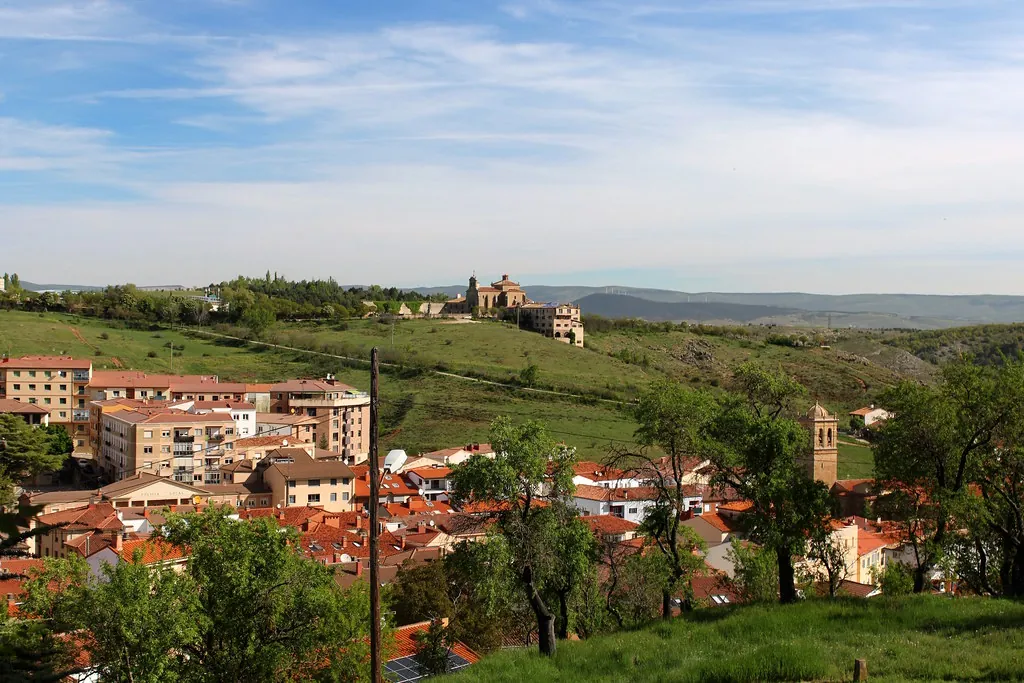
The first thing you notice is the thinness of the air. At 800 metres above sea level, Villatuelda sits higher than Ben Nevis's base camp, yet the village appears to float on an ocean of wheat rather than cling to any mountainside. The stone church tower marks this altitude with medieval indifference—its bell has rung across these Castilian plains for centuries, calling fewer than a hundred souls to worship in a space built for many more.
This is Spain's agricultural heartland stripped of pretence. No souvenir shops. No interpretive centres. Just a grid of stone houses arranged around a church, surrounded by cereal fields that shift from emerald to gold with the seasons. The village's name appears on few maps, and when it does, the typeface is modest, almost apologetic.
Walking Through Layers of Stone and Silence
The streets reveal themselves slowly. Narrow lanes paved with worn granite slabs connect houses built from the same ochre stone, their facades weathered to the colour of dry earth. Look closely and you'll spot Romanesque fragments—a carved capital here, a worn gargoyle there—incorporated into later rebuildings like architectural afterthoughts.
Behind the main street, accessible only on foot, lie the village's most honest spaces. Corralones—communal couryards—where chickens once scratched and vegetables grew against south-facing walls. Many remain private, their wooden gates closed to casual visitors, but enough stand ajar to glimpse the self-sufficient life that sustained families through harsh winters when these plains turned white with frost.
The underground bodegas deserve seeking out. Carved directly into the bedrock, these cellars maintained constant temperatures for wine storage long before electricity arrived in 1967. Some still function, their heavy wooden doors opening onto stone staircases that descend into earth-scented darkness. Others stand abandoned, their entrances fenced off, home to nesting birds and the occasional fox.
What Grows Between Earth and Sky
Spring arrives late at this altitude. While southern Spain enjoys almond blossoms in February, Villatuelda's fields lie dormant until April, when green shoots finally pierce the iron-rich soil. The agricultural calendar dictates everything here—when to burn stubble, when to plant, when the village's population briefly swells with seasonal workers who arrive in white vans at dawn.
Summer brings its own rhythm. Temperatures can reach 35°C, but the altitude provides respite that coastal visitors find surprising. Evenings cool quickly; locals emerge at 9 pm for paseo, walking the village's single circuit while discussing rainfall, wheat prices, and whose grandson has found work in Burgos or Valladolid.
The surrounding tracks—barely wide enough for a tractor—offer walking opportunities that require no permits or parking fees. Follow the camino northeast for two kilometres and you'll reach an abandoned threshing floor, its stone circle intact, where grain was once separated from chaff by mules walking in endless circles. Southwest leads toward a copse of holm oaks, the only trees for miles, where booted eagles nest and where locals still gather mushrooms after autumn rains.
Eating What the Land Provides
Villatuelda's gastronomy reflects its geography: substantial, straightforward, designed to fuel agricultural labour. The village's single bar opens at 7 am for workers' breakfasts—strong coffee with milk, toasted bread rubbed with tomato and garlic, perhaps a slice of local chorizo if the matanza happened recently.
Lunch remains the day's main meal. The menu del día, served weekdays at €12, might feature cordero lechal (milk-fed lamb) roasted in a wood-fired oven whose temperature is judged by hand, not thermometer. Winter brings cocido, a chickpea stew thick enough to stand a spoon in, flavoured with morcilla (blood sausage) made from family recipes that predate refrigeration.
The village's small shop stocks essentials: flour for torta de arroz (a local rice cake), dried beans for winter stews, and wine from cooperative bodegas in neighbouring villages. Fresh vegetables arrive twice weekly from regional markets—anything more exotic than peppers or tomatoes requires a 40-kilometre drive to Aranda de Duero.
When the Village Remembers Its Voice
August transforms Villatuelda. The fiestas patronales bring former residents back from Bilbao, Barcelona, even London, swelling numbers to perhaps 300. The church bell rings more frequently, brass bands parade through streets too narrow for their formations, and the plaza fills with tables where families share botellas of wine and stories of emigration.
The evening verbena—outdoor dancing—starts late and finishes later. Pensioners who spend winters by solitary fireplaces suddenly demonstrate salsa steps learned in their youth. Teenagers who usually escape to Burgos at weekends appear in pressed shirts, eyeing cousins from the city with mixture of curiosity and suspicion. For three nights, the village remembers what it sounded like when population justified its infrastructure.
Then Monday arrives. Cars loaded with city children depart before dawn. The bakery reduces output. The bar owner stacks chairs at 11 pm instead of 3 am. Villatuelda settles back into its quiet altitude, where the only sounds are church bells, wheat rustling against stone walls, and occasional tractors heading to fields that stretch toward horizons made hazy by heat or frost, depending on the season.
Getting There, Getting By
No trains serve Villatuelda. The nearest railway station lies 35 kilometres away in Aranda de Duero, itself two hours from Madrid by regional train. From Aranda, a winding comarcal road climbs gently through wheat fields and past villages that appear as stone islands in a golden sea. Car hire essential—public buses run twice daily, timed for local workers rather than visitors.
Accommodation options remain limited. The village lacks hotels, though two houses offer rooms to seasonal workers and the occasional birder seeking steppe species. Book through the ayuntamiento office, open Tuesday and Thursday mornings. Alternatively, Aranda provides proper hotels with heating that functions properly—night temperatures drop sharply even in July.
Visit in May when storks nest on church roofs and fields glow impossibly green. Or come October for the wine harvest and mushroom season. Avoid August unless you crave fiesta atmosphere; avoid January when Atlantic storms turn plains to mud and the single road becomes treacherous. Bring walking boots—the best experiences happen beyond the village boundaries, where tracks disappear into wheat and where the only company might be a booted eagle circling overhead, scanning the same landscape that villagers have watched for a thousand years.