Full Article
about Villaverde Del Monte
Ocultar artículo Leer artículo completo
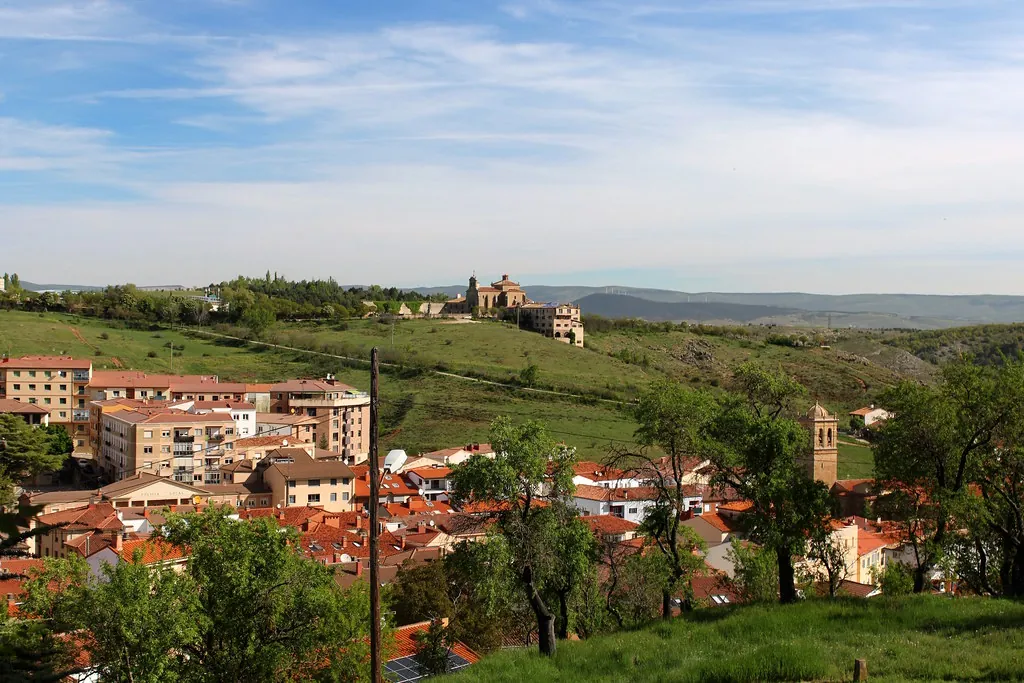
The church bell strikes noon, yet nobody hurries. An elderly man leans against a stone wall, watching his grandson kick a football through dust that hasn't seen rain in weeks. This is Villaverde del Monte, where the Meseta's vast emptiness meets the Montes de Oca, and where modern Spain hasn't quite managed to overwrite what came before.
At 900 metres above sea level, this Burgos village of 500 souls operates on its own rhythm. The altitude matters more than you'd think. Summer mornings start crisp, even when afternoon temperatures push past thirty degrees. Winter arrives early and stays late—snow isn't unusual from October through April, and the road from Burgos city can close during heavy falls. The locals, many whose families have weathered these conditions for generations, barely notice.
The village spreads along a ridge, its stone houses huddled against Atlantic winds that sweep across the plateau. Traditional building methods weren't chosen for aesthetics. Thick adobe walls regulate temperature; small windows face south when possible. You can spot the newer builds immediately—larger windows, concrete blocks, that distinctive Spanish white that looks wrong against the ochre landscape. The old houses wear their age with a kind of dignity that money can't replicate.
Walking through Villaverde del Monte takes twenty minutes if you're dawdling. The main street, Calle Real, connects the church at one end to the cemetery at the other—a practical arrangement that saved transport costs when carrying coffins meant manpower rather than horsepower. Between these two anchors, houses cluster along lanes that follow livestock paths rather than any urban planning manual. Gates hang askew on medieval hinges. Adobe walls bulge like well-fed cattle. Everything speaks of maintenance done when necessary, not when fashionable.
The Iglesia de San Andrés dominates the skyline, its square tower visible from kilometres away across wheat fields that shimmer gold in June. Built piecemeal between the twelfth and eighteenth centuries, it shows the architectural equivalent of geological layers. Romanesque foundations support Gothic additions, topped with a Baroque tower that serves as the village's lighthouse. Inside, the atmosphere carries centuries of incense and candle wax. The altarpiece, gilded during the village's brief sixteenth-century prosperity, still dazzles when sunlight hits it through the southern windows at the right angle.
But Villaverde del Monte's real treasure lies outside its stone walls. The surrounding countryside rolls away in every direction, a patchwork of cereal fields and oak groves that changes personality with the seasons. Spring brings green wheat and nesting storks. Summer turns everything golden except the irrigated vegetable plots that survive around the village spring. Autumn transforms the landscape into a Rembrandt painting—umber, sienna, gold. Winter strips everything back to essentials: brown earth, black tree silhouettes, white frost that lingers in north-facing hollows until midday.
The GR-88 long-distance path passes within two kilometres of the village, though you'd never know it. This 500-kilometre route connecting Santo Domingo de Silos to Santiago de Compostela attracts serious hikers during May and September. Most bypass Villaverde del Monte entirely, following waymarks across empty countryside to the next designated stopping point. Their loss. The village makes an excellent base for shorter circular walks that reveal what the guidebooks miss.
Try the eight-kilometre loop south towards Valdelateja. The path follows an ancient drove road between dry stone walls where lizards sun themselves. You'll pass abandoned threshing floors, their stone circles slowly being reclaimed by wildflowers. The views stretch north towards the Cantabrian mountains, south across the Duero valley. On clear days, you can spot the distinctive profile of the Picos de Europa, 150 kilometres away. Take water—there's none en route, and summer temperatures can hit 35°C by eleven o'clock.
Birdwatchers should bring binoculars. The steppe-like habitat supports species that have vanished from most of Europe. Great bustards occasionally feed in the stubble fields. Black-bellied sandgrouse nest in the fallow land. You'll definitely see red kites—their distinctive forked tails give them away as they ride thermals above the village. Dawn and dusk provide the best sightings, when raptors hunt and smaller birds feed before roosting.
Food here follows the seasons with agricultural precision. Winter means cocido, the hearty stew that uses every part of the pig slaughtered in December. Spring brings wild asparagus and young lamb. Summer offers tomatoes that taste like tomatoes should, plus peppers roasted over vine cuttings. Autumn delivers wild mushrooms and game birds. The village shop stocks basics—bread arrives daily from a bakery in Salas de los Infantes, twelve kilometres away. For anything fancier, you'll need to drive to Aranda de Duero, forty minutes south on the A-1.
Accommodation options remain limited, which keeps the village honest. Casa Rural El Portalón offers three rooms in a restored seventeenth-century house. The stone floors slope dramatically, the Wi-Fi barely reaches the bedrooms, and breakfast features eggs from chickens you can hear clucking in the neighbour's yard. It costs €60 per night, cash only, and Maria the owner speaks exactly enough English to explain checkout time. Book direct—she doesn't trust booking websites and raises prices for anyone who tries to use them.
Getting here requires commitment. The nearest railway station lies 45 kilometres away in Burgos, served by slow trains from Madrid that take two and a half hours. Car rental from Burgos airport costs around €40 daily, but check the small print—many companies charge extra for travelling on unpaved roads, which you'll definitely encounter. Buses run twice daily except Sundays, connecting Villaverde del Monte to Aranda de Duero. The journey takes an hour through landscapes that make the Scottish Highlands feel crowded.
The village's fiesta happens during the third weekend of August. If you're expecting sophisticated entertainment, stay away. The highlight involves releasing heifers through the streets at seven in the morning, followed by communal paella eaten at plastic tables in the square. Everyone attends, from babies to great-grandparents. Music blares from speakers that should have been retired decades ago. Wine flows freely, though quality varies dramatically depending on who's donated what. Tourists are welcomed with polite curiosity, then largely ignored—this celebration belongs to the villagers, and they're not changing it for anyone.
That's Villaverde del Monte's appeal, really. It doesn't need you to visit. Life continues regardless, shaped by seasons and tradition rather than TripAdvisor reviews. Come if you want to understand how most of Spain lived until very recently. Don't come expecting transformation or enlightenment. The village will still be here when you've gone, its bells marking time that moves to rhythms older than tourism itself.