Full Article
about Villazopeque
Ocultar artículo Leer artículo completo
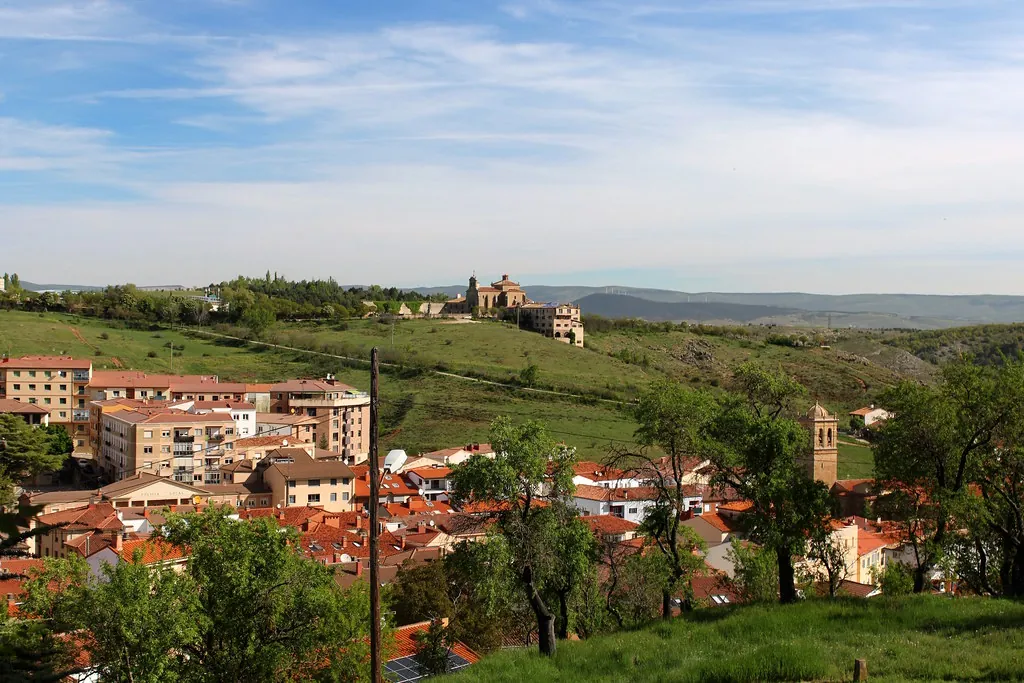
The church bell strikes eleven and the only other sound is a combine harvester grumbling somewhere beyond the stone houses. Villazopeque doesn’t do rushing. Twenty minutes west of Burgos city, the village sits at 870 m on Spain’s northern plateau, high enough for the air to carry a sharp edge even in May, yet low enough for the horizon to stretch unbroken in every direction. Wheat, barley and the occasional stripe of luminous beet fill the view; the sky feels oversized, as if someone has zoomed out the landscape settings.
A grid of adobe and silence
Roughly five streets run north-south, four east-west. That is the entire historic centre. Adobe walls the colour of toasted bread rise straight from the pavement; timber doors are painted the same oxidised green you see on tractors. Nothing is prettified for passing traffic, because almost none passes. The parish church of San Andrés anchors the western edge, its tower a handy compass if you wander onto the dirt tracks that ribbon the surrounding fields. Inside, the retablo is sixteenth-century Flemish in style, gilded to the point of gaudiness, yet the nave smells of floor polish and candle smoke rather than museum dust. Entry is free; the door is generally open between 09:00 and 19:00 unless the priest has locked up for lunch.
Walk a block east and you reach the tiny Plaza de la Constitución. Two bench seats, one locust tree, no bar. That absence surprises first-time visitors who assume every Spanish square comes with a terrace and a thimble of vermouth. Instead, locals buy beer from the family-run grocer on Calle Mayor and drink it at home. The shop stocks tinned tuna, UHT milk, and a surprisingly good selection of local wheels of queso de Burgos. Expect to pay €4–5 for a half-kilo portion, still milky and slightly sharp.
What “sightseeing” actually means here
Villazopeque has no ticketed attractions. The modest list of things to “see” can be walked in forty minutes, but that misses the point. The village is a base for noticing details: storks nesting on a telegraph pole, the way mud-mortared walls bulge like loaves proving, or how the afternoon light turns the cereal fields from gold to copper. Photographers should bring a long lens; the flat terrain means bustards, stone-curlews and other steppe birds feed within 200 m of the tracks. May and late September give the best colour contrast without the haze of midsummer.
If you need a structured walk, a 7 km loop heads south-east along the Camino de Roa, past an abandoned grain co-op and back along a drovers’ lane edged with wild fennel. The route is way-marked by a single wooden post at the village edge; after that you follow tractor ruts and the ridge of the Sierra de la Demanda on the horizon. Comfortable shoes are sufficient – boots are overkill – but take water; shade is non-existent.
Roast lamb and other Sunday rituals
Food is Castilian farmhouse: roasted rather than grilled, filling rather than delicate. The only public restaurant, B&P on Calle del Medio, opens Friday evening, Saturday and Sunday. A full asado de cordero lechal (milk-fed lamb) needs six people and 24 hours’ notice; most visitors order the quarter portion (€16) which still covers the plate. Starters might be judiones (large white beans) stewed with morcilla de Burgos, the local blood sausage that contains rice rather than onion and tastes lighter than its Asturian cousin. House wine is a young tempranillo from Aranda; €8 buys a half-litre jarra generous enough for two.
Outside those three days, you eat in Burgos or self-cater. The capital’s tapas scene lies 19 km away – a €22 taxi each way, or a 35-minute ride on the regional bus that leaves Villazopeque at 07:25 and returns at 20:10. If you hire a car, the underground car park by Burgos cathedral costs €1.55 for the first hour, then €2.05 per hour thereafter.
Beds beneath clay tiles
Accommodation inside the village amounts to two rural houses, each sleeping four, booked through the provincial tourist board. Expect beamed ceilings, wool blankets and Wi-Fi that drops whenever the wind is easterly. Prices hover around €80 per night for the whole house, with a two-night minimum at weekends. There is no hotel, and the nearest pool belongs to the campsite in nearby Villayerno Morquillas – a 10-minute drive and open only July to August. In winter, night temperatures can dip to –8 °C; most houses rely on pellet stoves, so pack slippers.
Festivals that still belong to locals
The fiestas patronales take place around 15 August. Proceedings start with a misa solemne followed by a procession in which the statue of the Virgin is carried, not on shoulders, but on the back of a tractor draped in white linen. After Mass, the village square fills with long tables for a communal lunch: roast suckling pig, potato omelette and litres of tinto de verano mixed in plastic buckets. Visitors are welcome to buy a €10 ticket the morning of the event, but don’t expect bilingual signage or a souvenir stall. Evening entertainment is a mobile disco that shuts down at 02:00 sharp because the DJ’s wife wants to get to bed.
Semana Santa is quieter: a single drum accompanies the Good Friday procession, the only sound permitted by local statute since 1932. If you come then, dress warmly; the Meseta can feel colder than London in February once the sun drops.
Getting here – and when to bother
Villazopeque makes sense as an overnight pause if you are driving the A-62 between Bilbao and Salamanca, or as a gentle antidote to the cathedral crowds of Burgos. Spring (mid-April to mid-June) delivers green wheat and comfortable walking temperatures; early autumn (mid-September to mid-October) trades the green for blond stubble and adds migrating cranes overhead. July and August are furnace-hot by mid-day, although the low humidity means nights cool to 15 °C. Winter is bleak, photogenic and almost empty – perfect if you like your silence total and your heating bills someone else’s problem.
There is no train; the nearest AVE station is in Burgos. From the UK, the simplest route is a flight to Bilbao, then a two-hour drive south on the AP-68 and A-62. Car hire is effectively essential; without wheels you are marooned once the daily bus has left.
The bottom line
Villazopeque will never feature on a “Top Ten Spanish Villages” list, and the locals would be horrified if it did. Turn up expecting boutique charm and you will leave within an hour. Stay long enough to let the pace recalibrate and the place starts to work on you: the smell of straw drifting through open windows, the way shop hours bend to fit the harvest, the fact that nobody checks their phone in the street because the street is the social network. Come for the sky, the lamb and the lesson in how time expands when nothing demands your attention. If that sounds like boredom, book elsewhere. If it sounds like breathing space, bring walking shoes and expect to stay longer than planned.