Full Article
about Villegas
Ocultar artículo Leer artículo completo
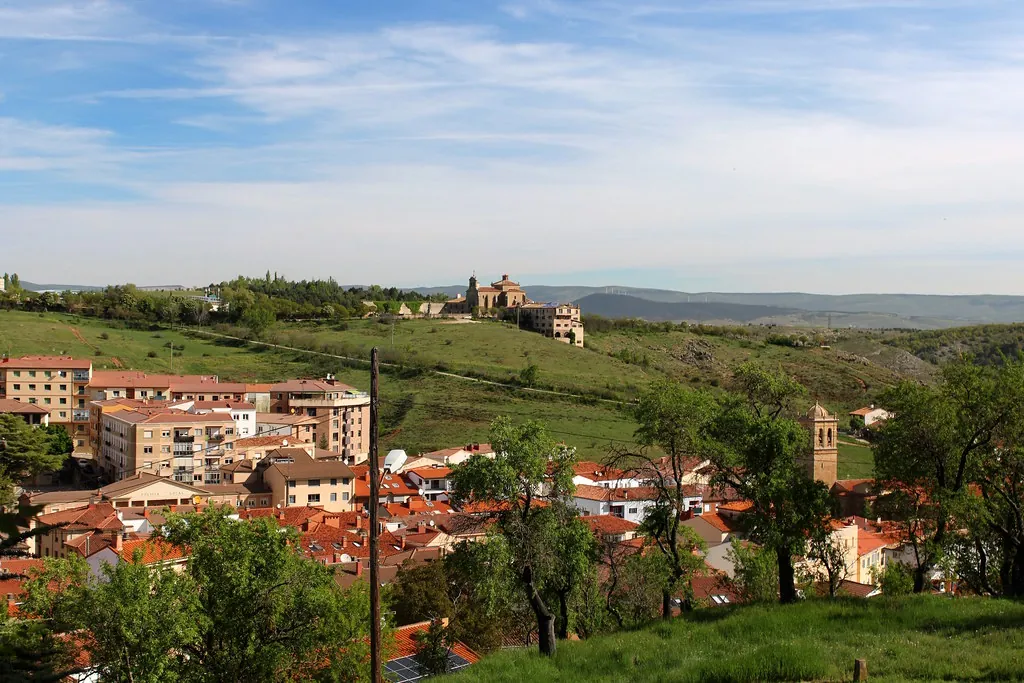
The church bell strikes midday and every dog in Villegas stops to listen. For forty-five seconds the village holds its breath—no engines, no voices, just bronze ringing across cereal fields that run flat to the horizon. When the echo dies, normal service resumes: a tractor coughs, a bar door scrapes, someone shouts for their grandson to come in for potaje. You will not find this moment on Instagram; it is simply how time works here.
Villegas sits 26 km north-west of Burgos city, far enough from the A-231 motorway that traffic noise never reaches the single main street. The 500 souls who remain have watched neighbouring hamlets lose their last grocers, chemists and even priests, yet they still keep a bakery open six mornings a week and a doctor’s surgery that functions on Tuesdays and Thursdays. Visitors expecting signage in five languages or a souvenir shop will be disappointed; those prepared to accept the village on its own terms are rewarded with an unfiltered slice of Castilian life.
Stone, Shield and Silence
A slow circuit of Villegas takes twenty minutes on foot—thirty if you pause to read the coats of arms carved above doorways. The grandest belongs to the 16th-century Casa de los Benavides on Calle Mayor, where a double-headed eagle still clutches a scroll promising loyalty to the crown. Next door, an iron balcony sags like an old mattress; the paint has gone but the smith’s mark (“F. Pérez, 1894”) is legible if you stand on the opposite kerb. These houses were built with wheat money during the brief decades when land-owning farmers lived like minor nobility, and the village has neither demolished nor Disneyfied them—left alone, the stone has simply weathered to the colour of burnt cream.
The parish church of San Pedro keeps the same policy of benign neglect. The portal is Romanesque, the tower is eighteenth-century, and the brick patching on the south wall is pure 1957, applied after lightning shattered the cornice. Inside, a polychrome Virgin surveys empty pews; her gown has flaked to rose-pink and the gold leaf on her crown has been nibbled by time rather than vandals. The key hangs in the presbytery office opposite the bakery—ask for María, sign a scrap of paper, and the building is yours for as long as you choose to linger.
At the lower end of the village stands the rollo, a stone column two metres high where public punishments were carried out until 1835. A rusty iron ring survives halfway up, thick enough to clamp a wrist. Few guidebooks mention it, so you are likely to share the space only with swallows that nest in the capital.
Bread, Blood Sausage and Early Nights
Food in Villegas is governed by season and parish. In October the bakery produces pan de mata, a round loaf flavoured with aniseed that keeps for a week—ideal for field workers who leave before dawn. On winter Saturdays the bar next to the church fires up a wood oven and serves lechazo (milk-fed lamb) until it runs out; arrive after 3 p.m. and you will be offered ham instead. A full menú del día costs €12 and includes wine that arrives in a plain bottle with no label yet tastes of blackberries and slate. Vegetarians survive on judiones—giant butter beans stewed with paprika—while coeliacs should bring their own bread; the concept has not yet penetrated the village.
Evenings wind down fast. By ten the square is empty, the temperature having dropped with the sun. Locals retreat to heated kitchens; visitors staying at the only guesthouse (three rooms above the pharmacy) hear the church clock strike every hour through thin walls. Light sleepers should request the back room overlooking vegetable plots rather than the street where the night-time rubbish lorry passes at 2 a.m.—a concession to modernity that nobody asked for.
Walking Lines Across the Plateau
Crop fields surround Villegas in a checkerboard of ochre and pale green depending on whether wheat or barley is planted. Ancient caminos—public rights of way wide enough for a mule and cart—link the village to forgotten hamlets four or five kilometres apart. One leads south to Sotoscueva, following the Odra river until the water disappears into a limestone gorge; another heads east to Pedrosa de Valdeporres, where a ruined monastery offers shade and a stone bench engraved with the words “Rest if you must, continue if you can.”
These tracks are flat, stony and largely shadeless; in July the heat ricochets off the earth and even larks seek cover. Spring is kinder: skylarks hang overhead, crested larks run between furrows, and the occasional stone curlew gives a ghoulish shriek at dusk. A pair of binoculars and a litre of water are sufficient equipment—guidebooks are redundant when every junction carries a hand-painted board giving distances in the old Castilian legua (roughly 5 km).
Cyclists can complete a 30 km loop via Valdelateja and Pineda de la Sierra, returning along the river. The surface is compacted earth; after heavy rain the clay clogs wheels and shoes alike, so telephone the tourist office in Burgos first—they collate farmer reports on track conditions, updated weekly in Spanish.
When the Village Comes Out of Hibernation
August changes everything. The fiestas patronales honour the Virgin of the Assumption with a formula refined over centuries: Saturday evening brass band, Sunday morning procession, Monday afternoon paella popular cooked in a pan two metres wide, Tuesday night fireworks that terrify every dog previously mentioned. Former residents return from Bilbao, Barcelona and Birmingham; number plates read like a map of Europe. The bakery extends hours, the pharmacy stocks hangover cures, and the single ATM—installed in 2019—runs out of €20 notes by day two.
Book accommodation early if you insist on witnessing the chaos; otherwise visit in late September when the grain harvest finishes and the village exhales. Temperatures hover around 22 °C, straw bales sit photogenically in fields, and the bar still serves cocido despite the calendar claiming summer. Winter brings sharp frosts and skies the colour of gunmetal—beautiful if you own a down jacket, punitive if you expected Andalusian balm.
Getting There, Getting Out
No train reaches Villegas. From Burgos bus station, line 205 departs at 07:45 and 15:30, reaching the village in 45 minutes; the return leaves at 13:10 and 19:20. A single ticket costs €2.65, paid in cash to the driver who will remember you the following week. Hire cars give freedom, but note that petrol stations close at 20:00 and the nearest 24-hour pump is 18 km away on the N-627. Mobile coverage is patchy: Vodafone works near the church, Orange demands you stand on the picnic table outside the cemetery, O2 gives up entirely.
If the silence becomes oppressive, Burgos city offers a cathedral, a human-rights museum and coffee that costs more than an entire village lunch. The contrast is instructive: twenty-six kilometres transport you from Europe’s fifteenth-century capital to a place where the same century feels like yesterday and tomorrow may never arrive.
Leave before you mistake the quiet for permanence; Villegas is still shedding families. Yet while the bakery dispenses rosquillas at dawn and the church bell counts the hours, the village endures—neither museum nor ghost town, simply itself.