Full Article
about Autilla del Pino
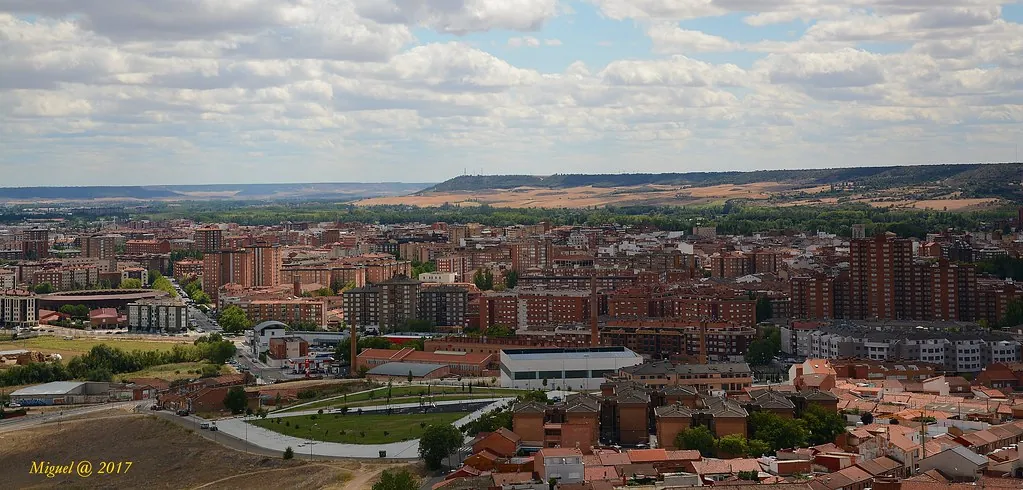
Known for its natural lookout offering sweeping views over Tierra de Campos; a quiet village of traditional architecture close to the provincial capital.
Ocultar artículo Leer artículo completo
The tractor arrives at 7:43 am. Not 7:30, not 8:00, but 7:43 precisely, its diesel engine cutting through the morning silence like a blunt knife. This is how days begin in Autilla del Pino—not with church bells or smartphone alarms, but with agricultural machinery announcing that work, weather and seasons still dictate the rhythm here.
At 860 metres above sea level, this Castilian village sits high enough that the air carries a different weight. Summer mornings arrive crisp, even when afternoon temperatures push past 30°C. Winter transforms the surrounding plains into something approaching tundra; when snow comes, it doesn't merely dust the landscape—it rewrites it entirely. The village becomes an island in a white sea, accessible only via the N-601 that ploughs through drift and blizzard alike.
The Architecture of Survival
Adobe walls two feet thick weren't built for aesthetics. These structures represent centuries of trial and error, of learning that mud brick regulates temperature better than stone, that small windows reduce heat loss, that a central courtyard provides both light and shelter from the relentless wind. Walking Autilla's streets means witnessing this practical wisdom firsthand—though increasingly, it means witnessing its decay too.
The Church of San Pedro stands as testament to this functional approach. Its bell tower, more watchtower than campanile, rises stark against the horizon. Inside, the decoration runs to whitewashed walls and simple wooden pews. There's no baroque excess here, no carved saints demanding attention. The building serves its community, nothing more, nothing less. Sunday service still draws thirty-odd parishioners, their voices carrying across plains that once echoed with thousands.
Many houses stand empty now, their traditional tile roofs collapsing inward like broken umbrellas. The population hovers around two hundred, down from nearly a thousand in the 1950s. Yet restoration work proceeds, slowly. Foreign buyers—mainly French and German—have discovered they can purchase a four-bedroom village house for less than €40,000. They arrive seeking the rural dream, though few stay through their first Castilian winter.
Between Earth and Sky
The real drama here plays out horizontally. Tierra de Campos—literally 'Land of Fields'—stretches forty kilometres in every direction, broken only by the occasional village that appears first as a smudge on the horizon, then gradually resolves into church tower and houses. The wheat doesn't merely grow; it dominates, rolling in golden waves that shift colour with every cloud shadow.
This is steppe country, Europe's own prairie. Great bustards—birds that can weigh fourteen kilos and stand a metre tall—strut between the wheat rows. Lesser kestrels hover overhead, hunting insects stirred up by farm machinery. Bring binoculars in spring and you might spot black-bellied sandgrouse, birds more commonly associated with North Africa than northern Spain. The best viewing comes at dawn, when the rising sun backlights the fields and the birds remain active before heat drives them to cover.
Walking routes exist, though you'll find no signposts. The GR-89 long-distance path passes within three kilometres, but local farmers have created their own network of tracks between fields. A circular walk of eight kilometres takes you south past abandoned grain silos, then loops back through olive groves that predate mechanised agriculture. The going remains easy—this is plateau country, after all—but carry water. The altitude and wind combine to dehydrate faster than you'd expect.
When the Wind Blows
And blow it does. The locals have seventeen different words for wind, each describing direction, temperature and carrying capacity for dust. The cierzo arrives from the north, cold and clean, sweeping the plains clear of clouds. The bochorno comes from the south, heavy with African heat and sometimes, in late summer, carrying Saharan dust that paints the sunset blood orange.
These winds shaped the cuisine as surely as they shaped the architecture. Sopa castellana—garlic soup thickened with bread and egg—originated as a way to warm bodies after mornings spent working exposed fields. Lechazo, roast suckling lamb, reflects the region's sheep-herding heritage; the animals fatten on plains grasses rendered sweet by temperature swings between day and night. Local restaurants within twenty kilometres include Casa Camino in Boadilla de Rioseco, where €18 buys a three-course menu featuring both dishes, plus a half-bottle of robust local tinto.
The Tyranny of Distance
Getting here requires commitment. Valladolid's airport, ninety minutes away, offers only domestic flights. Madrid remains the practical option—two hours' drive northwest on the A-62, then thirty minutes north from Palencia on the N-601. Car hire runs essential; public transport serves Autilla twice daily, but buses connect with larger towns rather than cities. Miss the 3:15 pm from Palencia and you'll spend the night, whether you'd planned to or not.
Accommodation within the village itself is limited to two self-catering houses, both restored by that French couple who arrived three years ago. Casa del Cura sleeps four and costs €80 nightly, minimum two nights. The alternative lies fifteen kilometres away in Carrión de los Condes, where the three-star Hotel Real offers doubles from €55, including breakfast featuring local honey and cheese made from sheep's milk.
Seasons of Silence
Spring brings transformation. By late April, green shoots push through brown earth, and the sky fills with migrating storks returning to nests they've occupied for decades. The temperature hovers around 18°C—perfect walking weather before summer's intensity arrives. This is when the village feels most alive, when neighbours emerge from winter hibernation to exchange news over coffee in Bar Centro, the only establishment that qualifies as a café, shop and social club combined.
Summer means survival strategy. Work starts at 6:00 am and finishes by 2:00 pm, when temperatures make fieldwork dangerous. The village empties as families retreat to cooler coastal regions, leaving behind those too old or too stubborn to abandon their land. August's fiesta brings temporary resurrection—three days of music, dancing and consumption that seems to compress an entire year's socialising into seventy-two hours.
Autumn delivers the region's finest light. The wheat harvest creates golden stubble fields that glow amber in late afternoon sun. This is photography weather, when the quality of light transforms ordinary scenes into something approaching art. The tourist buses don't come—they never do—but individual travellers appear, drawn by articles like this one, seeking authenticity and finding something more complex than that simple word allows.
Winter strips everything back. Trees reveal their skeletons, houses show their bones, and the village's true scale becomes apparent. On clear days, you can see twenty kilometres to the Sierra de Híjar, snow-capped and sharp against pale sky. Nights drop to -10°C, and heating costs force many to close off rooms, living in just enough space to remain civilised. The silence becomes absolute, broken only by church bells marking hours that feel increasingly irrelevant.
This is not a destination for ticking boxes or collecting experiences. Autilla del Pino offers something simpler and more demanding: the chance to witness how rural Spain functions when nobody's watching, how communities persist against demographic tide, how landscape shapes lives in ways urban dwellers have forgotten. Come prepared for boredom, for beauty, for realisation that twenty-first century complexity can still resolve into something as basic as soil, sky and the human determination to remain connected to both.