Full Article
about Bolaños de Campos
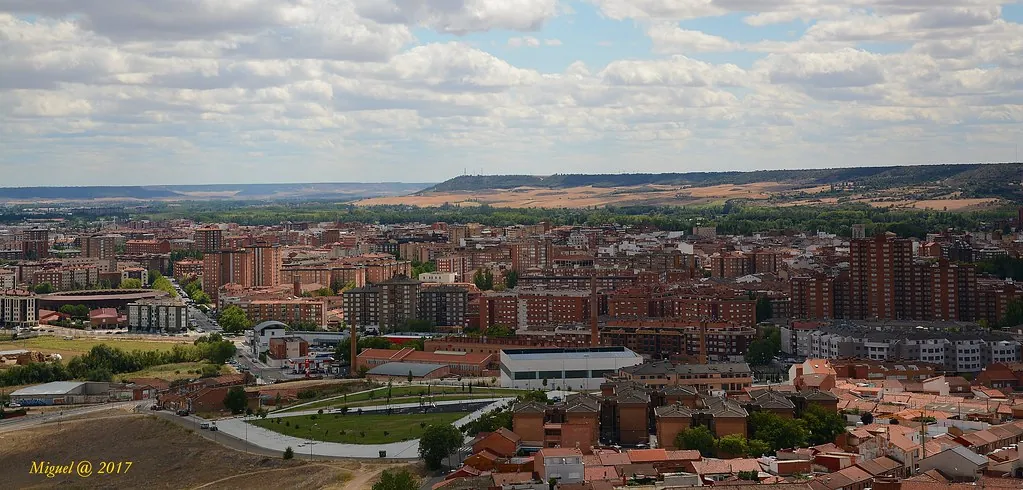
A town on the Terracampa plain, noted for its adobe architecture and the church that dominates the center.
Ocultar artículo Leer artículo completo
The church bell strikes noon, and for a moment the only other sound is a tractor grinding through third gear somewhere beyond the adobe walls. Bolaños de Campos doesn't do background noise. At 708 metres above sea level on the high plateau of Tierra de Campos, the village sits in a bowl of silence so complete that even the larks sound apologetic.
This is cereal country, where the horizon runs ruler-straight in every direction and wheat fields roll like a beige ocean towards Portugal. The 243 inhabitants (yes, that's the real number) have grown used to living in a landscape that most travellers race through on the A-62, bound for Segovia or Salamanca. They know that visitors who do pull off at junction 134 are either lost, or they've finally worked out that Spain's emptiest quarter has its own gravitational pull.
Adobe, Brick and the Art of Staying Upright
Park by the stone cross at the entrance and the village reveals itself in layers. Nearest the road, modern brick houses with satellite dishes and half-finished extensions. Deeper in, the original core: ochre adobe walls two metres thick, timber doors bleached silver by a century of UV, and those distinctive chimney pots that look like black storks nesting on the rooflines. The houses stand shoulder-to-shoulder, as if huddling against the wind that scours the plateau for nine months of the year.
Walk Calle Real and you'll spot the tell-tale grilles set into the pavement outside many front doors. These breathe for the bodegas subterráneas, cave-cellars hacked into the clay beneath each dwelling. Some still store wine at a constant 14°C; others have been converted into cosy dining alcoves where families retreat during winter, when night temperatures drop to -8°C and the fields glitter with frost. Knock politely and an owner might lift the iron hatch to show you stone steps descending into earthy darkness. They won't charge for the demonstration, but accepting a glass of local tinto is only decent.
The parish church of San Andrés commands the square like a fortress. Built in stages between the 15th and 18th centuries, it mixes late-Gothic bones with a Baroque skin—rather like the village itself. The wooden Mudéjar ceiling inside is worth tracking down the key-holder for, but don't expect souvenir stands or multilingual captions. Instead, ask for Paco at Bar El Centro (open 07:00–14:00, closed Thursday afternoons) and he'll telephone his cousin who keeps the church keys next to the bread bin.
Pigeon Towers and the Economics of Thin Air
Circle the back lanes and you'll count eight palomares, the cylindrical dovecotes that once generated fertiliser and Sunday lunch in equal measure. Most are crumbling, their internal brick nests exposed like honeycomb. The tallest, on the edge of a barley field south of the cemetery, still has its original revolving ladder—imagine a hamster wheel mounted vertically inside the tower, used to reach upper nesting boxes. Farmers here stopped keeping pigeons when chemical fertiliser arrived in the 1960s, but the towers remain, too solid to demolish and too tall to ignore.
Climb the metal grain silo opposite the petrol station (technically private, yet rarely locked) for the definitive panorama. Northwards, the land rises imperceptibly towards the Cantabrian mountains, invisible beyond 150 kilometres of heat haze. South, the Valladolid plateau ripples with thermals. In June the wheat looks gold-shot-green; by mid-July the combine harvesters have turned everything the colour of digestive biscuits. Photographer? Arrive an hour before sunset when the low sun models every furrow and the sky turns the exact shade of a Tintoretto heaven.
Where to Eat, Sleep and Fill the Tank
Accommodation options inside the village amount to one: Casa Rural Palomar (two doubles, €70 per room, breakfast €8). The house is a 19th-century adobe rebuild with under-floor heating and a kitchen that still smells of cured pork from the previous century. Book through the provincial tourism board website—owners María and Luis live three kilometres away and need 24 hours' notice to light the boiler.
There is no hotel, no supermarket, and the lone ATM works only on weekdays before 14:00. Fill up in Medina de Rioseco (18 km) or carry cash. For lunch, Bar El Centro serves a three-course menú del día (€11, wine included) featuring sopa de ajo heavy enough to anchor a hot-air balloon, followed by lechazo—milk-fed lamb roasted in a wood-fired oven until the skin shatters like caramelised sugar. Vegetarians get tortilla and sympathetic shrugs.
Dinner is trickier. The bar closes at 20:00 sharp; after that you're driving to Villalpando (14 km) for plates of judiones—buttery giant beans stewed with chorizo—and local Rueda white wine that tastes of fennel and limestone. Book a taxi back (€25) because the Guardia Civil patrol the straight, empty roads with enthusiasm.
Calendar of the Sensible and the Surreal
Visit in late April for the Romería de San Marcos. Half the village processes 3 km to a stone ermita in the middle of nowhere, carrying an effigy of the evangelist and a portable sound system that blasts pasodobles across the wheat. After mass, everyone eats hornazo (a meat-stuffed pastry) and drinks wine chilled in the irrigation ditch. Tourist count: zero.
August brings the fiesta patronal: foam party in the square, a raffle for a ham, and the dubious highlight—capea en el coso, an amateur bull-running in a makeshift ring. British visitors often find this unsettling; locals treat it as village comedy rather than blood sport. Bulls are small, horns are padded, and casualties are usually limited to sprained ankles and dented pride.
Winter is brutal. When the northeasterly solano wind arrives, temperatures feel ten degrees colder than the thermometer shows. Roads ice over, birds migrate, and Bolaños retreats indoors. Come then only if you enjoy absolute solitude and your own company. Bring logs—the casa rural's central heating was never designed for -12°C nights.
Leaving Without a Fridge Magnet
The village won't sell you souvenirs because nothing here has been designed for external consumption. What you can take away is subtler: the memory of stepping outside at 03:00 to find the Milky Way spilled across the sky like sugar on slate; the taste of wine drawn from a clay tinaja that's been in the same family since 1890; the realisation that 243 people have chosen to live on a windy hilltop in the middle of Spain's agricultural engine room, and that their choice makes perfect sense once the silence gets under your skin.
Drive away on the CL-615 and the horizon reclaims the village in seconds. Five minutes later you could swear Bolaños de Campos never existed—except for the dust on your shoes and a faint smell of straw that lingers in the hire car for days.