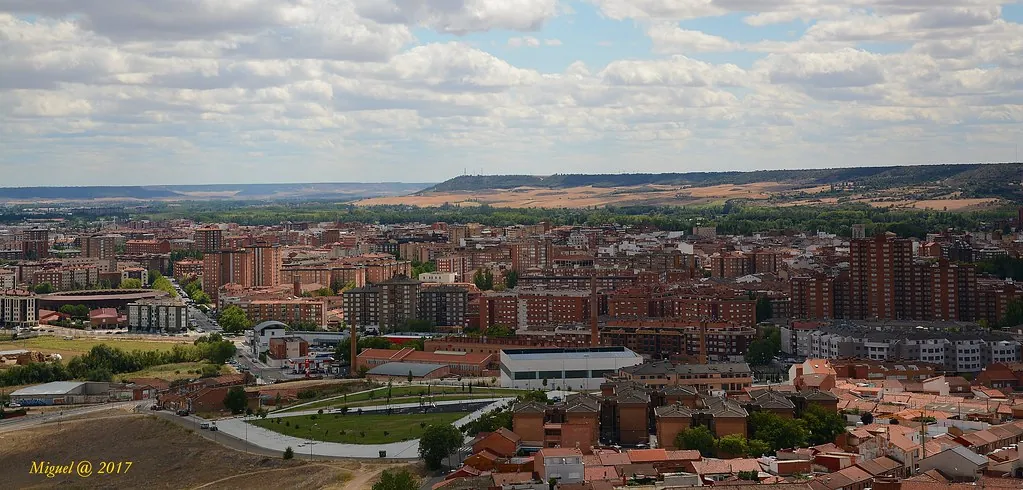
Vista aérea de Calzada de los Molinos
Instituto Geográfico Nacional · CC-BY 4.0 scne.es
Castilla y León · Cradle of Kingdoms

Calzada de los Molinos

The tractor appears first, a distant speck against wheat that shifts from gold to silver as clouds pass overhead. Then the village materialises—low...

305 inhabitants · INE 2025
820m Altitude

Why Visit

Mountain Church of Santiago Camino de Santiago

Best Time to Visit

spring

Santiago (July) julio

Things to See & Do
in Calzada de los Molinos

Heritage

  • Church of Santiago
  • Remains of mills

Activities

  • Camino de Santiago
  • Mill Route
  • Hiking

Festivals
& & Traditions

Fecha julio

Santiago (julio), San Antonio (junio)

Las fiestas locales son el momento perfecto para vivir la autenticidad de Calzada de los Molinos.

Full Article
about Calzada de los Molinos

On the Camino de Santiago; named after the old Roman road and its flour mills; a Jacobean stop.

Ocultar artículo Leer artículo completo

The tractor appears first, a distant speck against wheat that shifts from gold to silver as clouds pass overhead. Then the village materialises—low, earth-coloured houses crouched beneath an enormous Castilian sky that seems to press everything closer to the ground. Calzada De Los Molinos sits at 820 metres in the Tierra de Campos, a place where horizon lines count as landmarks and the wind has nothing to brake it for kilometres.

This is cereal country, has been since the nameless Visigoths first scratched furrows into the plateau. The mills that gave the village its suffix are gone, yet their logic remains: grow grain, store it dry, survive the winter. Adobe walls, some two metres thick, still shoulder the cold for families who return each evening from fields that surround the houses like an inland sea. Walk the single main street at 7 a.m. and you’ll hear more skylarks than cars; by 8 a.m. the only queue is for the bar that doubles as the bread counter—three customers, two coffees, one baguette wrapped in paper that turns translucent with butter.

A Church, Some Walls, and the Birds Between

The parish church of San Andrés won’t make the cover of any art magazine. Its limestone bell tower leans slightly, as if bored after centuries of watching the same wheat. Inside, the air smells of wax and grain dust that has slipped through the door on work boots. Retablos painted by provincial craftsmen in the 1690s flank the altar; their colours have faded to the same ochre palette as the surrounding fields. What makes the building matter is continuity: baptisms, marriages, funerals, the annual blessing of the tractors—rituals that mark time more accurately than any clocktower.

Round the back, older houses show how the plateau was built. Adobe bricks, the size of a child’s coffin, are stacked between timber ties; upper walls taper inward to shed weight and heat. Many façades have been cement-rendered, yet if you peer down the alleyways you’ll spot original mud walls protected only by overhanging eaves the width of a farmer’s forearm. Palomares—dovecotes—rise like miniature castles, their nesting holes empty since farmers discovered fertiliser in sacks. One, on the road out toward Boada de Campos, still has internal ladders of hand-hewn poplar; climb at your own risk, the rungs snap like dry bread.

The real monuments here are mobile. Great bustards drift across fallow plots, necks hunched forward as if perpetually surprised. Little owls sit on telephone posts at midday, blinking at passing cyclists. Bring binoculars and patience; the birds are accustomed to tractors, less so to people on foot. A calm hour on the dirt track south to Villarramiel can yield Montagu’s harrier, calandra lark, and—if the stubble has recently been burnt—flocks of wintering lapwing that lift in a single grey sheet when the wind changes.

Walking Without Waymarks

There are no signed PR loops, no steel railings, no gift-shop maps. Instead, farm tracks radiate from the village like spokes, each one graded by the width of a combine harvester. Pick any and walk for twenty minutes; you’ll pass stone piles cleared by hand, a ruined threshing floor, maybe an irrigation pond where migrating gulls touch down in April. The topography is gentle enough to read the landscape aloud: darker soil means water-retaining clay, paler stripes are chalk where wheat burns off early. In May the fields turn emerald and red poppies seam the margins; by late July everything is blonde and rustling, the air thick with chaff that sticks to lip balm.

Carry water. Shade exists only where a telegraph pole meets its shadow, and the altitude keeps midday heat surprisingly sharp. Early mornings smell of damp earth and diesel; evenings taste of grain dust and cooling iron. If you want mileage, string together the villages that share the same postal code: walk north to Castil de Vela along the gravel service road for the high-voltage lines (flat, 7 km), then loop back south on the camino that skirts the Arroyo Valdemanco. Total distance: 16 km; total ascent: negligible; total humans encountered: possibly zero.

What You Won’t Find (and Where to Find It)

Calzada has no supermarket, no cash machine, no Sunday newspaper. The bakery van calls on Tuesday and Friday, honking outside the ayuntamiento at 11 a.m.; locals sprint out clutching handbags and shopping bags the colour of parish bingo. If you need fuel, bread, or a cashpoint, drive 12 minutes east to Carrión de los Condes—historic in its own right, with two Romanesque churches and a chemist that stocks factor-50 suncream.

Eating options within the village limits close early and open unpredictably. The safest strategy is to treat the place like a bothy: arrive provisioned. Market day in Palencia (35 minutes by car) is Tuesday; stock up on lechazo (milk-fed lamb), locally dried pulses, and a wheel of queso de oveja—sheep’s-milk cheese that tastes of thistle and straw. If you’d rather someone else lights the oven, stay in one of the rural apartments at Villarramiel or drive to Carrión for asador-style roast meats. Expect to pay €14–18 for a three-course menú del día, wine included, and don’t ask for vegetarian beyond tortilla or salad.

Accommodation inside the village itself is essentially private; a handful of villagers rent rooms informally, but you’ll need Spanish and persistence. More realistic bases are the loft conversions in Carrión (9 out of 10 on Booking, from £55 a night) or the stone-built guesthouse at Villarramiel where breakfast arrives with jars of home-made apricot jam. Whichever you choose, bring slippers—stone floors at 820 metres stay cold even in July.

When the Wheat Burns and the Fiestas Spark

April and May give you green shoots, long light, and night temperatures that still demand a jumper. Midsummer is a paradox: blazing sun at noon, sweater weather after dark. The fiestas honouring the Virgen del Rosario fall on the last weekend of August, when the population quadruples. Temporary bars pump out pop hits from 1998, tractor engines are hosed down for the blessing, and elderly residents dance chotis in the square until the generator runs out of diesel. It’s fun, loud, and impossible to sleep before 3 a.m.; book accommodation elsewhere if you came for silence.

Winter is another country. Step outside on a January morning and the plateau lies under iron frost; each breath rasps. Natives wear woollen cloaks that look medieval because, in design, they are. Roads become glassy, and the single daily bus from Palencia may not appear at all. Photographers love the clarity—50 km visibility, peach-coloured dawns, wheat stubble lacquered white—but unless you own a 4×4 and a fondness for sideways motoring, visit between March and October.

Leaving Without a Fridge Magnet

Calzada De Los Molinos will not seduce you with souvenir shops or selfie frames. It offers instead the slower pleasure of a place that continues after you depart: grain stored, walls patched, birds circling on thermals older than any map. Come prepared, tread quietly, and the village might lend you its rhythm—one in which the wind sets the tempo and the horizon keeps the beat.

Key Facts

Region
Castilla y León
District
Tierra de Campos
INE Code
34042
Coast
No
Mountain
Yes
Season
spring

Livability & Services

Key data for living or remote work

2024
Connectivity5G available
EducationHigh school & elementary
Housing~5€/m² rent · Affordable
Sources: INE, CNMC, Ministry of Health, AEMET

Planning Your Visit?

Discover more villages in the Tierra de Campos.

View full region →

More villages in Tierra de Campos

Traveler Reviews