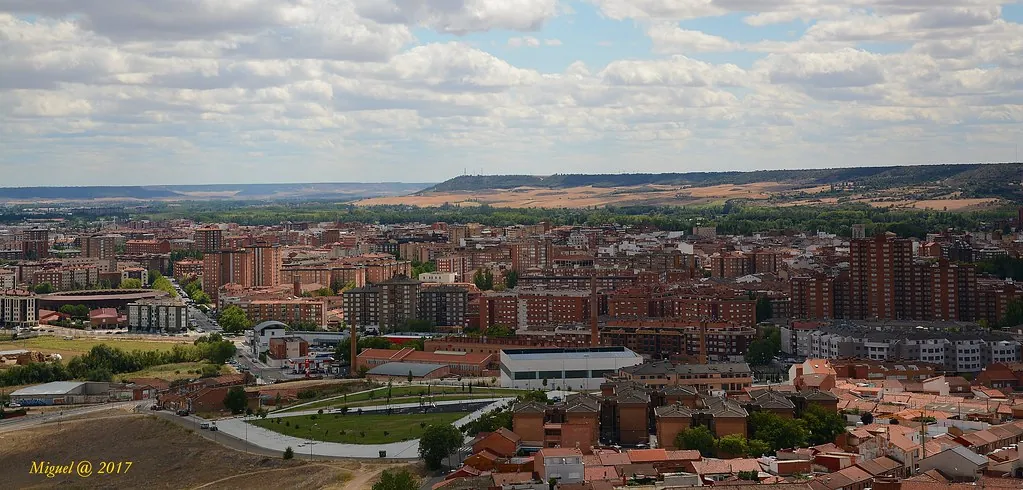
Burgos - Archivo Municipal Palacio de Castilfalé 2.jpg
Zarateman · CC0
Castilla y León · Cradle of Kingdoms

Castilfalé

The grain silos appear first. Rising like exclamation marks against the Leonese sky, they mark Castilfale long before the village itself comes into...

58 inhabitants · INE 2025
819m Altitude

Why Visit

Mountain Church of San Juan Degollado Walks through the cereal steppe

Best Time to Visit

summer

San Juan (August) agosto

Things to See & Do
in Castilfalé

Heritage

  • Church of San Juan Degollado
  • Dovecotes

Activities

  • Walks through the cereal steppe
  • Rural photography

Festivals
& & Traditions

Fecha agosto

San Juan (agosto)

Las fiestas locales son el momento perfecto para vivir la autenticidad de Castilfalé.

Full Article
about Castilfalé

Tiny village in Tierra de Campos, noted for its quiet and mud-and-brick architecture.

Ocultar artículo Leer artículo completo

The grain silos appear first. Rising like exclamation marks against the Leonese sky, they mark Castilfale long before the village itself comes into view. At 800 metres above sea level, where the Meseta's wheat fields stretch until they blur into cloud, this is a place that makes you calculate distances differently. The nearest petrol station sits twenty-five kilometres away in Sahagún. The nearest supermarket? Further still.

Sixty souls call this home. On Sundays, when the church bell tolls across the plains, the sound carries for miles without encountering another village. Castilfale occupies that peculiar Spanish category of pueblo—too small for services, too remote for weekenders, yet stubbornly alive despite every demographic chart suggesting otherwise. The bakery closed in 1998. The school followed in 2003. What remains is architecture stripped to essentials: earth-coloured houses rendered in adobe, their walls thick enough to swallow mobile phone signals, roofs pitched to shrug off the cierzo wind that sweeps down from the Cantabrians.

The Architecture of Absence

Walk the main street at noon and shadows pool in doorways of houses that haven't seen residents since Spain still used pesetas. Some collapse gently inward, their roof beams sagging like tired shoulders. Others wear metal grilles across windows, a declaration that someone still claims ownership despite decades of absence. The church of San Miguel stands solid among the decay, its stone tower rebuilt in 1847 after lightning split the original. Inside, the temperature drops ten degrees. Dust motes dance in shafts of coloured light from nineteenth-century glass. The priest visits monthly now; locals joke he schedules Castilfale between larger parishes like a reluctant dentist fitting in a minor filling.

The palomares steal photographers' attention. These circular dovecotes, scattered across surrounding fields, rise like miniature castles from the wheat. Built from the same earth as the village houses, they blend perfectly until sunset when low light reveals their perfect geometry. Most date from the early 1900s, when pigeon droppings fetched good money as fertiliser. Now they serve as monuments to agricultural cycles that no longer apply. One, belonging to farmer José María García, still functions. He'll show visitors the internal ladder and nesting boxes if asked, though his English extends only slightly beyond "very old" and "my grandfather." The language barrier matters less than you'd expect. Standing inside the cool darkness, listening to pigeons rustle overhead, communicates everything necessary about continuity and adaptation.

Wheat, Wind and Wildlife

The landscape refuses spectacular. This is wheat country, plain and simple. From October planting through July harvest, the fields dominate every view. But look closer. The carrascas—holm oak hedgerows—mark ancient property boundaries. In spring, they burst with hawthorn and wild rose. Stone curlews call from fallow patches. Great bustards, those heavyweight flyers that somehow resemble both ostriches and bishops, stalk through young crops. Bring binoculars in April and May, when males perform mating displays that involve inflating neck sacs until they resemble white balloons.

The senda leaving Castilfale's eastern edge follows a medieval drove road towards Moratinos, another village fighting demographic decline. Marked simply as PR-LE-14, the path crosses fields for six kilometres before reaching the abandoned venta of Valdelaguna. Here, medieval merchants once paid tolls while moving merino sheep between summer and winter pastures. Nothing remains except foundation stones and wild fennel growing through cracks. The walk takes ninety minutes each way; carry water since shade exists only where clouds oblige.

Summer walking demands early starts. By 11am, temperatures push thirty-five degrees and the mirage effect makes distant silos appear to float. Autumn brings la sementera—the sowing—when tractors work through the night under floodlights that transform the plains into a terrestrial constellation. Winter arrives suddenly, usually overnight between late October and early November. Frost silver-plates the stubble fields. When snow comes, it arrives horizontally on Atlantic winds that have gathered moisture crossing four hundred kilometres of Spanish interior. The village becomes inaccessible for days; locals stockpile groceries like survivalists.

Eating and Sleeping (Elsewhere)

Castilfale offers no restaurants, bars or shops. Zero. The last vending machine died in 2019 and nobody replaced it. Plan accordingly. Sahagún, twenty-five minutes by car, provides the nearest reliable meals. Try La Barrica on Calle San Juan for cordero lechal—milk-fed lamb roasted in wood ovens until the meat slips from bones. Their house red, from nearby Ribera del Duero, costs €3.50 a glass and arrives at cellar temperature, exactly as it should. For picnic supplies, the Dia supermarket on Sahagún's main street stocks local cheese: try the queso de oveja from Villarmildo, tangy and slightly oily, perfect with the crusty bread from Panadería Rosa across the road.

Accommodation requires similar forward planning. Moratinos, ten kilometres away, offers Casa Sonrisa—three rooms in a restored village house run by British expats who moved here for the silence. They charge €60 nightly including breakfast featuring their own marmalade made from local quinces. Alternatively, Sahagún's Hotel La Codorniz provides conventional rooms from €45, though you'll trade star-rating facilities for location in a 1970s time-warp beside the main road.

When Silence Becomes Tangible

Visit in late August for the fiesta of San Bartolomé, when the village population temporarily triples. Emigrants return from Madrid, Barcelona, even Geneva. They bring children who speak Swiss German and eat churros with tentative curiosity. The peña—local social club—reopens for three days. Someone produces a sound system that plays Spanish pop from 1987. Elderly women dance pasodobles in the street while teenagers scroll Instagram, half-embarrassed, half-fascinated by their parents' birthplace. By Monday, it's over. Cases load into hatchbacks. The last car disappears towards the A-231, raising dust that settles slowly on streets that will see silence again for another year.

This is Castilfale's truth: it exists not for visitors but despite them. The wheat grows, the wind blows, the population chart creeps ever downward. Come if you want to understand how Spanish villages function—or don't—as the twenty-first century accelerates elsewhere. Bring walking boots, binoculars, and realistic expectations. The souvenir shop won't open next year. The silence, however, remains free and absolutely guaranteed.

Key Facts

Region
Castilla y León
District
Tierra de Campos
INE Code
24042
Coast
No
Mountain
Yes
Season
summer

Livability & Services

Key data for living or remote work

2024
Housing~5€/m² rent · Affordable
Sources: INE, CNMC, Ministry of Health, AEMET

Official Data

Institutional records and open data (when available).

  • CASTILLO
    bic Castillos ~0.2 km

Planning Your Visit?

Discover more villages in the Tierra de Campos.

View full region →

More villages in Tierra de Campos

Traveler Reviews