Full Article
about Cervatos de la Cueza
Birthplace of General San Martín (liberator of Argentina); it has a house-museum dedicated to him and brick architecture.
Hide article Read full article
A village defined by its landscape
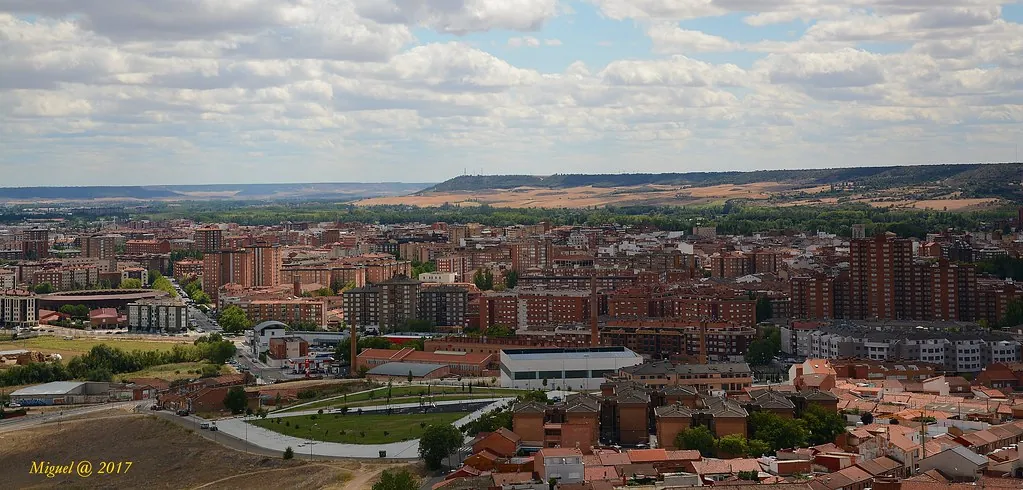
Tourism in Cervatos de la Cueza makes most sense when you first picture the map. The village sits in the heart of Tierra de Campos, in the province of Palencia, a vast cereal-growing plain where the horizon stretches almost without interruption. The landscape sets the tone here: open fields, straight tracks and small settlements that appear at intervals between cultivated plots.
With around two hundred inhabitants, Cervatos keeps the slow rhythm typical of this part of Castilla. Daily life is closely tied to the land, and that connection shapes both the look of the village and its atmosphere.
For centuries, the French route of the Camino de Santiago has passed through the village. Pilgrims usually arrive from Carrión de los Condes and continue towards the area of Sahagún, following one of the longest and most exposed stages of the entire route. This steady flow has left its mark, though Cervatos has not turned into a place centred solely on the Camino. It remains, above all, an agricultural village within Tierra de Campos.
There are no major monuments competing for attention. Interest lies instead in how the built area relates to its surroundings: simple streets, buildings connected to farming life and a landscape that shifts noticeably with the seasons. In summer, fields glow with the gold of ripening grain. In winter, the tones are more muted, with freshly turned earth dominating the view.
San Pedro and the fabric of the village
The parish church of San Pedro is the most prominent building in Cervatos. Its origins date back to the 16th century, with later alterations over time. It follows a type of rural church common in the province of Palencia: solid walls, restrained volumes and a presence that feels practical rather than grand. For generations it served as the main meeting point for the community, something still suggested by its position within the village.
Walking through the streets reveals traditional houses built from adobe and stone, materials widely used in Tierra de Campos thanks to their availability and their suitability for the local climate. Some properties retain large gateways designed for carts and access to inner courtyards. It is also fairly common to come across underground cellars or their entrances, linked to the storage of wine and other produce.
The layout of Cervatos is irregular, as is often the case in agricultural settlements that grew gradually over time. There is no central monumental square organising the whole. Streets adapt to the terrain and to older land divisions, creating a pattern that feels practical rather than planned.
The Camino and the scale of Tierra de Campos
The Camino de Santiago crosses Cervatos de la Cueza from east to west. In this stretch, the route runs through very open country, following agricultural tracks between cereal fields. It is one of the sections where the scale of Tierra de Campos becomes especially clear: kilometres of flat land, small villages separated by long distances and an expansive sky overhead.
From the village itself, various paths lead out into the surrounding countryside without any technical difficulty. These are working tracks used for farming, so it is worth being aware of agricultural machinery at certain times of year. On clear days, visibility extends far in all directions, with little to interrupt the horizon.
The area is also known for birdlife associated with steppe-like environments. With patience, it is possible to spot some species in the nearby fields, particularly early in the morning or towards evening.
For more extensive services such as shops, banks or transport connections, people usually head to Carrión de los Condes. It acts as a local hub and lies a short distance away by road.
When the landscape changes
Spring and autumn tend to be the most comfortable seasons for walking the paths around Cervatos. In summer, the sun can be intense and shade is scarce, something well known to those travelling the Camino. Winter brings its own character, with wind and the dry cold typical of the central plateau.
Cervatos de la Cueza is best approached without rushing. A walk through the village, time spent along the surrounding tracks and a pause to take in the landscape offer a clearer sense of the place. The appeal here is not about ticking off sights, but about observing how life unfolds in the middle of Tierra de Campos.