Full Article
about Frómista
A key stop on the Camino de Santiago and a showcase of Romanesque architecture; home to the church of San Martín.
Hide article Read full article
A village that appears on the plain
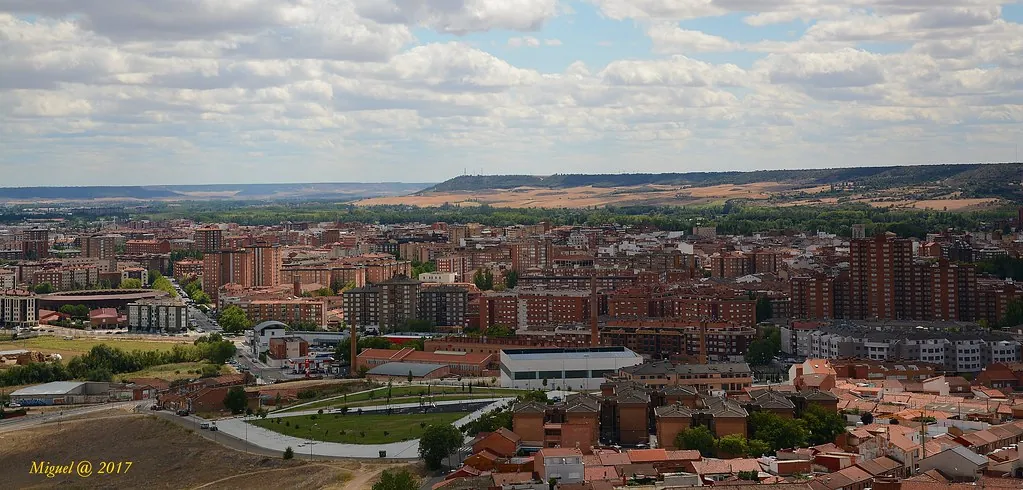
Some places seem to rise out of nowhere as you approach them. The road crosses kilometres of cereal fields, flat and quiet, and then Frómista appears. A small cluster of houses, a tower or two above the rooftops, and beside it the Canal de Castilla cutting across the landscape in a straight line.
Tourism in Frómista revolves around two clear themes: Romanesque architecture and the Camino de Santiago. The village is small, with just over seven hundred residents, yet it has seen travellers pass through for centuries. Pilgrims today follow the same route once used by merchants and other travellers. That steady flow shapes the atmosphere. It does not feel static, but there is no rush either.
Once parked, everything sits within easy reach. A couple of straight streets, a few quiet squares, and frequent signs of the Camino: backpacks and walking sticks resting against a wall while someone takes a short break before continuing.
San Martín: Romanesque without distraction
The church of San Martín is the main reason many people come to Frómista. Anyone with even a passing interest in Romanesque architecture has likely seen it before in books or photographs.
Built in the late 11th century, it has a quality that often draws comment: it looks almost like a perfectly proportioned model. The lines are clear, the structure balanced, with two round towers and golden stone. There is no excess decoration, and everything seems exactly where it should be.
A slow walk around the exterior reveals one of its most engaging details. The corbels, more than three hundred in total, form a small catalogue of scenes. Animals, human figures and faces appear, some of them surprisingly expressive. At first they can go unnoticed, but after a moment they tend to hold attention.
The church underwent a major restoration in the late 19th century, so what stands today is carefully preserved. Even so, it retains the solid, simple character typical of Romanesque buildings.
Inside, the space is not large. A full visit takes only a few minutes. The atmosphere often encourages quiet voices without anyone needing to say so.
Churches that emerge as you walk
A short distance away stands San Pedro, recognisable by its tower, visible from various points in the village. The building combines different phases, with Gothic elements alongside later alterations, and it has also been used as an exhibition space over the years.
Santa María del Castillo receives less attention in many guides, yet it rewards a look for those interested in historic churches. It has undergone several transformations across the centuries, and inside there are still elements that reflect different moments in the village’s past.
One of the appealing aspects of Frómista is that these places do not require careful planning. They simply appear as you walk through the streets.
The Canal de Castilla and its quadruple lock
The Canal de Castilla is the other central feature of Frómista. The surroundings shift slightly as you approach the water. There are fewer cereal fields right at the edge and more trees along the bank.
The canal was one of the major engineering projects of Enlightenment-era Spain. Its purpose was to connect inland Castile with the sea, allowing grain and goods to move by water. The arrival of the railway left the project incomplete, but what remains is still striking.
Here you will find the quadruple lock, one of the most unusual points along the canal. Four consecutive chambers make it possible to overcome a significant change in level. A closer look helps explain how it worked: gates, stone and water rising or falling so that barges could continue their route.
This is not an area filled with facilities. It is simply the canal, the locks and the paths alongside them. That simplicity is part of its appeal.
Walking routes that suit the landscape
Frómista lies on the French route of the Camino de Santiago, so pilgrims pass through at all times of day. Many continue towards Carrión de los Condes, a well-known stage across open countryside.
For those who prefer a shorter walk, the paths beside the Canal de Castilla offer an easy option. The terrain is very flat, the kind that allows for relaxed walking or quiet observation of the surroundings.
Summer requires a bit of planning. The sun in Tierra de Campos can be intense, and shade is limited along some stretches.
Food in Tierra de Campos
The local cuisine reflects the character of the region: straightforward, based on local produce and traditional methods. Roast suckling lamb, known as cordero lechal asado, is one of the most typical dishes. It often appears alongside dense-crumb breads and Castilian soups during colder weather.
This is not elaborate cooking. It is the kind that leaves the impression of having eaten in a way that has remained consistent over time.
How long to spend
Frómista can be seen fairly quickly. A couple of hours is enough to walk through the village, visit San Martín and take a stroll towards the canal.
What tends to work best is to treat it as a pause rather than a destination packed with plans. The scale of the place, the steady rhythm of passing pilgrims and the open landscape all lend themselves to a slower pace, even if only for a short while.