Full Article
about Fuentes de Nava
Historic town linked to the Laguna de la Nava; noted for its Renaissance heritage and ecological importance for birds.
Ocultar artículo Leer artículo completo
The first thing you notice is the sound. Not traffic, not chatter, but a low, rolling bugle that carries across flat wheat fields for miles. That's the call of common cranes, hundreds of them, gliding in at dusk to roost on Laguna de la Nava. In Fuentes de Nava, population 743, this is the evening rush hour.
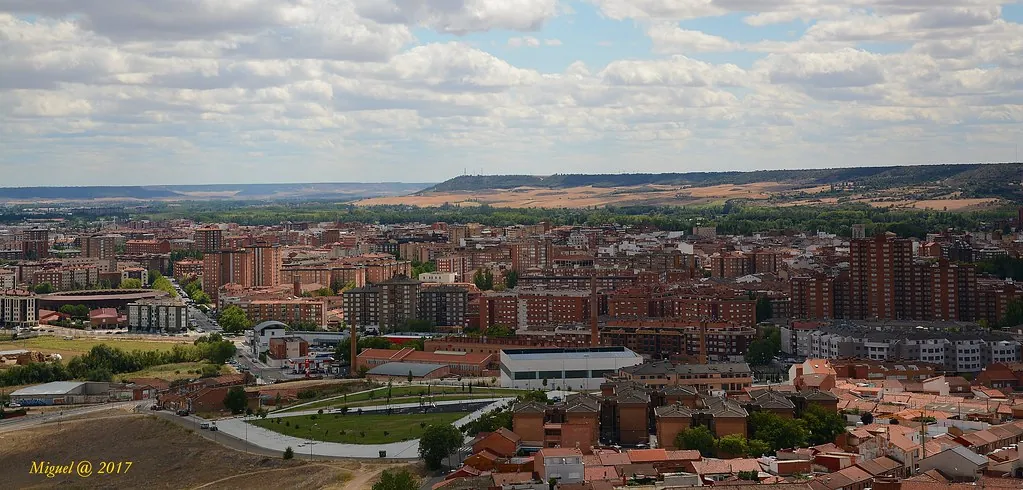
The village sits 25 kilometres south of Palencia, planted squarely in the middle of Tierra de Campos, Spain's answer to East Anglia. There are no mountains to frame the view, just an enormous sky and a horizon so straight you can watch thunderstorms develop an hour before they arrive. The only vertical punctuation is the 65-metre tower of the Iglesia de San Pedro, a brick-and-stone exclamation mark visible long before you reach the outskirts.
A Lagoon That Came Back from the Dead
Laguna de la Nava was drained in the twentieth century to plant more wheat. The soil proved too clay-rich, yields were poor, and by the 1990s the regional government decided to reverse the mistake. They flooded the basin again, re-seeded wetland plants, and waited. Within three years the birds had returned; within ten, ornithologists were driving in from Madrid with telescopes worth more than most local cars.
Today the lagoon is one of Castilla y León's top Ramsar sites, yet it still feels accidental. There are no entry gates, no car parks big enough for coaches, just a single-lane track that threads between reeds and barley. The visitor centre opens on request—ring the bell and a warden appears, happy to unlock the hides and sell you a €1 leaflet. From October to February the star attraction is the daily crane commute: up to 8,000 birds leave their night roost at dawn, spend the day scavenging leftover grain, then parade back at sunset in loose V-formations. You can watch the whole spectacle from a wooden platform 200 metres from the village football pitch; bring a scarf, the wind across the plain cuts straight through denim.
Summer is quieter. By July the lagoon often shrinks to a muddy puddle, and the birds move north. Local farmers then graze sheep on the emerging grass, an informal arrangement that keeps the reeds in check and saves on fodder. If you want mirror-calm water and reflections, come in May after the spring influx of avocets and black-winged stilts.
Adobe, Brick and Underground Wine
Back in the village, houses are built from the same ochre clay that defeated the wheat barons. Adobe walls two feet thick keep interiors cool at midday and warm after dark. Many still have family bodegas underneath—small brick-lined cellars reached by spiral stairs so narrow you edge down sideways. A few owners will open up if you ask politely; inside, the temperature sits at 14 °C year-round and the air smells of oak and fermenting grapes. Most stopped making wine when phylloxera hit in the 1920s, but the barrels remain, labelled with chalk marks from the last harvest.
Above ground, the streets follow a simple grid laid out in the thirteenth century. Calle Real is the spine; everything else branches off like ribs. At number 14, Casa Martín keeps a 400-pigeon dovecote in its back garden. The birds are long gone, but the nesting holes form a latticed pyramid that casts honeycomb shadows across the patio. Walk five minutes in any direction and you hit wheat. There are no suburbs, just a sudden transition from stone to stubble.
What You’ll Actually Eat
Forget tasting menus. Fuentes de Nava does one thing brilliantly: roast lamb. The local churro breed is milk-fed for four weeks, then into a wood-fired clay oven for three hours. The result is meat so tender you carve it with the edge of a plate, served with nothing more than a mound of chips and a quartered lemon. A half-kilo portion at Bar Paloma on Plaza de España costs €18 and feeds two comfortably. Order ahead; the ovens are lit only on weekends and for booked tables.
If lamb isn't your thing, ask for sopa castellana, a hearty garlic broth laced with paprika and chunks of jamón. Vegetarians get a thick vegetable stew called potaje de garbanzos—request it "sin chorizo" if you don't want the pork garnish. Wine comes from nearby Cigales; the rosado is strawberry-pale and arrives in a 500 ml carafe that costs less than a London espresso. Finish with queso de villalón, a soft sheep cheese that tastes like Manchego's younger, milder cousin, best smeared on bread with a dab of quince paste.
Sundays, siestas and other scheduling hazards
Plan around the Spanish clock or you'll go hungry. Shops shut from 14:00 to 17:00; the only place open mid-afternoon is the petrol station on the main road, and even that closes on Christmas Day. Market day is Sunday morning: six stalls occupy the square selling cheese, honey and the occasional hunting knife. Bring cash—card machines are considered exotic. If you need cash, the village ATM runs out of notes by Monday; the next one is a 20-minute drive in Baltanás.
Churches are usually locked outside service times. To see the gilded altarpiece inside San Pedro, phone the Palencia tourist office at least a day ahead; someone cycles over with a key. The same applies to the small Romanesque chapel at the cemetery, worth it for the twelfth-century fresco of Saint Peter looking distinctly sheepish as he walks on water.
Walking the Squares and Circles
The lagoon circuit is an eight-kilometre gravel track that starts opposite the cemetery gates. It's billiard-table flat, but the wind can be brutal; on gusty days you’ll walk twice the distance in effort. Cyclists can link up with the Vía Verde de la Campiña, a greenway that follows an old railway towards Medina de Rioseco—23 kilometres of straight, car-free riding through sunflower fields. Mountain bikes aren't necessary; a hybrid with puncture-resistant tyres is plenty.
Serious hikers head south-east to the Canal de Castilla. The towpath is intact but water levels are low; don't expect colourful narrowboats, just herons using the channel as a private fishing stream. From Lock 51 you can walk 12 kilometres to Frómista, emerging opposite the twelfth-century church of San Martín, one of the purest Romanesque buildings in Spain. Time it for lunch and try theMenu del Día at Café Colonial—three courses, water and wine for €12.
When to Come, When to Stay Away
October delivers the best bird spectacle and daytime highs of 18 °C. By December night temperatures drop below freezing; the cranes stay, but you'll need gloves and a thermos. Spring is green and loud with skylarks, yet the lagoon can be half-empty if winter rain was poor. August is the dead month—hot, dusty and quiet to the point of ghostly. Many houses are shuttered; their owners have decamped to the coast.
Accommodation is limited to three casas rurales, none with more than six rooms. Casa de Adobe has under-floor heating and prices start at €70 for two, including a breakfast of toast rubbed with tomato and a bowl of thick drinking chocolate. Book early for weekends and fiesta days: the village doubles in size during the last weekend of June when ex-residents return for the patronal feast of San Pedro. Expect fireworks at midnight and a disco that finishes when the sun comes up—possibly the only time you'll hear bass heavier than a crane's call.
The Bottom Line
Fuentes de Nava won't change your life. It offers no adrenaline activities, no souvenir tat, no Instagram hotspots. What it does give you is space—sonic, visual and temporal—to remember what a sky full of birds sounds like when no one is selling you anything. Bring binoculars, an empty stomach and a tolerance for silence. Leave before the church bell strikes ten and the village switches off its lights; the road back to Palencia is unlit, and the cranes have already claimed the night shift.