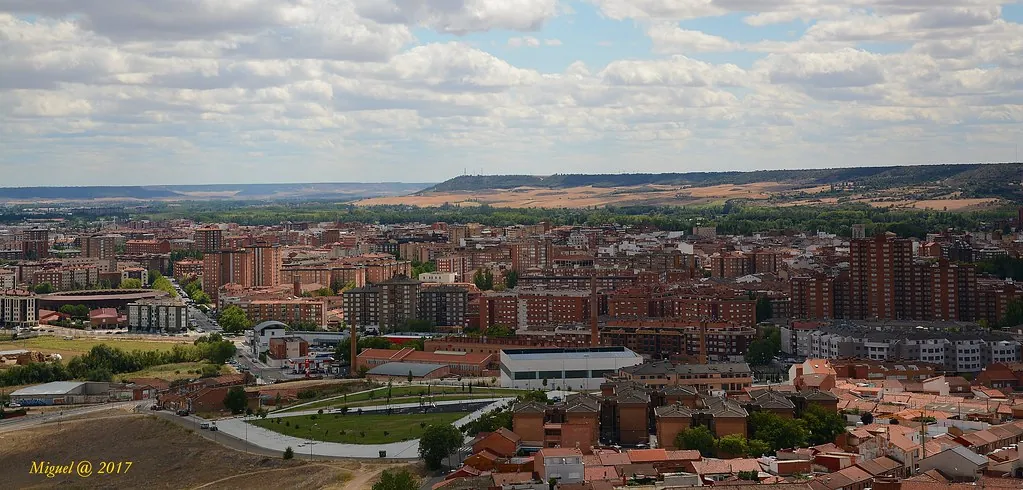
Itero de la Vega - Flickr
santiagolopezpastor · Flickr 6
Castilla y León · Cradle of Kingdoms

Itero de la Vega

The first thing you notice is the horizon bending like a loose wire. At 770 m above sea level the cereal plains south of Burgos stretch so flat tha...

147 inhabitants · INE 2025
770m Altitude

Why Visit

Fitero Bridge Camino de Santiago

Best Time to Visit

spring

San Pedro (June) septiembre

Things to See & Do
in Itero de la Vega

Heritage

  • Fitero Bridge
  • San Pedro Church
  • Hermitage of Mercy

Activities

  • Camino de Santiago
  • Riverside walk
  • Visit to the bridge

Festivals
& & Traditions

Fecha septiembre

San Pedro (junio), Virgen de la Piedad (septiembre)

Las fiestas locales son el momento perfecto para vivir la autenticidad de Itero de la Vega.

Full Article
about Itero de la Vega

A Jacobean village on the Pisuerga River, known for the Puente Fitero linking Palencia and Burgos on the Camino de Santiago.

Ocultar artículo Leer artículo completo

The first thing you notice is the horizon bending like a loose wire. At 770 m above sea level the cereal plains south of Burgos stretch so flat that the village of Itero de la Vega seems to have been dropped there by someone too tired to walk any further. That, in essence, is why it exists: the hamlet is a comma in the long sentence of the Camino Francés, a place to pause before the next 17 km of nothing-to-see-until-Castrojeriz.

Stone houses, a single street, two bars and a bridge. Population 155 on a busy Sunday. The arithmetic is brutal, but the sum works. Pilgrims arrive with dust on their boots and leave with bread in their rucksacks; the village keeps their footprints for a few hours and then sweeps them away.

The bridge that paid the bills

Puente Fitero, a six-arched medieval span across the Pisuerga, is the only “sight” most people remember. It once marked the border between the kingdoms of Castile and León, so every sheep, cart and merchant paid a toll. The limestone blocks are polished by nine centuries of boot leather; look closely and you can still see the slots where the iron gates hung. Beside it stands the Ermita de la Piedad, a Romanesque chapel barely wider than a single lorry, which doubled as a pilgrim hospital when the river ran high. Inside, the air smells of candle wax and damp stone. There is no ticket desk, no audio guide, just a visitors’ book that records the same complaint every April: “wind colder than my ex”.

Crossing the bridge is the high drama of the day. The Pisuerga slips past, brown and unhurried, carrying fragments of the Cantabrian mountains towards the Duero. Herons lift from the poplars; a fisherman in green waders casts without hope. Once you’re over, the Meseta proper begins – a sea of wheat that will turn from emerald to gold to stubble in the space of a British school holiday.

A village that refuses to pose

Itero will not be on anyone’s Instagram “top ten cute Spanish villages”. The church tower of San Pedro is sturdy rather than elegant; the plaza is concrete, not cobbled; flowerpots are sporadic. The supermarket opens when the owner wakes up and shuts when she feels like it. There is no ATM, no boutique, no Sunday craft market. If you need cash, the nearest machine is 17 km back in Castrojeriz – a fact discovered daily by walkers who assume contactless has reached rural Spain. It hasn’t.

What the place does offer is momentum in reverse. The albergues – two of them, facing each other like rival siblings – operate on donation and goodwill. La Mochila has a veg-heavy pilgrim menu (€10) that surprises people who thought the Meseta only served pork. The coffee is proper, not vending-machine bitterness, and the wi-fi password is written on a chalkboard that changes whenever the hospitalero can be bothered. Over the road, Hostal Puente Fitero does a three-course menú del día for €12: soup, grilled chicken, yoghurt. You sit at formica tables with tractor drivers who have finished for the day and cyclists who have just discovered how hard the plain can blow against you.

Walking the line

The Camino enters Itero on a gravel farm track that used to be Roman, became medieval, and is now simply the way to the next beer. The stage from Hornillos is 12 km of straight, dead-flat nothing; in July the heat shimmers like cheap glass. There is no shade until the village poplars, so the first bar stool feels like an honour. Most people arrive before noon, wash socks in the albergue sinks, and sleep through the hottest hours. By four the wind picks up, rattling the wheat like dry bones, and the path calls again.

If you’re not walking, the surrounding grid of farm lanes makes for an honest hour’s stroll. Early morning is best: larks overhead, dew silver on the furrows, the horizon pinking up like a shy apology. Take the track south-east and you’ll reach the abandoned railway halt of Itero-Tablada; the platform clock stopped in 1985 and the ticket window is now a swallow’s nest. There is no interpretive board, no heritage grant – just silence and the smell of wild fennel.

When to come, when to leave

April and May are the kindest months: temperature in the low twenties, wheat young enough to glow, nights cool enough for sleep. September repeats the trick, with added stubble fields the colour of digestive biscuits. Mid-summer is fierce: 35 °C by eleven o’clock, shade worth more than a cathedral. Winter is bright but raw; the wind carries snow from the Cordillera and the albergues close for lack of bodies. If you do come then, bring a sleeping bag rated below zero and do not expect central heating. The bars still open, but conversation is minimal until the brandy appears.

Getting here, getting out

There is no bus station, no taxi rank, no onward transport. The nearest ALSA stop is in Castrojeriz, 17 km west. From the UK fly to Madrid or Santander, take a train to Burgos, then the daily bus to Castrojeriz. A cab from Castrojeriz to Itero costs €25–30; book the day before because there is only one driver on Sundays. Once you leave Itero the next vehicle access is in Frómista, 28 km ahead. In short, you walk in or you walk out. The village likes it that way.

The honest verdict

Itero de la Vega will not change your life. It will give you a bed, a plate of lentils, and a sunset that makes the wheat look like liquid pennies. Some evenings the only sound is the click of hiking poles on tarmac and the soft thud of rucksacks being dropped outside the bar. If that is not enough, stay on the coach. But if you have spent the day measuring Spain in kilometres of straight track, the village offers something the guidebooks forget: permission to stop trying so hard. Drink the coffee, wash the shirt, watch the swallows stitch the sky above the bridge. Tomorrow the Meseta starts again, and the plain doesn’t care how fast you walk.

Key Facts

Region
Castilla y León
District
Tierra de Campos
INE Code
34089
Coast
No
Mountain
No
Season
spring

Livability & Services

Key data for living or remote work

2024
Connectivity5G available
TransportTrain 11 km away
Housing~5€/m² rent · Affordable
CoastBeach nearby
Sources: INE, CNMC, Ministry of Health, AEMET

Official Data

Institutional records and open data (when available).

  • TORRE DE ITERO
    bic Castillos ~1 km
  • ROLLO DE JUSTICIA
    bic Monumento ~0.8 km

Planning Your Visit?

Discover more villages in the Tierra de Campos.

View full region →

More villages in Tierra de Campos

Traveler Reviews