Full Article
about Medina de Rioseco
Known as the City of the Admirals; historic quarter with monumental churches and the Canal de Castilla basin.
Ocultar artículo Leer artículo completo
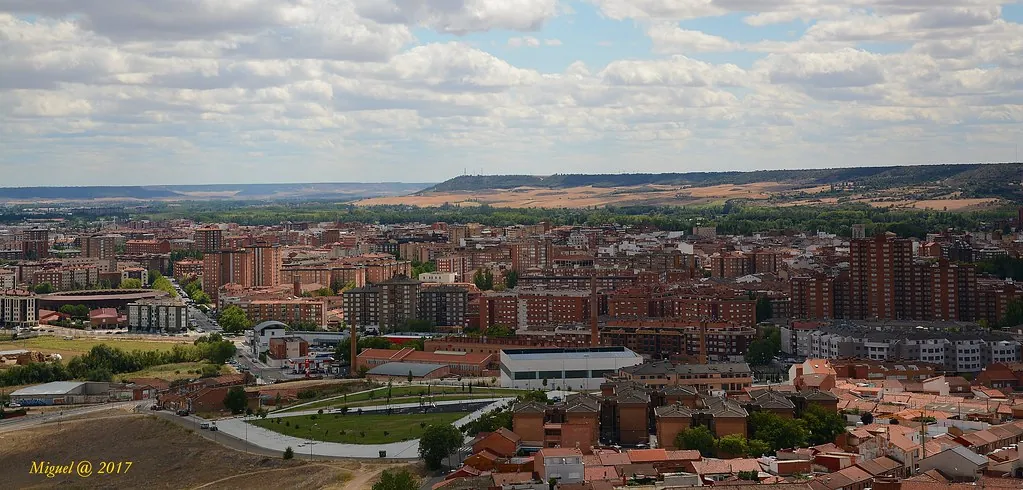
The bells of Santa María de Mediavilla strike eleven across a skyline that hasn't changed since the Enríquez family—admirals to the kings of Castile—bankrolled this town's golden age. Below, the weekly market is already packing up; tarpaulins come down, revealing stone arcades that once sheltered wool merchants weighing sacks against the silver of Flemish traders. Medina de Rioseco, 733 metres above sea level on the wind-scoured Tierra de Campos, makes no apology for keeping medieval hours. Lunch finishes by two, the streets empty by three, and the only sound is the grain elevator humming somewhere beyond the city walls.
A Street Built for Trade, Not Selfies
Calle de la Rúa, the porticoed spine of the old town, is forty metres too short to qualify as a grand boulevard yet feels longer thanks to the optical trick of repeating stone arches. Walk it slowly; the granite sets are uneven and the council has given up warning tourists. Above the glass-and-aluminium fronts of two surviving hardware shops hang timber beams blackened by four centuries of grain dust. Plaques beside studded doors list Enríquez offspring who bankrolled Columbus's second voyage or commanded squadrons against the Moors—genealogy that explains the town's nickname, "City of Admirals," and why the coat of arms shows both anchors and fleurs-de-lis.
Peer into doorways and you will still find the original mesones—taverns with earth floors where muleteers slept beside their animals. One has been converted into a chemist, another into Casa Manolo, the restaurant Lonely Planet singles out for roast lechazo. They will serve half a suckling lamb between two if you telephone ahead; expect to pay €24 a portion, crackling included, washed down with a young Cigales that arrives at table slightly cooler than room temperature, exactly as locals like it.
Churches That Outshine Their Town
Medina's population has halved since 1960, yet its ecclesiastical art collection would embarrass a city ten times the size. The Iglesia de Santa María hides the Capilla de los Benavente behind an unassuming Gothic façade; step inside and you are standing beneath what art historians call the "Sistine Chapel of Castile," a star-studded dome dripping with gold leaf so fresh it still smells of linseed. Admission is €3, cash only, collected by a sacristan who doubles as ticket clerk and will lock the door if he needs to ring the bells. Photography is forbidden, ostensibly to protect pigments but mostly to maintain the hush that lets you hear the wooden choir creak.
Five minutes away, Santiago de los Caballeros competes for attention with a Baroque high altar carved from walnut so dark it looks burnt. Between Palm Sunday and Easter the church becomes a depot for seventeen pasos—life-sized wooden sculptures carried through town during Holy Week. The museum ticket (shared €5 with Santa María) lets you inspect them at nose level: look for the 17th-century Virgin whose glass tears were once replaced with rock crystal after a British art dealer offered to buy them.
Water in a Dry Land
The Canal de Castilla skirts Medina two kilometres south, an 18th-century hydraulic highway built to float wheat to Bilbao. Today the locks still work, operated by a single engineer who appears on a moped when kayakers ring the bell. A paved track runs the towpath for 120 km; rent bikes from the hostel at the San Francisco convent (€15 a day) and head east towards Valladolid. The gradient is flat, the scenery relentlessly horizontal—sunflower stubble in autumn, green wheat by April—and shade non-existent. Carry water; the only bar between Medina and the next village opens unpredictably.
Walkers can manage the three-kilometre circuit to the twin locks of Las Piedras and back before lunch. Kingfishers flash turquoise between poplars planted to stabilise the banks, and the silence is so complete you hear the click of every bicycle spoke long before the rider appears. In October migrating cranes use the water as a navigation line; stand on the casilla (lock-keeper's cottage) roof at dusk and you may count a thousand birds heading south, their bugle calls echoing off the brickwork.
When to Come, When to Stay Away
Spring and late autumn suit the plateau climate. May brings day after day of 22 °C and sharp light that makes the stone glow honey-coloured; nights drop to 7 °C, so pack a fleece. July and August bake—midday temperatures flirt with 38 °C—and Spanish families desert the town for the coast. Winter is surprisingly harsh; at 733 m the wind whips across Tierra de Campos unfettered, and when snow falls the Valladibus service is cancelled without notice.
Semana Santa is spectacular and impossible. Every hotel bed within 30 km is booked a year ahead by Madrilené families who inherit reservations like heirlooms. If you crave trumpets and incense, reserve early; if you prefer echoing streets, avoid the week entirely and come instead for the September Feria de San Miguel, when livestock still changes hands in the main square and you can breakfast on churros dunked in thick chocolate at 8 a.m. without queuing.
Getting Here, Getting Fed, Getting Out
Valladolid airport, 29 km east, has summer Ryanair flights from London Stansted three times a week. Outside those months fly to Madrid and take the 55-minute ALSA coach north (€16). From Valladolid bus station, Monbus line 260 leaves bay 7 at 10:15, 13:15, 17:15 and 20:15; buy your €2.30 ticket from the driver and keep coins—notes are refused. The journey across the cereal plain takes 25 minutes, long enough to watch the horizon dip as Medina's towers rise like ship masts from a sea of wheat.
Rooms are inexpensive because demand is modest. Vittoria Colonna, a converted 16th-century palace on Calle del Sacramento, offers doubles for €55 including a breakfast of mantecados (crumbly shortbread) and coffee strong enough to anchor a frigate. Check-out is 11 sharp; the owner, Doña Paloma, will remind you at 10:45. The only alternative is Hostal El Cobertizo on the main road where truckers park—clean, €35 a night, and the bar opens at six for workers wanting a cortado before the fields.
Medina shuts early and hard. After 22:00 the lone cash machine inside the walled Santander branch powers down; bars will not accept cards under €10 and will tell you so bluntly. Bring cash, carry water if you plan to cycle, and do not expect conversational English. The reward is a town that has skipped the heritage gloss applied to more famous neighbours—no souvenir shops selling Don Quixote made in China, no audio guides in six languages, just stone, silence and the faint smell of roast lamb drifting from kitchen chimneys as the sun drops over the plain.