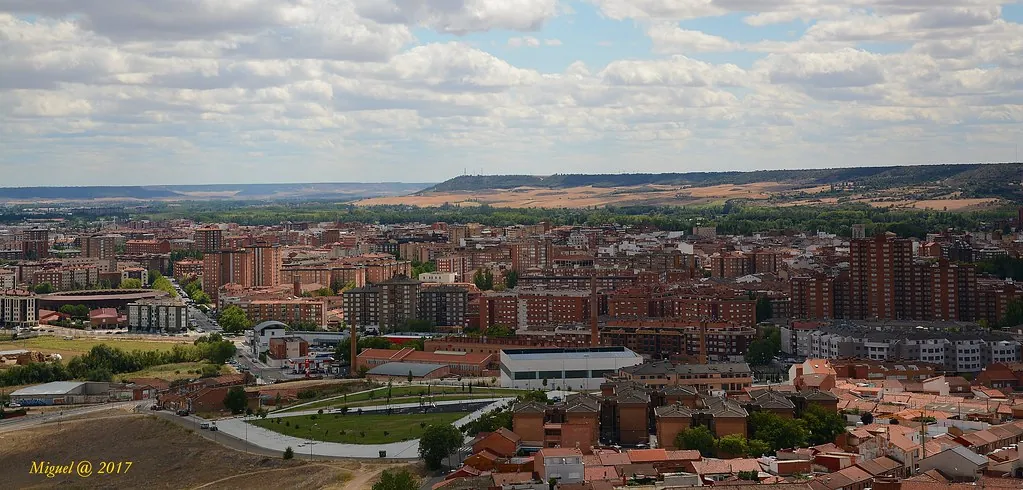
Vista aérea de Melgar de Arriba
Instituto Geográfico Nacional · CC-BY 4.0 scne.es
Castilla y León · Cradle of Kingdoms

Melgar de Arriba

At 780 metres above sea level, Melgar de Arriba sits high enough to make your ears pop on the drive up. The approach road from Valladolid climbs st...

161 inhabitants · INE 2025
784m Altitude

Why Visit

Church of Santiago Apóstol Cea River trails

Best Time to Visit

summer

San Miguel (May) julio

Things to See & Do
in Melgar de Arriba

Heritage

  • Church of Santiago Apóstol

Activities

  • Cea River trails
  • Hunting

Festivals
& & Traditions

Fecha julio

San Miguel (mayo), Santiago (julio)

Las fiestas locales son el momento perfecto para vivir la autenticidad de Melgar de Arriba.

Full Article
about Melgar de Arriba

Northernmost town in the province; noted for its Santiago church and the quiet of the surroundings.

Ocultar artículo Leer artículo completo

The Village That Forgot to Grow

At 780 metres above sea level, Melgar de Arriba sits high enough to make your ears pop on the drive up. The approach road from Valladolid climbs steadily for 45 minutes through wheat fields that stretch so far you can see the curvature of the earth. When you arrive, the village doesn't so much welcome you as regard you with mild surprise—like someone's eccentric uncle who's forgotten they had guests coming.

One hundred and sixty people live here permanently. That's not a typo. The entire population could fit inside a London double-decker bus with room to spare for the driver. They've been living at this altitude for centuries, watching weather systems roll across the Castilian plateau long before they hit the village. The air thins noticeably. In winter, temperatures drop five degrees lower than Valladolid. In summer, the sun burns with particular intensity—there's simply less atmosphere to filter it.

The village centre consists of a church, a bar that opens when the owner feels like it, and houses built from adobe bricks the colour of dry earth. Adobe isn't a design choice here; it's survival. The thick walls insulate against temperature swings that can hit twenty degrees between day and night. Walk down Calle Real at midday in July and you'll understand why every door is shut tight against the heat, every window barred with wooden shutters older than most countries.

What Passes for Architecture Around Here

The church of San Miguel squats in the main square like a bulldog that's seen better days. Built in the 16th century from local stone and whatever the congregation could afford, it represents Castilian rural architecture at its most honest: functional, unadorned, built to last rather than impress. Inside, the retablo shows saints painted by artists who'd clearly never met their subjects—everyone looks vaguely surprised to be there.

More interesting are the dovecotes scattered around the village periphery. These cylindrical towers, some square, rise from the wheat like primitive space rockets. Built from the same adobe as the houses, they housed pigeons that provided both meat and fertiliser for the fields. Most stand empty now, their entrances blocked by rubble and time. The best-preserved example sits 200 metres south of the village, visible from the road to Villalón. It's square-based, three metres tall, with the original nesting boxes still visible inside.

The real architecture here isn't built at all—it's the landscape itself. Fields of wheat and barley create a living mosaic that changes colour with the seasons. In April, the green is almost violent in its intensity. By July, it's gold that hurts to look at under the high sun. October brings ochres and browns that would make a Flemish master weep. The horizon sits so low you can watch weather arrive an hour before it hits. Local farmers claim they can smell rain coming from twenty kilometres away.

Walking to Nowhere in Particular

There are no marked hiking trails. No visitor centre. No gift shop flogging refrigerator magnets. What exists is a network of agricultural tracks that radiate outward like spokes from a wheel, connecting Melgar to neighbouring villages eight to twelve kilometres distant. These tracks serve farmers first, walkers second—if they serve walkers at all.

The camino to Villarramiel follows a ridge that offers views across three provinces. On a clear day, you can see the wind farms near León, forty kilometres northwest. The track is wide enough for a tractor, surfaced with compacted earth that turns to sticky clay after rain. Walking it in October means sharing with harvesters bringing in the sunflower crop. They'll wave, because everyone waves here, but don't expect conversation. Time works differently at altitude—people move slower, think longer, speak less.

Cyclists find these lanes perfect for grinding out base miles. The gradients rarely exceed three percent, but the wind can add twenty kilometres per hour to your effort without warning. Carry two bottles minimum—there's no water between villages, and the next fountain might be dry. Local riders start at dawn to avoid both wind and sun. They know something visitors don't: by 11am in August, the road surface radiates heat like a pizza oven.

The Sound of Almost Nothing

Stand in the village centre at 3pm on a Tuesday. Close your eyes. What you hear is the sound of a place that's forgotten to make noise. A tractor grumbles somewhere distant. A dog barks once, then thinks better of it. Wind moves through wheat with the sound of silk brushing silk. Your own breathing seems intrusive.

This absence of sound affects people differently. Some visitors find it oppressive, like a weight pressing against their eardrums. Others discover they can hear their own blood moving. The silence isn't peaceful so much as absolute—it forces confrontation with thoughts that traffic and television usually drown out. Local doctor Juan Carlos Martinez, who commutes from Valladolid three days weekly, claims half his consultations involve sleep disorders. "People aren't used to actual quiet," he says. "Their brains don't know how to process it."

Night brings a different acoustic experience. At this altitude, sound carries improbable distances. A conversation in the next village—five kilometres away—can seem like it's happening in your garden. The church bell, tolled by hand at 8pm, marks curfew for agricultural workers and time for visitors to find their dinner. There's no street lighting. On moonless nights, the Milky Way appears close enough to touch.

Eating What the Land Provides

The village bar, when open, serves coffee for €1.20 and beer for €1.50. The menu consists of whatever María—who owns it with her husband Paco—feels like cooking. This might be migas (fried breadcrumbs with garlic and chorizo) or sopa de ajo (garlic soup) thick enough to stand a spoon in. Don't ask for vegetarian options. Don't ask for gluten-free. Don't ask for anything, really—eat what's offered and be grateful.

Serious eating happens in Villalón de Campos, twelve kilometres down the road. Restaurante La Cuchara serves lechazo (roast suckling lamb) for €22 per portion. They'll do half portions if you ask nicely, though asking nicely involves Spanish and considerable humility. The wine list features local tempranillo that costs less than bottled water and tastes like it was designed to accompany roast meat and arguments about football.

Self-catering requires advance planning. The nearest supermarket sits in Medina de Rioseco, twenty-five minutes by car. Stock up before you arrive—Melgar's only shop closed in 2018 when the owner retired at eighty-seven and nobody wanted to take over. What locals need, they grow or barter. What visitors need, they should have brought.

When to Come, When to Stay Away

April brings fields of green wheat that ripple like ocean waves. Temperatures hover around fifteen degrees, perfect for walking, though showers arrive without warning and disappear just as fast. The village smells of wet earth and growing things. This is the best time, if best involves moderation in all things.

July and August bake. The thermometer hits thirty-five by midday and stays there until sunset. The wheat harvest dominates everything—tractors move through the night to avoid the worst heat. Accommodation options don't exist in Melgar itself; you'll need to stay in Villalón or Medina and drive up. Air conditioning isn't optional.

October offers ochre fields and temperatures that drop to five degrees at night. Farmers burn stubble, filling the air with smoke that catches the low sun like suspended gold. Migrating birds pass overhead in formations that predate human memory. The village celebrates its fiesta on the third weekend, when population swells to perhaps four hundred. There's a paella contest, a football match between middle-aged men who should know better, and dancing in the square until someone's grandmother complains about the noise.

Winter means snow at this altitude. Not much—two or three falls that melt within days—but enough to cut the village off when the access road ices over. The wind blows from the northwest with nothing to stop it between here and the Atlantic, three hundred kilometres distant. Only the truly committed visit between December and February. They find a village that's closed in on itself, protecting what warmth remains from the previous summer.

The road down to Valladolid closes when snow hits. They've been talking about installing heating cables for fifteen years. Don't hold your breath.

Key Facts

Region
Castilla y León
District
Tierra de Campos
INE Code
47089
Coast
No
Mountain
No
Season
summer

Livability & Services

Key data for living or remote work

2024
Connectivity5G available
TransportTrain nearby
Housing~5€/m² rent · Affordable
Sources: INE, CNMC, Ministry of Health, AEMET

Planning Your Visit?

Discover more villages in the Tierra de Campos.

View full region →

More villages in Tierra de Campos

Traveler Reviews