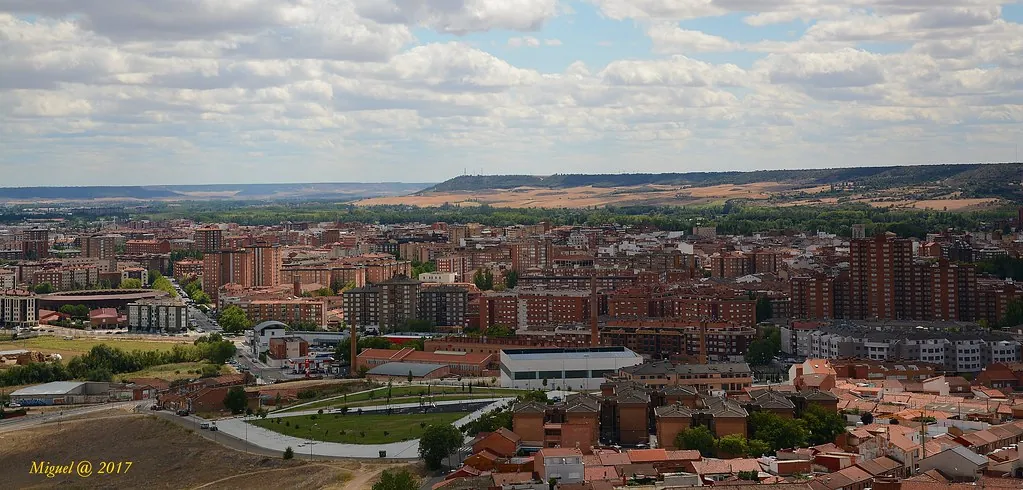
Valladolid - Edificio Moratinos 3.jpg
Zarateman · CC0
Castilla y León · Cradle of Kingdoms

Moratinos

The first thing you notice is the horizon. From the ridge above Moratinos it sits ruler-straight, 360 degrees of wheat and barley broken only by th...

55 inhabitants · INE 2025
860m Altitude

Why Visit

Mountain Church of Santo Tomás Way of Saint James

Best Time to Visit

spring

Santo Tomás (December) agosto

Things to See & Do
in Moratinos

Heritage

  • Church of Santo Tomás
  • Traditional wine cellars

Activities

  • Way of Saint James
  • Winery visits
  • Pilgrim rest stop

Festivals
& & Traditions

Fecha agosto

Santo Tomás (diciembre), Fiestas de verano (agosto)

Las fiestas locales son el momento perfecto para vivir la autenticidad de Moratinos.

Full Article
about Moratinos

Last town on the Camino de Santiago in Palencia before León; known for its hillside cellars and pilgrim atmosphere.

Ocultar artículo Leer artículo completo

The first thing you notice is the horizon. From the ridge above Moratinos it sits ruler-straight, 360 degrees of wheat and barley broken only by the square tower of the 16th-century church and, if the light is right, the tiny silhouette of a pilgrim plodding west. At 860 m above sea level the air is thin enough to make Madrid’s summer heat feel like someone else’s problem; by night the temperature plummets and the Milky Way appears with an almost vulgar clarity.

Seventy-five souls are registered here, though on any given day the head-count is higher. The Camino de Santiago Françés bisects the single street, funnelling a steady trickle of walkers between the albergue municipal and Bar Cruz, the only establishment that earns the word “bar” without exaggeration. They come in pairs, in chatty groups, or alone with blister tape trailing from their boots, and for a couple of hours Moratinos becomes a listening post: rucksacks thud onto flagstones, snippets of Korean, Dutch and Scouse float above the clink of coffee cups, then the village reverts to cereal-field silence.

Adobe, storks and the illusion of a castle

There are no souvenir shops, no interpretive centres, no ticketed anything. What you get instead is a textbook of Castilian building materials: adobe walls the colour of dry biscuits, timber painted the same green as the provincial road signs, and roofs of curved terracotta that the storks have requisitioned for their gymnastic nests. The houses are low, their doorways narrow enough to make a six-footer duck; many stand empty, but the ones that have been patched up show how cool adobe can keep a parlour when the thermometer outside nudges 38 °C.

Halfway down the street a private house sprouts two short turrets and a crenellated parapet. Locals call it “el castillo” with a shrug that admits the joke; Instagram pilgrims sometimes pose beneath it expecting a medieval fortress and leave mildly sheepish. Still, the lane beside it frames a photograph worth taking: wheat in the foreground, the church tower beyond, and sky that refuses to end.

Walking the meseta without leaving the bar

The meseta section of the Camino has a reputation for mental mileage: long straight tracks, no shade, nothing to look at but your own thoughts. Moratinos sits bang in the middle of that existential corridor, yet it offers just enough civilisation to let you test the theory in safety. From the door of Bar Cruz the path heads west for 6 km to Sahagún, east for 17 km to Castrojeriz; both directions are pancake-flat, shared with tractors rather than traffic. Cyclists like the surface—compacted gravel that never quite turns to sand—but complain about the headwind that picks up after 11 a.m. and doesn’t drop until sunset.

If you’d rather keep your boots clean, strike out south along the farm track signed “Ermita de la Virgen”. Within ten minutes the village is a smudge and the only sound is wheat rustling like dry rain. Crest the imperceptible rise and you’ll find a concrete bench placed, mysteriously, in the middle of nowhere; sit long enough and a Montagu’s harrier will quarter the field in front of you, giving a fly-past that no hide in Norfolk could guarantee.

Calories and caution

Bar Cruz unlocks at 07:00 sharp, lights off at 22:00 or whenever the last pilgrim stops buying drinks. The owner, Mari-Carmen, speaks no English but has perfected a bilingual menu: point at the glass cabinet for tortilla, at the whiteboard for the €12 pilgrim lunch. Expect soup thick enough to stand a spoon in, a pork chop the size of a coaster, chips frozen but fried in decent olive oil, and a yoghurt cup still cold from the chest freezer. Vegetarians can cobble together huevos rotos—crisply fried potatoes buried under two runny eggs—while vegans should stock up in Sahagún because here even the salad arrives with tuna by default.

The honesty-box fridge outside the albergue is a Camino legend: €1.50 buys a 33 cl bottle of Estrella, €1 gets you water. Drop coins in the tobacco tin, clink heard by no one; the system has run for eight years without going bust, a small referendum on Spanish trust. There is no shop, no cash machine, no pharmacy; the nearest supermarket is 7 km away and closes on Sunday afternoons, a fact forgotten every week by someone who ends up eating plain crisps for supper.

Seasons and solitude

April turns the surrounding plain an almost Irish green; by late May the wheat is waist-high and the fields shimmer like a low-resolution screensaver. June brings daylight until 22:15 and night temperatures that hover around 10 °C—perfect for sleeping in the albergue, which has no heating and blankets that smell of camphor. July and August are brutal: 35 °C by noon, shade only inside the church or your own shadow. The bar does a roaring trade in €2 glasses of house red served with ice cubes, a practice that would get you excommunicated in Rioja but here makes absolute sense.

Autumn is harvest: combine harvesters the size of semi-detached houses crawl across the horizon, kicking up dust that hangs in bronze shafts. September mornings are crisp, afternoons still warm enough for shorts; the camino quietens after the summer surge, giving the village back to itself. Winter is not picturesque. The thermometer can dip to –8 °C, the wind cuts sideways, and the albergue shuts to conserve firewood. Unless you crave absolute silence and carry your own central heating, visit between late March and mid-October.

Beds, buses and back-up plans

Accommodation is limited to twelve municipal bunks (donation €8, kitchen available but no pots) and three double rooms at the private house-castle (€45 including breakfast, Wi-Fi that actually reaches the bedrooms). When both are full—which happens in May and again in September—the nearest beds are in San Nicolás del Real Camino, 4 km east along the path. A taxi from Sahagún costs €18 if you’ve snapped a ligament; the local driver, Jesús, answers WhatsApp voice messages faster than the village gets mobile reception.

Getting out without walking involves a train from Sahagún to Madrid-Chamartín (two direct Alvia services daily, 2 h 15 min, advance fares from €21). The same line continues to León for those heading onward to Galicia. Buy your ticket while you still have 4G; the station café’s Wi-Fi password is written on a piece of cardboard that no one can ever find.

Last call

Moratinos will not change your life. It offers no epiphany, no Instagram trophy, no story that plays well at a dinner party. What it does give is a calibration point: a place to measure how much noise you normally carry in your head against an almost perfect silence. When the bar closes and the pilgrims switch off their head-torches, the village reverts to its default setting—sky, fields, and the faint whistle of wind through stork nests. Stay up for ten minutes, let your eyes adjust, and you’ll realise the horizon is still there, glowing faintly under starlight, waiting for tomorrow’s walkers to discover it all over again.

Key Facts

Region
Castilla y León
District
Tierra de Campos
INE Code
34109
Coast
No
Mountain
Yes
Season
spring

Livability & Services

Key data for living or remote work

2024
TransportTrain nearby
Housing~5€/m² rent · Affordable
Sources: INE, CNMC, Ministry of Health, AEMET

Planning Your Visit?

Discover more villages in the Tierra de Campos.

View full region →

More villages in Tierra de Campos

Traveler Reviews