Full Article
about Paredes de Nava
Birthplace of Pedro Berruguete and Jorge Manrique; a town with exceptional artistic heritage and a benchmark parish museum.
Ocultar artículo Leer artículo completo
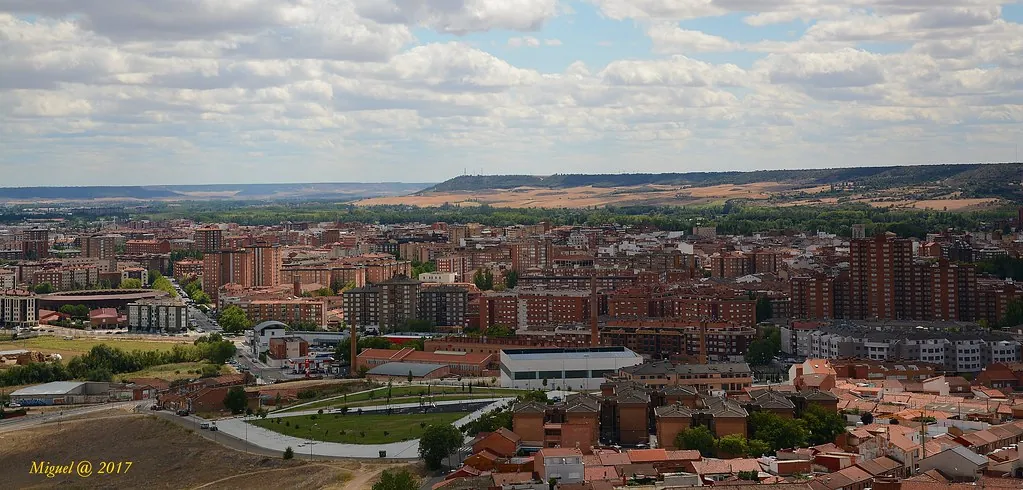
The tower of Santa Eulalia rises like a compass needle above the pancake-flat Tierra de Campos, visible a full five minutes before you reach the town itself. At 775 m above sea level, Paredes de Nava sits higher than Sheffield yet feels as though it were pressed into the earth by the vast Castilian sky. That sky is everywhere: reflected in the adobe walls, echoed by the pale stone of three Gothic churches, and stretched tight across cereal fields that shimmer gold in June and green in April.
A Wheat Town That Learnt to Paint
The town’s wealth came from grain, not grapes. Medieval wheat merchants funnelled profits into altarpieces rather than palaces, and the result is an artistic density that startles anyone expecting a quiet agricultural backwater. Step inside Santa Eulalia and you are confronted by Pedro Berruguete’s brushwork—Spain’s answer to early Flemish precision—hanging in a space that still smells of candle wax and floor polish. The parish museum next door keeps further panels in a modest side-chapel; labels are in Spanish only, so download a translation app or simply enjoy the colours: vermilion robes, lapis skies, sheep that look as if they’ve just trotted in from the surrounding plain.
Opening hours are idiosyncratic—Tuesday to Friday 10:30-13:30, Saturday 11:00-14:00, closed Sunday and Monday—so check the notice taped to the door rather than trust the website. Entry is €3, cash only, and the custodian will flip on lights as you enter each bay. If the doors are locked, the bar opposite, Café California, usually knows whether someone is “en el museo”.
Santa María and San Juan complete the ecclesiastical triangle. Neither charges admission; both are kept unlocked during daylight. Santa María’s nave is barn-wide, the stone acoustics so sharp that your footsteps echo like a second pilgrim. San Juan, half a street away, has a simpler retablo but retains its medieval roof beams—oak that predates the Armada and smells of resin on hot days.
The Plain Truth About Eating
Paredes de Nava does not do tasting menus. What it does do is roast milk-fed lamb—lechazo—cooked in wood-fired clay ovens until the skin crackles like pork. Restaurante Pensión Sofía on Calle Santa Ana serves it at €18 a quarter with a dish of judiones (buttery giant beans) and a carafe of local red. The wine is from Tierra de León, soft enough for Rioja drinkers and cheaper than water in most Brighton restaurants. Vegetarians can ask for pimientos de Padrón and a plate of the local sheep’s-milk cheese; the latter appears under the unassuming name “queso tierno” but tastes like a mild Manchego crossed with Wensleydale.
Sunday lunch starts at 14:00 sharp and the dining room empties by 16:00, when families head home for sobremesa. After 22:00 the town is essentially silent—footsteps carry, dogs bark, and the sky, unpolluted by street-lighting, turns into a planetarium. Bring a coat even in May; the altitude means temperatures can drop 15 °C after dusk.
Cycling the Canal That Never Reached the Sea
Five kilometres north, the Canal de Castilla slices across the plain like a ruler-drawn line. Begun in 1753, it was meant to haul grain to the Bay of Biscay, but money and topography ran out; the water stops dead at Medina de Rioseco, 40 km short of the coast. What remains is a flawless cycling track: flat, tarmacked, and empty. Hire bikes in Palencia (€20 a day) or simply walk the towpath to the next lock, where white stilts nest in the reeds and the only sound is the click of irrigation gates. Boat trips operate from nearby Melgar de Abajo between Easter and October; outside those months the quay is shuttered and you’ll have the herons to yourself.
If you prefer two feet to two wheels, a signed 7 km loop leaves from the ermita on the eastern edge of town, passes the modest Laguna de la Nava (bring binoculars for marsh harriers), and returns along a farm track lined with poplars. The path is level but exposed—there is literally no shade—so carry water and a hat even in October.
Getting Here, Staying Over, Knowing When to Leave
There is no railway. ALSA buses run twice daily from Palencia (35 min, €4.20) but the midday service is axed at weekends. A hire-car from Valladolid airport—reached via Madrid with Iberia—gives more flexibility and turns the journey into a 50-minute drive across open fields that look like East Anglia on steroids. Roads are empty, petrol cheaper than in the UK, and parking free beside the main plaza.
Accommodation is limited to a pair of small guesthouses: Hostal Camino de Santiago (doubles €55, no lift) and the newer Hotel Trescasas (€70 with breakfast). Both fill during Semana Santa and the September fiestas; book ahead or base yourself in Palencia and day-trip. If you need cash, the Santander ATM on Plaza de España accepts UK cards and dispenses up to €300; most bars do not take plastic, and the museum ticket desk certainly doesn’t.
Spring and autumn give the best light: sharp mornings, hazy afternoons, storks clacking on chimney pots. August is furnace-hot—38 °C is routine—and December can bring minus figures and a wind that feels straight from the Urals. Whenever you come, plan on half a day to see the churches and another half to walk or cycle; linger longer only if you enjoy the sound of grain dryers and the sight of elderly men in berets arguing over dominoes.
Paredes de Nava will not change your life. It will, however, recalibrate your sense of scale: the plain is so wide that the horizon curves, the sky so dominant that even the tallest tower looks provisional. Leave before dusk and the tower of Santa Eulalia will follow you in the rear-view mirror, a stone finger pointing at nothing and everything, until the road dips and the wheat swallows it whole.