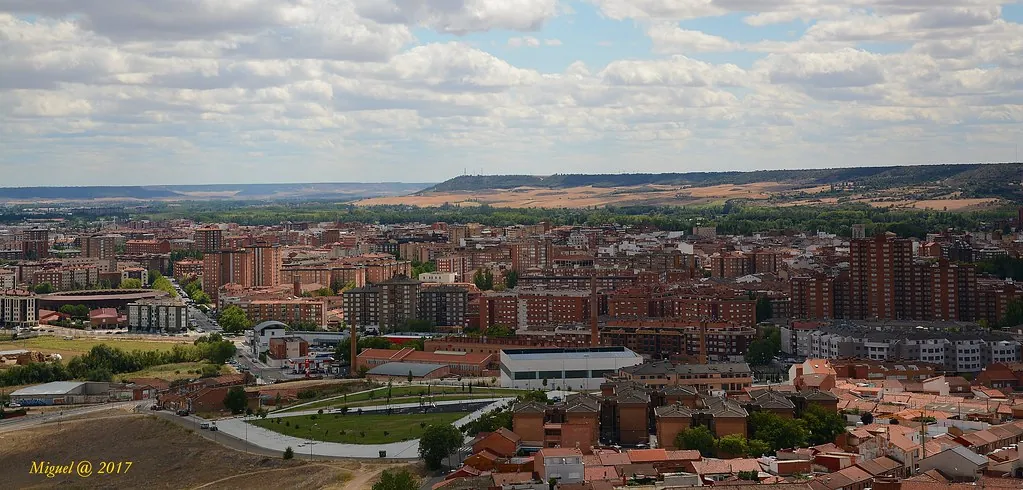
Vista aérea de Pozo de Urama
Instituto Geográfico Nacional · CC-BY 4.0 scne.es
Castilla y León · Cradle of Kingdoms

Pozo de Urama

The wheat field stops abruptly at a low stone wall. Beyond it, a single-track lane leads into Pozo de Urama, population twenty, elevation 800 m. No...

21 inhabitants · INE 2025
800m Altitude

Why Visit

Mountain Church of Nuestra Señora del Castillo Quiet walks

Best Time to Visit

summer

Our Lady of the Castle (August) agosto

Things to See & Do
in Pozo de Urama

Heritage

  • Church of Nuestra Señora del Castillo
  • Bust of Pablo Montesino

Activities

  • Quiet walks
  • Cultural route
  • Stargazing

Festivals
& & Traditions

Fecha agosto

Nuestra Señora del Castillo (agosto), San Isidro (mayo)

Las fiestas locales son el momento perfecto para vivir la autenticidad de Pozo de Urama.

Full Article
about Pozo de Urama

Tiny Terracampina village; birthplace of educator Pablo Montesino; noted for its quiet and adobe architecture.

Ocultar artículo Leer artículo completo

The wheat field stops abruptly at a low stone wall. Beyond it, a single-track lane leads into Pozo de Urama, population twenty, elevation 800 m. No signpost announces the village; the only clue is the church tower rising above terracotta roofs like a ship's mast in an ocean of cereal. At dusk in April the green grain glows almost neon against the steel-grey sky, and the place feels less like a settlement than a mirage that might vanish with the next harvest.

Adobe, tile and the sound of silence

Every building here is handmade from what lay within ox-cart distance: ochre mud, straw, pine beams, Arabic tile. Walls bulge and settle, roofs sag, doorframes list. The effect is not picturesque; it is honest. You can read the economic history of Castile in those patched facades—booms that paid for a second storey, busts that left ground-floor rooms open to the wind. A few houses sport bright Madrid-style colours, evidence of weekenders who arrive with paint and leave before November's first frost.

The plaza is a widened street. One bench, one streetlamp, no bar. The parish church of San Miguel, 16th-century but remodelled so often it looks older and newer at once, keeps its door latched. Ring the bell in the tower wall and a woman in an apron appears from across the lane; she keeps the key in her kitchen drawer. Inside, the nave smells of candle wax and damp stone. A single bulb hangs from the choir vault; switch it on and the frescoes—folk art rather than fine—jump into life: ochre saints, scarlet martyrs, a sky the colour of Wedgwood. Donations go into a tin labelled “for the roof”. Drop in a euro and you hear it land.

Walking the dry sea

Leave the last house behind and you are instantly alone on the meseta. The caminos are sandy strips between cereal plots, marked only by tractor tyre prints. In May the wheat is knee-high and whispers like silk; by July it stands chest-high and crackles. There is no shade except an occasional poplar planted as a windbreak, so start early. A circular tramp of 6 km south to the abandoned hamlet of Urama la Vieja and back takes ninety minutes, longer if you stop to photograph the dovecotes—square adobe towers punched with nesting holes, some intact, some dissolving back into mud. Farmers tolerate walkers who stick to the verge; close every gate and resist the urge to climb the stone piles that once were walls.

Birdlife rewards patience. Little bustards perform their corkscrew display flights in April; calandra larks pour out mechanical song overhead. Bring binoculars and water—there is nowhere to buy either. Mobile reception is patchy; download an offline map before setting out.

When winter bites

At 800 m the village sits just high enough for weather to turn nasty. January mean is 2 °C, but the wind sweeping across Tierra de Campos makes it feel colder. Snow is brief yet disruptive: the regional road CL-615 is cleared sporadically, and the final 9 km from Herrera de Pisuerga can become a white ribbon of packed ice. If you insist on a winter visit, pack chains and keep the fuel tank half full—there is no petrol station closer than 25 km. Summer swings the other way: July tops 32 °C by mid-afternoon, and the only swimming option is the municipal pool in Herrera, open July–August, €3 entry, midday siesta closure 2–4 pm.

Eating without a restaurant

Pozo de Urama has no shop, no bakery, no bar. Self-catering is mandatory unless you befriend a resident invited to a family asado. Stock up in Palencia (45 min drive) or at the supermarket in Herrera de Pisuerga (15 min). Regional specialities to sling in the boot: lechazo (milk-fed lamb) from the village of Castrillo de Villavega, P.D.O. Aliste cheese made from raw sheep's milk, and jars of locally jarred pardina lentils. If you crave a menu del día, drive 20 km to Villada where Mesón O Theu serves three courses plus wine for €14; weekends only, book ahead.

Arriving and staying

The nearest airports with UK flights are Santander (120 km, 1 h 45 min on fast roads) and Valladolid (100 km, 1 h 20 min). Car hire is essential; no bus company lists Pozo de Urama on its route map. Accommodation is limited to three village houses renovated as holiday lets—search “casa rural Pozo de Urama” on the regional tourism site. Expect stone floors, wood-burning stoves, Wi-Fi that copes with email but not Netflix. Nightly rates hover around €80 for two bedrooms, minimum two nights. Hosts live in Palencia city; they leave the key in a coded box and will not appear unless the boiler misbehaves.

The fiesta that almost isn't

The patronal fiesta happens sometime in mid-August, date fixed by WhatsApp vote. Activities: Saturday evening mass followed by pinchos in the priest's garden, Sunday lunchtime paella cooked on a gas ring in the plaza, children's sack race, nighttime disco powered by a single speaker. Visitors are welcome but not announced; turn up with your own chair and a bottle of tinto de Aguilar and you will be absorbed. Fireworks are modest—think supermarket selection box rather than Edinburgh Hogmanay.

Last light

Stand beside the church at sunset in early October and the cereal stubble catches the low sun like brushed brass. The only sounds are a dog barking two streets away and the soft clink of a horseshoe on stone as a local farmer leads his mare home. Pozo de Urama offers no souvenir shop, no viewpoint selfie platform, no Michelin mention. What it does offer is a calibration check for anyone who thinks Spain equals crowded coast and late-night tapas. Come for twenty-four hours and you will leave with a revised sense of scale: a country the size of Britain still contains places where silence is the headline attraction, and where the horizon is far enough away to remind you that Europe has its own interior wilderness.

Key Facts

Region
Castilla y León
District
Tierra de Campos
INE Code
34137
Coast
No
Mountain
Yes
Season
summer

Livability & Services

Key data for living or remote work

2024
TransportTrain nearby
Housing~5€/m² rent · Affordable
Sources: INE, CNMC, Ministry of Health, AEMET

Planning Your Visit?

Discover more villages in the Tierra de Campos.

View full region →

More villages in Tierra de Campos

Traveler Reviews