Full Article
about Prado
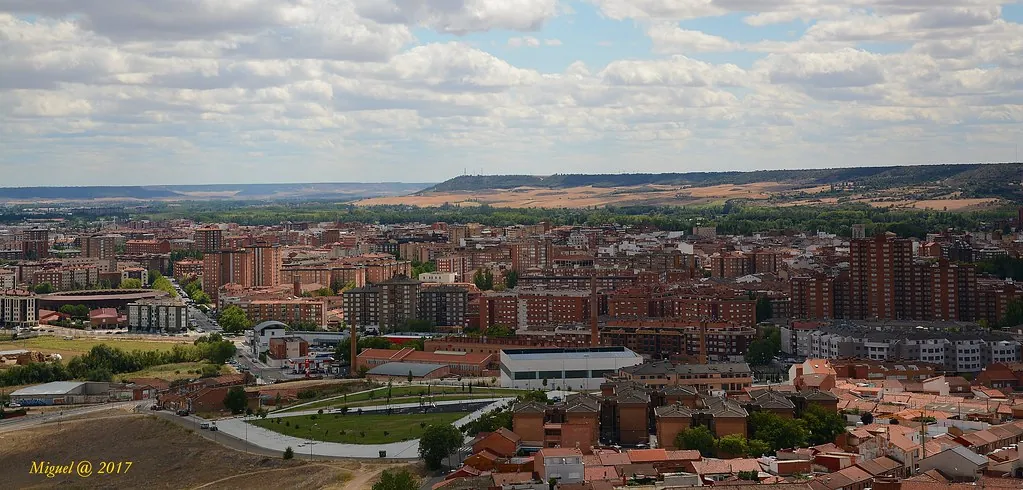
Tiny Tierra de Campos town; it keeps the lonely beauty of the cereal steppe.
Ocultar artículo Leer artículo completo
The tractor arrives at seven-thirty. Not a gentle putter but a proper diesel clatter that ricochets off the single-storey houses and sends a pair of magpies flapping towards the cereal horizon. In Prado, this counts as the morning rush hour. Fifty-odd inhabitants, one parish church, and a plateau so flat that the village’s 710-metre contour line feels like a mountain ridge.
The Arithmetic of Empty Space
Stand on the plaza at midday in July and the heat has weight. Thermometers nudge 34 °C, yet the air feels thinner; at this altitude the sun burns faster, a useful detail if you plan to walk the unsignposted farm tracks that fan out from the last streetlamp. There are no kiosks, no bike-hire shack, not even a bench with a view—just wheat, barley and the occasional fallow square where stone curlews hide their eggs among the stubble.
The caminos were bulldozed wide in the 1970s so combine harvesters could turn without reversing. That makes them perfect for gravel bikes: hard-packed clay, dead-straight for kilometres, zero traffic. Circle south-east for 12 km and you reach Villafáfila’s lagoons, where flamingos winter. Head north-west for 9 km and you bump into Villalón de Campos, whose Mudéjar tower you can climb for two euros on Saturdays. Either way, carry two litres of water; the only shade is the shadow your own body casts.
Brick, Adobe and the Sound of Emptiness
Prado’s church has no tourist board plaque, no opening times. The door is oak, iron-studded, and usually ajar; push gently and the hinges squeal like a wet finger on glass. Inside, the temperature drops ten degrees. Walls are half brick, half tapial—chalky adobe mixed with straw—exactly what you would expect in a place whose building stone is the wind. The altar rail is 19th-century pine, painted sludge-green. No gold leaf, no St Teresa swooning; just a single electric candle that someone switches off when the last prayer leaves.
Back outside, notice the boarded windows, the collapsed roof beams lying in courtyards like dinosaur bones. Each ruin is a ledger of departures: the 1960s rush to Barcelona’s factories, the 1980s drift to Valladolid’s service jobs, the steady hemorrhage of university places that never come back. The village school closed in 1998; the plaque reads “Gracias por vuestros años de esfuerzo” and someone has nicked the brass letters off “esfuerzo”.
What Grows Between the Cracks
Come in May and the plateau is a green ocean that ripples when the breeze arrives. By late June the combine harvesters shave it to stubble; the air smells of grain dust and diesel. That’s the moment to look for great bustards. You will need binoculars (8×42 minimum) and patience; the males weigh 15 kg and stand a metre tall, but their brown-and-buff plumage melts into the straw. Drive the back road towards San Agustín del Pozo at dawn—slowly, windows down—and you may hear their hollow, double-bark call long before you see them.
Photographers favour the grain elevator on Prado’s western edge. Climb the crumbling concrete steps (mind the rebar) and the plateau spills outward in a checkerboard of ochre and lime-green. Sunrise here is 6:15 am in October; the light stays side-on for forty minutes, painting every furrow with razor-sharp shadow. Night brings a sky so dark that the Milky Way reflects in puddles. Bring a tripod and a remote release; the only passing headlights belong to the farmer driving home from the cooperative.
Calories and Other Practicalities
There is no shop. Zero. The last grocery, a front-room affair run by Doña Pilar, shut when she died in 2013. If you are self-catering, stock up in Zamora before you leave the N-630. The Tuesday market in Tordesillas (40 min drive) sells lentils from Tierra de Campos at €3 a kilo, small enough to slip into panniers. For coffee, try Bar la Parada in Villalpando (9 km) where an espresso still costs €1.10 and they will fill your flask if you ask nicely.
Accommodation is equally scarce. The nearest rooms are in restored manor houses outside Villafáfila: double B&B around €85, heating extra in winter. Camping is tolerated beside the irrigation canal provided you pack up at first light; the guarda civil patrols at dusk and will wave if your fire is smokeless. Wild swimmers should lower expectations—the canal is only waist-deep and farmers spray it with glyphosate in April.
When the Village Remembers Itself
The fiesta happens on the third weekend of August. Population swells to 300, car boots overflow with folding chairs, and someone unspools electrical cable from the church to the plaza so a sound system can blast 1990s Spanish pop until the priest complains. Saturday night is the communal paella: €10 donation, bring your own plate. The rice arrives in a pan two metres wide, towed behind a Renault 19. Locals will insist you taste the local chorizo; it is actually from a factory in Valladolid but nobody admits it.
Sunday morning, the bishop sends a substitute priest because the regular one is on holiday. Mass is amplified outdoors; swallows dive-bomb the loudspeakers. Afterwards, the procession circles the single block of houses, Virgin balanced on the shoulders of eight teenagers who WhatsApp their mates while they walk. Fireworks cost €600 and last four minutes; the smell of gunpowder drifts across the wheat and is gone.
Getting There, Getting Out
From the UK, fly to Madrid, then drive north-west for two hours on the A-6 and A-11. Turn off at Zamora and follow the CL-527 towards Benavente; after 38 km watch for the finger-post that simply says “Prado 12”. The final 12 km are on local road ZA-315, single track with passing bays. In winter, morning frost can linger until eleven; black ice forms in the dips, so hire a car with ESP and decent tyres. Summer drivers face the opposite hazard—dust devils that swirl across the tarmac and reduce visibility to twenty metres.
No buses run to the village. The closest railway station is Zamora, on the Madrid–Galicia high-speed line. A taxi from there costs €70 if you ring Teletaxi Zamora in advance; cheaper to rent a Seat Ibiza for three days (around €90 via OK Mobility) and accept the carbon guilt.
The Honest Verdict
Prado will not change your life. You will not stumble upon a secret Michelin restaurant or a forgotten Roman mosaic. What you get is a slab of high plateau where human time moves like honey and the horizon feels negotiable. Bring water, binoculars and a tolerance for silence. Leave before the August fiesta if you dislike crowds, or arrive exactly then if you want to see how a village remembers itself for forty-eight hours before slipping back into hibernation. Either way, the tractor still starts at seven-thirty, and the fields keep rolling towards a sky big enough to swallow every cliché you ever packed.