Full Article
about Quintanilla del Monte
Municipality in the Villafáfila Lagoons reserve; prime spot for watching steppe birds.
Ocultar artículo Leer artículo completo
The church bell strikes noon, and the only other sound is a tractor churning through golden wheat. In Quintanilla del Monte, time doesn't stand still—it just moves to a different rhythm. Less than a hundred souls call this Castilian village home, scattered across the endless plain where the horizon stretches forty kilometres in every direction.
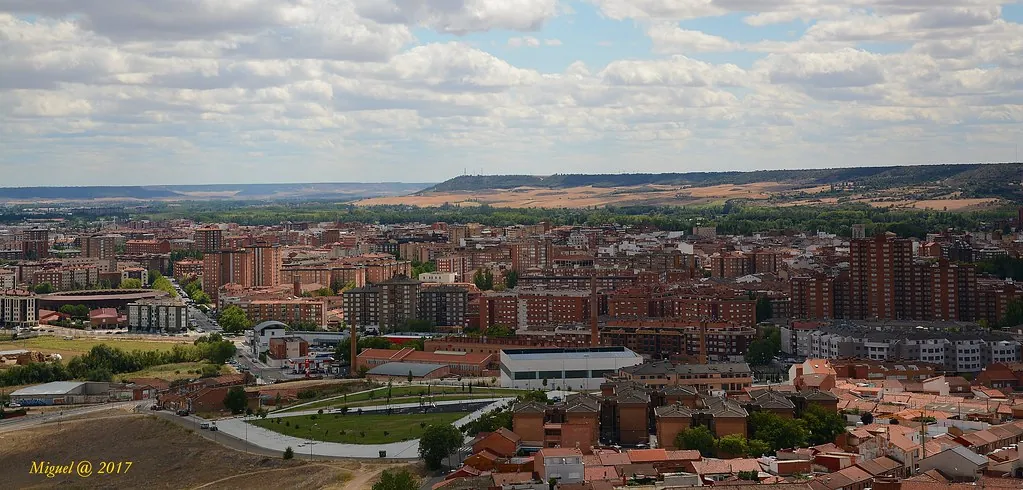
This is Tierra de Campos, Spain's answer to East Anglia, only sun-baked and twice the altitude. At 750 metres above sea level, the air carries a surprising crispness even in July. The landscape rolls—not in hills, but in waves of cereal crops that shift from emerald in April to bronze in September. It's big-sky country, where clouds cast shadows the size of counties and you can watch weather systems approach for half an hour before they arrive.
The Village That Agriculture Forgot to Erase
Quintanilla del Monte's survival feels almost accidental. While rural Spain empties, this cluster of adobe houses and brick barns persists, its population stubbornly hovering around eighty residents. The streets follow no grid—they wander between houses like sheep tracks fossilised into tarmac. Adobe walls three feet thick keep interiors cool through summers that regularly touch 35°C, while winter nights plummet to -8°C, bringing frost that can linger until eleven in the morning.
The architecture tells its own story. Grand wooden doors, tall enough to admit a laden donkey, open onto courtyards where chickens once scratched. Many have been converted into garages, though you're as likely to find a combine harvester parked outside as a Citroën. Underground cellars, carved from the compacted earth, still store wine at a constant 14°C year-round. Some have been transformed into rustic dining rooms; others remain exactly as they were when the last harvest was pressed in 1983.
Photographers arrive seeking Ansel Adams moments but find something closer to Edward Hopper. The light is relentless—either brutally exposing every texture or disappearing completely behind clouds that could swallow Rutland whole. Dawn and dusk stretch endlessly. In June, you can read a newspaper outside at 10:30 pm. December days compress to eight hours, with the sun skimming the horizon like a stone across water.
Walking Where Romans Once Measured Distance
The Romans passed through here, leaving straight roads that modern tractors still follow. Their legacy survives in the caminos—farm tracks that radiate from the village like spokes. Walking them requires no specialised equipment: sturdy shoes, water, and a hat for a sun that feels closer than it should at this latitude. The highest point within five kilometres rises just thirty metres above the village, making every route essentially flat.
These paths serve double duty as unofficial wildlife reserves. Step away from the machinery and you'll find bustards strutting through wheat stubble, their population recovering from near extinction. Harriers hunt low across fallow fields. At dusk, stone curlews call from roadside ditches, their eerie cries carried for miles across the acoustic sponge of open farmland. There's no hide, no visitor centre—just walk quietly and look.
Cycling works too, though bring puncture repair kits. The agricultural tracks vary from concrete-hard to axle-deep dust, sometimes within fifty metres. Road bikes stay on the tarmac heading towards Boada de Campos (6km) or Villalón de Campos (12km), while mountain bikes can venture onto the network of pistas that connect grain silos and isolated farmhouses. The local petrol station in Villalón sells basic supplies and will inflate tyres for fifty cents.
Eating What the Fields Provide
Food here predates the Mediterranean diet fad—it's survival cooking refined over centuries. Chickpeas arrive stewed with spinach and morcilla, the local blood sausage spiced with pimentón rather than penny-pinching oatmeal. Lamb comes from animals that grazed these very fields, roasted until the exterior crisps like pork crackling while the interior stays rose-pink. The wine arrives in unmarked bottles from cooperatives in neighbouring provinces, costing €3 and punching well above its weight.
Don't expect restaurants with English menus. The bar in the village opens sporadically—call ahead on +34 983 830 000 to confirm. More reliable options lie in Villalón: Mesón de la Plaza serves a €12 menú del día that would cost £25 in Leeds, while Casa Paco specialises in lechazo (suckling lamb) for weekend visitors from Valladolid. They'll serve half portions if asked, understanding that British stomachs aren't trained for Castilian quantities.
Self-catering presents challenges. The village shop closed in 2009; the nearest supermarket sits twelve kilometres away in Villalón. Stock up before arrival, or plan to drive for supplies. What you can buy locally makes the journey worthwhile: eggs still warm from hens that scratch behind houses, honey from beekeepers who'll sell you a kilo jar for €8, and seasonal vegetables sold from wheelbarrows parked beside the main road.
When Silence Breaks: Festivals and Returning Voices
August transforms everything. The population quadruples as former residents return from Madrid, Barcelona, even Manchester. The village fountain flows with wine instead of water for one riotous afternoon. Processions honour the Virgin with brass bands whose repertoire hasn't changed since Franco's death. Fireworks—proper ones, not supermarket sparklers—shake windows in their ancient frames.
The fiesta's timing isn't arbitrary. These dates coincide with wheat harvest completion, when the fields lie bare and golden, waiting for autumn planting. It's a celebration of survival, both agricultural and human. British visitors often find themselves adopted by families grateful for interest in traditions their children dismiss as provincial. Accept the offered wine; refusing causes genuine offence.
Winter brings different visitors: birdwatchers escaping Norfolk's crowded reserves, photographers chasing the perfect shot of frost-rimmed wheat, walkers who've discovered that Spain offers solitude impossible to find in the Lake District during half-term. They come prepared—temperatures can drop to -15°C on clear January nights, and the village's exposed position means wind chill becomes a genuine factor.
Getting There, Getting By
Valladolid Airport sits 65 kilometres south, served by Ryanair from London Stansted three times weekly. Car hire essential—public transport involves a train to Valladolid, then a bus that runs twice daily on weekdays only, terminating in Villalón. From there, it's a €20 taxi ride or a 12-kilometre walk.
Accommodation means staying in Villalón or finding a casa rural. Three renovated village houses offer rental through Spanish websites; expect to pay €80-120 nightly for a two-bedroom property. One accepts single-night bookings, others require minimum three-night stays. All include fully equipped kitchens—necessary, given the absence of local dining options.
The village lacks many things British travellers expect: no cash machine, no petrol station, no pharmacy. The nearest doctor sits twelve kilometres away. Mobile coverage varies—Vodafone works perfectly, O2 struggles. Download offline maps before arriving. Bring everything you need, then surrender to a pace where afternoon siestas aren't quaint customs but practical necessities in heat that makes August in Seville feel like a British heatwave.
Quintanilla del Monte won't change your life. It might, however, recalibrate your sense of scale—both geographical and temporal. In a country increasingly defined by coastal tourism and urban sophistication, it remains stubbornly, authentically itself. That alone makes the journey worthwhile.