Full Article
about Tordehumos
Historic town where the Treaty of Tordehumos was signed; noted for its ruined castle and ecomuseum.
Hide article Read full article
On the Plains of Tierra de Campos
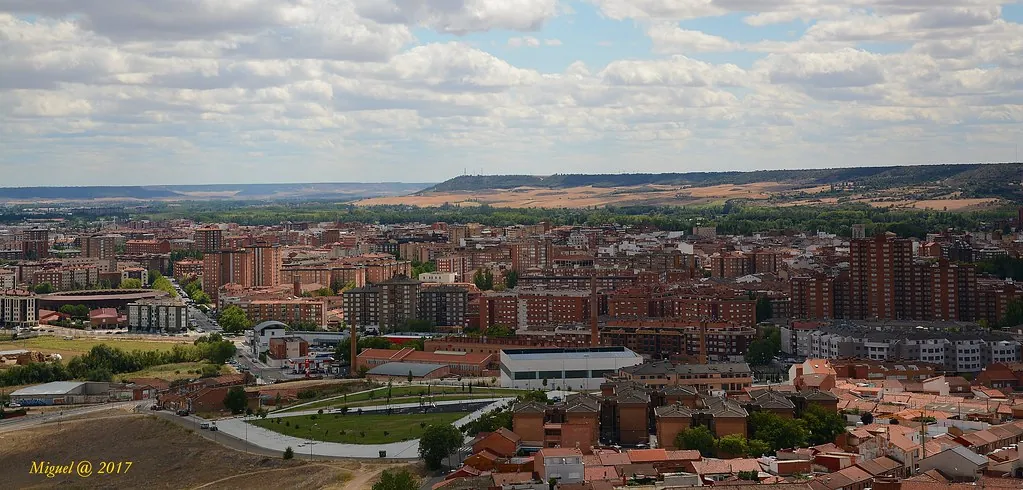
Any look at tourism in Tordehumos begins with a map of Tierra de Campos. This broad, cereal-growing plain stretches across parts of Castilla y León, and Tordehumos sits in the northern area of the province of Valladolid, right in the middle of it. The horizon is wide and the land barely rises or falls. Sky and field dominate almost everything.
With just over 360 inhabitants, the village keeps the quiet scale typical of many settlements in the comarca. Its medieval past can still be sensed in the layout of the old centre, where streets follow patterns shaped centuries ago.
Here the plateau stands at around 700 metres above sea level. The climate is dry and winters can be severe. Much of the traditional architecture makes sense in that context. Thick adobe or rammed-earth walls, brick used for reinforcement, and simple rooflines are practical responses to extremes of temperature. These were not decorative choices but building solutions designed to cope with cold winters and the heat of the Castilian summer.
A Settlement Marked by Medieval Disputes
During the Middle Ages, Tordehumos held a certain importance in controlling territory within Tierra de Campos. For centuries, this stretch of plateau functioned as a frontier zone between different powers and lordships. Fortified settlements played a role in overseeing roads and farmland.
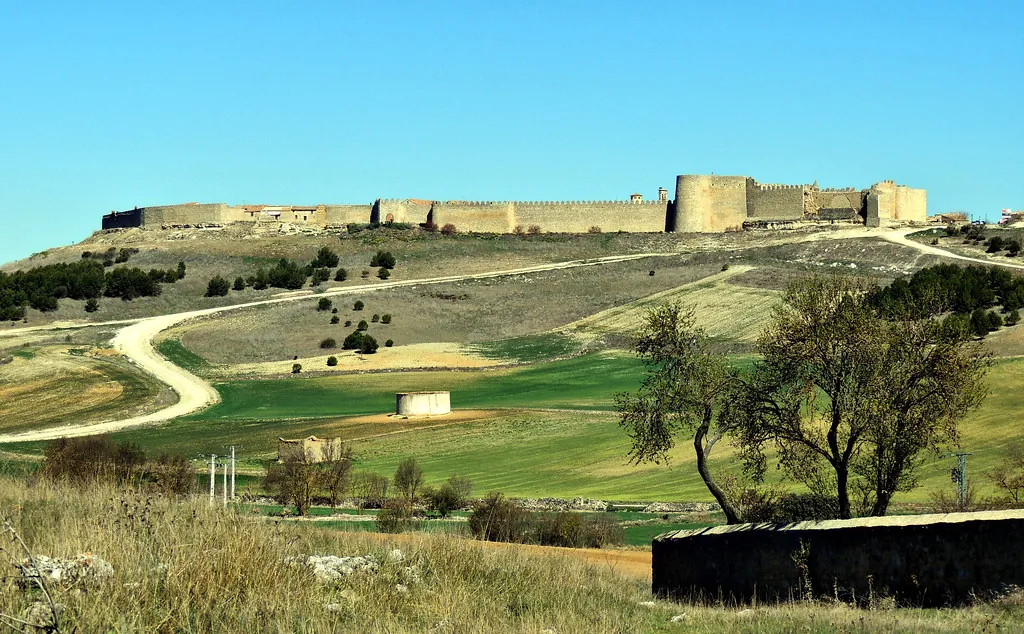
Very little of the medieval castle remains visible today, yet historical records confirm that a fortification once stood on the hill that dominates the village. From that elevated point, it is possible to command views over a vast expanse of open countryside. The strategic value is obvious. In a landscape as flat as this, height meant control.
That vantage point helps explain why the settlement consolidated here. The hill offered security and oversight in a region where authority was contested. Although the physical traces are scarce, the geography still tells the story.
Santa María del Castillo: A Landmark on the Skyline
The church of Santa María del Castillo occupies the highest point in the urban centre. The current building dates from the 15th century, with later alterations. Its style combines Mudejar features with additions from subsequent periods, a blend that is common in this part of Castilla.
Mudejar refers to the influence of Islamic artistic traditions within Christian-ruled territories, often visible in the use of brick and certain decorative elements. In Tierra de Campos, this influence appears in numerous parish churches, reflecting centuries of cultural overlap.
More than the size of the church, it is the setting that stands out. The outline of its tower can be seen from some distance when approaching along the regional roads. In villages on the plain like this, the church serves almost as a geographical marker. It rises above the low houses and signals the presence of the settlement long before individual streets come into view.
Adobe Houses and Unadorned Streets
In the centre of Tordehumos, several traditional houses are still standing. Many combine adobe, rammed earth and brick, materials long associated with Tierra de Campos. The choice was driven by availability and climate rather than appearance. Mud was readily accessible and provided effective insulation.
Some façades retain stone doorways or old wrought-iron grilles. In a few of the older houses, wooden galleries can still be seen, although they are less common here than in other northern regions of Spain. These elements add texture to otherwise simple street fronts.
As one moves away from the historic core, more recent constructions appear, most of them built during the 20th century. The transition is gradual rather than abrupt. The older centre keeps its modest scale, while later buildings reflect changing needs and materials without altering the essential character of a small agricultural village.
Walking through these streets is less about individual monuments and more about atmosphere. The proportions are human, the lines straightforward, and the materials closely tied to the land itself.
Dovecotes and an Agricultural Landscape
Around the edge of the village, several dovecotes are scattered among the fields. These structures are strongly associated with Tierra de Campos. Traditionally they were used for breeding pigeons, which provided meat and, above all, pigeon droppings known as palomina, valued as fertiliser for the fields.
Some dovecotes are circular, others square in plan. A number remain standing, while others are partly in ruins. Even in varying states of preservation, they form part of the identity of the region as much as the cereal fields themselves.
The surroundings are entirely agricultural. Wheat, barley and other dry-farmed crops shape the visual rhythm of the territory. The appearance of the land changes dramatically with the seasons. In spring, green tones dominate. By summer, the fields turn an intense gold. Under the high plateau light, these shifts in colour define the year.
There are few visual interruptions. Trees are scarce, and settlements are spaced apart. The result is a landscape that can feel immense despite the relatively short distances between villages.
Rural Tracks Across the Plain
Several rural tracks lead out from Tordehumos towards neighbouring localities. They are used routinely by farmers and also by those who wish to explore the area on foot or by bicycle. The terrain is flat, yet distances can be deceptive. What appears close on the horizon may take longer to reach than expected, especially under strong sun or persistent wind.
Clear orientation is important. On the plain, many paths look similar and are not always signposted. The uniformity of the landscape, part of its defining character, can also make navigation less straightforward.
For visitors, these routes offer a way to understand the scale of Tierra de Campos. Moving slowly across open ground reveals how villages like Tordehumos relate to one another, each occupying slight rises or strategic points within a largely level expanse.
The Virgen del Castillo Festivities
The main local celebration usually takes place around the Virgen del Castillo, closely linked to village tradition. During these days, religious events are organised alongside gatherings that bring together residents and families who return for a short time.
It is not a festival designed to attract large numbers of visitors. Instead, it provides insight into the social rhythm of a small community in Tierra de Campos. Collective memory remains strongly tied to such occasions, which mark the calendar and reinforce connections between those who live in the village year-round and those who maintain family roots there.
In Tordehumos, tourism is not about grand monuments or crowded streets. It is about understanding a place shaped by open horizons, medieval frontiers and an agricultural way of life that still defines its surroundings. The landscape, the church tower, the traces of a vanished castle and the scattered dovecotes all contribute to a setting where history and geography are closely intertwined.