Full Article
about Valderas
Historic Terracampina town known as the 'Sogorbia' of the Esla; rich monumental heritage and cod.
Hide article Read full article
A village shaped by the plains
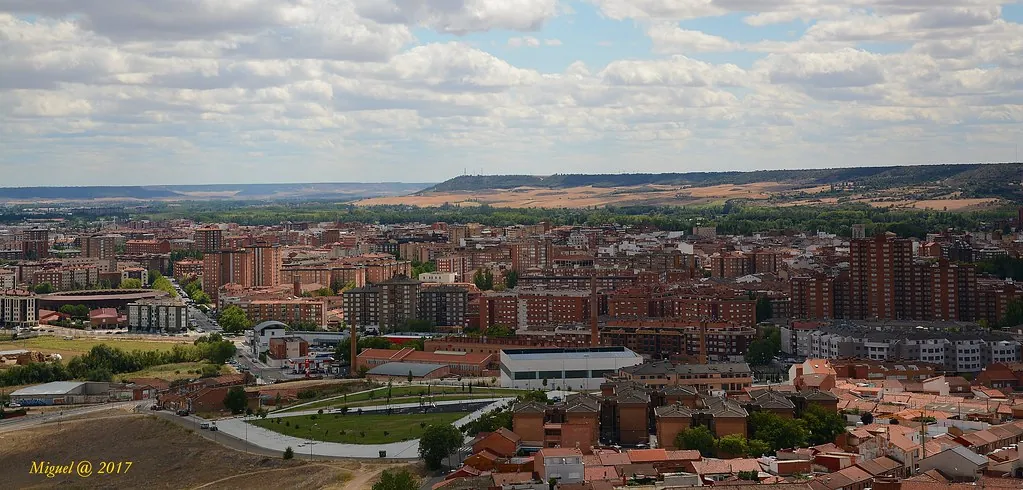
To understand Valderas, you must first understand Tierra de Campos. This village occupies the southern edge of León, on a vast plain where cereal fields dictate the horizon. The geography is the key. For centuries, life here has been organised around the rhythms of this open land.
A layout that reveals its past
Valderas held a strategic position in the Middle Ages, between northern León and the routes to the southern plateau. You can trace this in the urban plan. Remnants of walls and gate towers, though fragmented, outline a settlement designed for control and commerce. It was never just a random cluster of houses; it was a deliberate foundation.
Streets, squares and the materials of the plain
The historic centre is a network of narrow streets that funnel into small plazas. The architecture is of the earth. Adobe and brick define the traditional houses, materials that are local, practical, and give the village a cohesive, grounded texture. In some streets, arcades provide shelter—a functional response to the stark sun of summer and the biting cold of winter.
The Plaza Mayor has always been the core. It served as marketplace and meeting point for centuries. Today, its role is quieter, shaped by daily errands and conversation, not large-scale trade.
Two churches and a skyline
The church of Santa María del Azogue anchors the village. Its origins are 14th century, with later Gothic and Mudéjar modifications. The tower is a landmark across the flat terrain, a vertical marker in a horizontal world.
Not far away stands the church of San Pedro, from the 15th century. The presence of two substantial churches in one small town speaks to a historical importance that has since faded. Scattered manor houses from periods of agricultural prosperity blend into the street fabric, evidence of wealth that was earned from the land.
The character of the surrounding land
Outside Valderas, the landscape opens completely. Tierra de Campos is an expanse of sky and field. There is no dramatic relief, which is precisely its defining feature. The colour of the land shifts with the agricultural calendar, from the green of spring growth to the gold of summer harvest.
Dirt tracks lead straight out into the fields. Walking them is the best way to grasp the scale and silence of the place. This is also bird country, home to species adapted to steppe-like conditions.
Calendars and community
Local life follows a seasonal cadence. The patron saint’s festivities for San Pedro draw much of the community together. In summer, the population swells with returning families, changing the atmosphere temporarily.
Semana Santa processions move through the main streets of the old quarter along established routes. These are not spectacles for outsiders but continuations of a local practice.
A practical base for the region
You can walk the entirety of Valderas in a short time. That walk reveals the logic of a Tierra de Campos hub: defensive origins, a market function, an architecture suited to its setting.
The village also works as a base. The southern part of León and the borders with Valladolid and Zamora are close. The landscape and building styles create a continuity across this area. To see one village like Valderas is to begin to understand the whole comarca.