Full Article
about Villacidaler
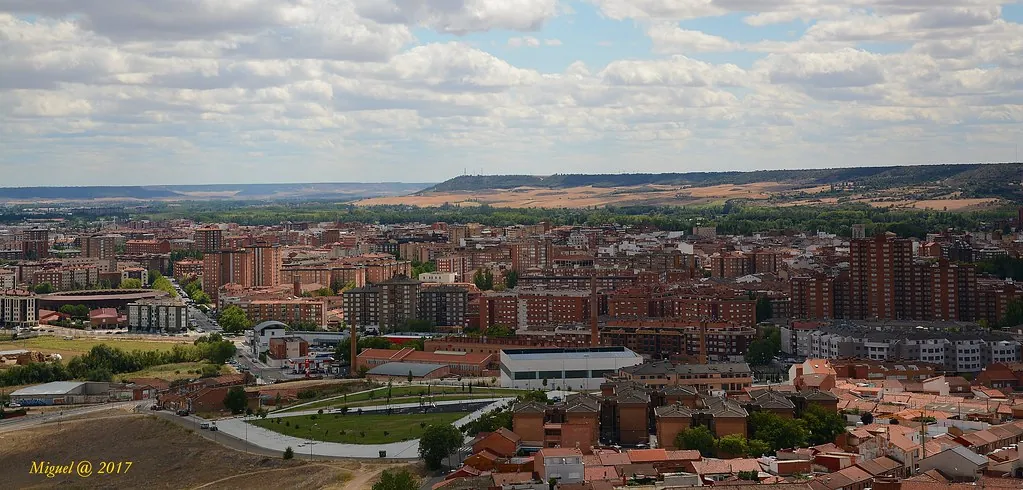
Bordering León; noted for its church and brick architecture; set in cereal-growing plains.
Ocultar artículo Leer artículo completo
The morning wind starts at seven sharp. It races across Tierra de Campos, rattles the loose tiles on a barn roof, then slams into the church wall with enough force to make the swallows reconsider their flight path. From the single bench in Villacidaler's minuscule plaza you can watch it happen: cereal heads bow in perfect unison, dust devils pirouette between the wheat rows, and somewhere out on the horizon a lone harrier tilts like a faulty weather vane. This is what 780 metres of altitude feels like when there's nothing taller than a dovecote for twenty kilometres.
Villacidaler sits so high that the air thins noticeably if you've driven up from the provincial capital. Palencia lies 45 kilometres south-west, but the road climbs steadily, leaving the irrigation canals behind and entering a landscape that feels closer to the steppes than to Castile. The village appears suddenly: a tight cluster of earth-coloured houses that seem to have been poured rather than built, their walls the exact shade of the surrounding soil. Adobe, tapial and terracotta – the holy trinity of rural Palencia – have survived here because no one ever bothered to replace them with brick.
Population figures swing between forty-five in winter and perhaps two hundred when the diaspora returns for August fiestas. The council still records five thousand souls on its books, a bureaucratic ghost that haunts electoral rolls and census returns, but the lived reality is quieter. Walk the two main streets at siesta time and the only sound is the grain store's automatic ventilator kicking in. Doors stand open because everyone knows whose dog will wander in, whose grandchild is visiting from Valladolid, and which house still keeps a working landline.
The altitude changes everything. Summer mornings are bearable until eleven, then the sun flattens colour out of the landscape and the tar between the cobbles softens. Winters bring genuine cold: minus eight is routine, minus fifteen arrives most Januarys, and the locals swap stories about the year the diesel in parked tractors turned to jelly. Spring arrives late but fast – one week the fields are brown stubble, the next an almost violent green that makes sunglasses advisable. Autumn is the photographers' favourite: the wheat stubble glows amber, the ploughed strips turn chocolate, and the low sun throws shadows sharp enough to measure with a ruler.
Where the Land Owns the Clock
There is no monument to tick off, no interpretation centre, no gift shop selling fridge magnets. Instead there is space, and the negotiation of space becomes the day's activity. The grain co-operative's lorries start at six, heavy enough to make the road surface ripple. By eight the first walkers appear – usually outsiders with Nordic poles and expensive binoculars – following the farm tracks that radiate out like spokes. The tracks are wide enough for a combine harvester, impossible to get lost on, and they deliver you within minutes to a silence so complete that ear pressure becomes noticeable.
Birdlife follows the farming calendar. March brings displaying great bustards that look like feathered office chairs engaged in elaborate courtship. Montagu's harriers quarter the fields at knee-height, while calandra larks provide an audio backdrop that resembles a Geiger counter. Bring a scope if you own one; the flat terrain means birds are often a kilometre away but visible at eye level. Farmers don't mind observers as long as gates stay closed and wheat isn't used as a lavatory – both of which sound obvious until you've watched a German tourist disappear knee-deep into a crop of durum.
Cycling works better than walking if you want to cover ground. A gravel bike is ideal: the surface is too loose for skinny tyres but too fast for mountain bike knobbly treads. Head north for five kilometres and you reach a ruined dovecote whose interior still smells of guano and centuries-old grain dust. Continue another three and the track tops a barely perceptible rise – probably an old river terrace – giving views that stretch to the Montaña Palentina forty kilometres away. The return leg is usually faster because the prevailing wind finally works in your favour.
Eating on Steppe Time
Food happens elsewhere. Villacidaler's last bar closed in 2009 when the owner retired; the nearest loaf of bread is in Villada, twelve kilometres west. What the village does provide is appetite: the air is so clean that lunch becomes an event rather than a refuelling stop. Drive to Magaz de Pisuerga for sopa castellana thick enough to stand a spoon in, or push on to Herrera de Pisuerga where Asador Otero still roasts lechazo in a wood-fired oven built in 1947. Expect to pay €22 for a quarter-lamb portion that feeds two, €12 for a bottle of Ribera that would cost £28 in London, and precisely nothing for the bowl of buttery chickpeas that arrives while you decide.
If you insist on staying local, pack a picnic and use the stone tables beside the abandoned school. The shop in Villada sells local cheese made from Friesian milk – milder than Manchego, better for breakfast than dinner – and chorizo that actually tastes of paprika rather than industrial red dye. Eat early; by two o'clock the wind drops, flies wake up, and shade becomes as valuable as water in the Sahara.
When the Village Remembers Itself
Visit during the third weekend of August and you'll witness the population multiplier effect. Cars with Madrid number plates squeeze into alleyways designed for mules, teenagers who speak perfect London English appear behind the church, and someone's uncle rigs up a sound system that would shame a small festival. The fiestas honour the Assumption, though religious observance is largely an excuse for extended family reunions. Saturday night involves a communal paella cooked in a pan two metres wide; Sunday morning brings a procession where the statue of the Virgin gets carried at shoulder height through streets too narrow for the bearers to walk abreast. Tourists are welcome provided they understand the hierarchy: locals first, returning emigrants second, curious outsiders a distant third. Turn up early for the paella – it runs out fast – and bring cash for the beer tent that operates on trust and mental arithmetic.
Winter visits demand more commitment. The road from Palencia can ice over, mobile reception vanishes in fog, and the single grocery in Villada closes at 1.30 pm sharp. Yet January delivers its own reward: the wheat is newly sown, the earth smells of frost and iron, and the bustards gather in flocks so large they look like scattered quarry stones from a distance. Dress for Scotland in February, bring a thermos stronger than the wind, and remember that the village's only streetlight switches off at midnight to save the council €3.40 a day.
Leaving Without Losing the Height
Drive away at dusk and the village shrinks instantly in the rear-view mirror. What lingers is the scale: not the postcard Spain of cathedrals and costas, but an older, drier place where human presence feels provisional. The meseta doesn't do cosy; it does endurance, and Villacidaler is a fragment of that ongoing negotiation between people, wheat and wind. Come for the birds if you're a list-ticker, for the light if you're a photographer, for the silence if you're escaping a city that never stops talking. Don't come for amenities – there aren't any – and don't expect to be entertained. The altitude does something strange: it levels expectations. After a morning watching clouds shadow the fields like slow-moving continents, the idea of needing anything else feels faintly absurd.