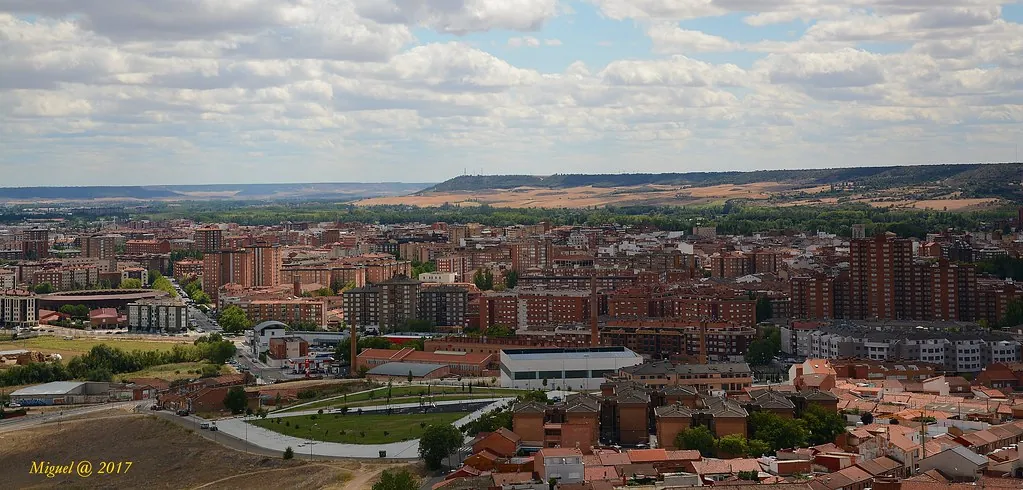
Vista aérea de Villafrades de Campos
Instituto Geográfico Nacional · CC-BY 4.0 scne.es
Castilla y León · Cradle of Kingdoms

Villafrades de Campos

The church tower appears first, a pale stone finger rising from the plain like a ships mast emerging from a golden ocean. Below it, Villafrades de ...

59 inhabitants · INE 2025
757m Altitude

Why Visit

Church of San Juan Evangelista Rural walks

Best Time to Visit

summer

Saint John (June) junio

Things to See & Do
in Villafrades de Campos

Heritage

  • Church of San Juan Evangelista

Activities

  • Rural walks
  • Roots tourism

Festivals
& & Traditions

Fecha junio

San Juan (junio)

Las fiestas locales son el momento perfecto para vivir la autenticidad de Villafrades de Campos.

Full Article
about Villafrades de Campos

Terracampina municipality; known for its church and quiet streets.

Ocultar artículo Leer artículo completo

The church tower appears first, a pale stone finger rising from the plain like a ships mast emerging from a golden ocean. Below it, Villafrades de Campos spreads barely a dozen streets wide, a settlement so modest that even the regional bus company seems to have forgotten it exists. This is farming country at its most uncompromising: no romantic hills, no shady forests, just earth and sky locked in an ancient conversation about wheat, barley and the patience required to coax life from dry soil.

The Arithmetic of Emptiness

Standing at the village edge, the mathematics are brutal. Fewer than a hundred souls remain year-round in a place built for five times that number. Empty houses outnumber occupied ones; their adobe walls crumble back into the earth from which they came, while corrugated iron patches newer structures with the pragmatic ugliness of necessity. The silence isn't absolute – a tractor growls somewhere beyond the grain silos, and swallows stitch the sky overhead – but it's the kind of quiet that makes city dwellers speak in whispers, as though they've wandered into somewhere they weren't meant to find.

The landscape operates on a scale that defeats photography. Phone cameras flatten the perspective, turning forty kilometres of wheat into a boring backdrop. In reality, the plain rolls like a gentle sea, each swell revealing another distant village, another church tower, another cluster of human determination against the vastness. On clear days, the cathedral spires of Palencia shimmer on the horizon, forty-five kilometres away. The earth here isn't flat; it's simply bigger than your ability to perceive its curves.

Adobe, Wood and the Memory of Hands

What passes for sightseeing in Villafrades demands a different kind of attention. The parish church of San Andrés stands locked more often than not, its key held by whoever happens to be passing – ask at the bar if it's open, though calling Bar Mary a 'bar' stretches the definition. It's someone's front room with a coffee machine and a fridge of beer, open when Doña Mary feels like company. Inside the church, if you manage entry, the altarpiece shows the moment when Baroque met bankruptcy: gilded wood that never quite achieved magnificence, painted with the slightly anxious faces of saints who know they're presiding over diminishing congregations.

More revealing are the houses themselves. Adobe construction – mud mixed with straw and packed into wooden forms – created walls thick enough to laugh at summer heat and winter cold. Look closely and you'll see handprints fossilised in the walls, the signature of builders who worked in the 1890s with the same techniques their great-grandparents used. Modern interventions arrive as concrete blocks and aluminium windows, materials that won't melt back into the earth so gracefully when their time comes.

The agricultural architecture tells its own story. Grain stores raised on mushroom-shaped stone pillars kept rats from the harvest while providing shelter for the village's last remaining storks. One pair nests atop the abandoned school, their clacking bill percussion the loudest sound at dusk. Below them, the playground's see-saw rusts in permanent suspension, a monument to Spain's rural exodus that makes no concessions to sentimentality.

Walking Where Nothing Happens

Attempting to 'do' Villafrades misses the point entirely. This is a place for walking until your mind matches the rhythm of the land, for understanding that 'nothing happening' is actually the sound of wheat growing and clouds drifting at their own geological pace. The caminos that radiate outward offer flat walking through agricultural monoculture that either appalls or fascinates, depending on your capacity for subtle variation. In April, the fields glow emerald with young wheat. By July, they shift to gold so intense it seems to generate its own light. October brings the stubble period, when the earth shows its bones and the horizon extends another impossible kilometre.

Cycling works better than walking for covering ground, though the wind demands respect. When it blows from the west – and it usually does – pedalling feels like swimming through invisible treacle. Local farmers drive utility quads along the tracks; they'll wave but won't stop, operating on the reasonable assumption that anyone voluntarily exercising in this landscape has made their own choices and must live with the consequences.

Birdwatching provides legitimate excuse for standing still. Great bustards – birds heavy enough to require a running take-off like overweight aircraft – feed in the fallow fields. Pin-tailed sandgrouse arrive in pairs, their calls carrying across the emptiness like squeaky gate hinges. You'll need binoculars and patience; these aren't garden birds hopping onto your seed feeder. They're wild creatures surviving in a habitat that offers neither mercy nor easy pickings.

The Gastronomy of Making Do

Eating in Villafrades requires military-style planning or absolute surrender to circumstance. Bar Mary might offer tortilla if she felt like cooking, or she might be shut because her granddaughter's visiting from Valladolid. The nearest certain food comes in Becilla de Villarromán, twelve kilometres east, where Casa Macario serves lamb chops that taste of thyme and wood smoke, plus the regional speciality of sopa de chícharos – pea soup thick enough to stand your spoon in, enriched with chorizo that actually contains pork rather than the mysterious orange discs found in British supermarkets.

Better strategy involves stocking up in Medina de Rioseco, twenty-five minutes by car, where Supermercado Eroski sells everything needed for a respectable picnic. Local cheese comes from sheep that graze the stubble fields; it tastes of lanolin and grass and the kind of patience that can't be rushed. Buy a loaf of pan candeal, the local wheat bread with its characteristic dense crumb, plus a bottle of Toro wine that punches far above its four-euro price point. Then drive back to Villafrades, park beside the church, and eat while watching the light change across the plain. This isn't compromise; it's understanding that proper provision turns limitation into luxury.

When the Village Remembers Itself

August transforms everything, though transformation here remains relative. The fiesta patronal brings back those who left for Madrid, Barcelona, or the Basque Country's shipyards. Suddenly the plaza holds conversations in accents shaped by cities, while elderly residents sit slightly straighter, remembering when these streets held butchers, bakers and enough children to fill three school classrooms. The temporary bar – erected in the shadow of the church – serves calamari sandwiches and cold beer to people who've waited twelve months to see cousins, argue about football, and dance until dawn despite knees that protest the enterprise.

San Isidro, the agricultural saint, arrives in May with a smaller celebration but deeper roots. The procession involves precisely one tractor, decorated with paper flowers, carrying the saint's statue while the priest walks behind swinging incense that drifts across wheat already knee-high. It's religion stripped of tourism, faith practised for its own sake, community asserting itself against demographic inevitability.

The village's real festival happens invisibly during these gatherings: the moment when people who share DNA, memories and the particular accent of Tierra de Campos come home to measure themselves against the place that made them. Some will leave again Sunday night, others might stay to plant wheat or start a business delivering organic flour to Madrid restaurants. The arithmetic of rural decline isn't defeated, but it's momentarily irrelevant.

Villafrades de Campos offers no postcard moments, no Instagram opportunities beyond the church tower against sunset. What it provides instead is the increasingly rare experience of authentic agricultural Spain, where tourism hasn't replaced agriculture as the primary economy, where strangers remain objects of polite curiosity rather than commercial opportunity, and where the landscape's grandeur reveals itself slowly to those willing to look beyond their phone screens. Come prepared for silence, bring your own lunch, and understand that the greatest luxury here is time measured in seasons rather than minutes. The wheat will be harvested, the storks will return to Africa, and Villafrades will continue its conversation with the sky long after you've driven back to the motorway, carrying with you the memory of a place that asked nothing of you except the courtesy of paying attention.

Key Facts

Region
Castilla y León
District
Tierra de Campos
INE Code
47203
Coast
No
Mountain
No
Season
summer

Livability & Services

Key data for living or remote work

2024
Housing~5€/m² rent · Affordable
Sources: INE, CNMC, Ministry of Health, AEMET

Planning Your Visit?

Discover more villages in the Tierra de Campos.

View full region →

More villages in Tierra de Campos

Traveler Reviews