Full Article
about Villagarcía de Campos
Historic town with an imposing castle-palace and collegiate church; linked to Don Juan de Austria
Hide article Read full article
A pause on the plains
Some villages look like the sort of place where you stop the car for five minutes to stretch your legs. Villagarcía de Campos is one of them. Then you linger.
Tourism in Villagarcía de Campos is not about landmark sights or headline monuments. It is about understanding how Tierra de Campos works when nobody is polishing it for visitors. This is everyday rural Castilla y León, as it is.
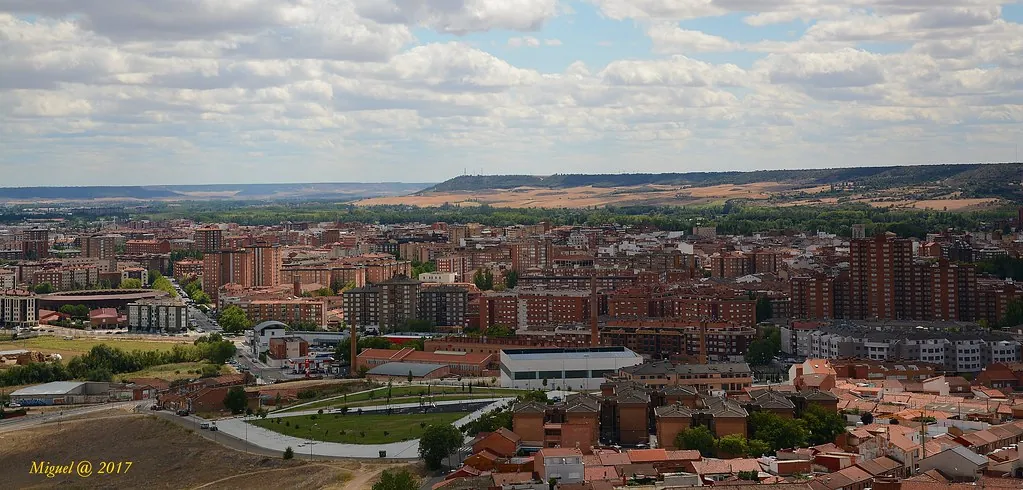
With around 300 residents, the municipality sits less than an hour’s drive from Valladolid. Life still revolves around the land. Wheat, barley and sunflowers occupy almost everything you can see. At roughly 770 metres above sea level, the setting has that characteristic horizontality of the comarca: vast sky above, cereal fields below.
Nothing competes for attention. That is precisely the point.
A village at its own pace
On entering Villagarcía de Campos, one thing becomes clear: not much is happening. In the best possible way.
Houses combine adobe, brick and thick walls that have endured more winters than anyone cares to count. Facades are simple. Some have large wooden gates, a reminder that agricultural tools and machinery are still part of daily life here.
A walk along Calle Mayor or towards the main square feels like leafing through a family album of the meseta, Spain’s high central plateau. There are no decorative backdrops designed for quick photos. What you see is what there is.
The streets are quiet, shaped by routine rather than tourism. Conversations happen at doorways. The rhythm of the day follows the fields. Even without obvious attractions at every turn, there is a clear sense of place.
Iglesia de San Luis and the village heart
The most recognisable building is the parish church of San Luis Obispo, built in the 16th century. It is sober and direct, very much in keeping with many rural churches across Castilla.
This is not the kind of church that demands an instant photo. Its role is different. It marks the point around which the village has long been organised. Nearby stand older houses and the occasional corral that still preserves its original structure.
Move a little beyond the centre and the landscape begins to open up again. Scattered across the fields are palomares, traditional dovecotes once used for raising pigeons. Some remain upright with quiet dignity. Others lean under the weight of time. Together they form part of the visual identity of Tierra de Campos, as recognisable as the crops themselves.
The wide horizon of Tierra de Campos
The true protagonist here is the landscape. Villagarcía de Campos is surrounded by plains that seem to have no end.
In spring, everything turns green and the wind moves through the cereal like water. Summer brings golden tones and the dry heat that defines this part of inland Spain. Autumn softens the colours. In winter, the fields lie bare, and the plateau takes on an austere look that feels almost elemental.
It is a simple landscape. Yet after walking for a while along the agricultural tracks, details begin to emerge. Birds of prey glide overhead. With luck, a bustard may appear in the distance. The prevailing sound is the wind.
There are no elaborate viewpoints or curated routes every few metres. The usual approach is to follow a rural path, take a dirt track and see where it leads. That is how this territory has always been travelled. The experience is less about reaching a specific spot and more about absorbing the scale and stillness of the surroundings.
A base for exploring nearby villages
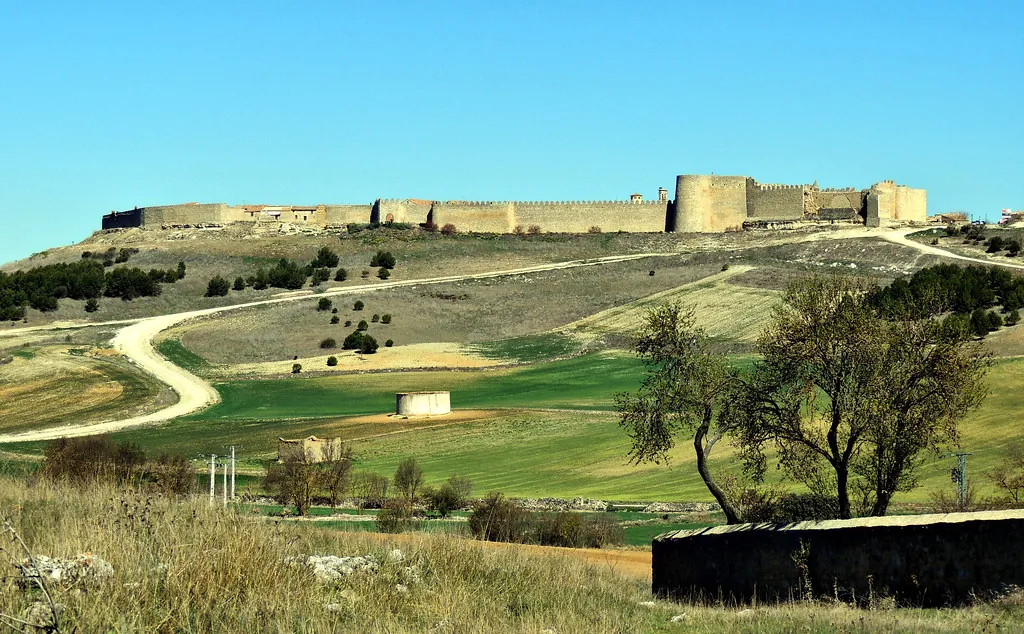
Villagarcía de Campos also works well as a quiet base for exploring this part of the province of Valladolid. A short distance away lies Urueña, known for its connection with books and for its well-preserved town walls. It offers a contrast to Villagarcía’s understated character.
Villabrágima is also close by, another village closely tied to the agricultural rhythm of the comarca. Visiting several places together helps build a fuller picture of Tierra de Campos, where settlements are small, distances are modest and the landscape binds everything together.
Villagarcía does not compete with its neighbours. It complements them. A couple of hours here, combined with time in surrounding villages, creates a more rounded plan.
Eating as it has always been done on the plateau
The local cooking follows the traditions found across inland Castilla. These are hearty dishes, designed for long working days and cold winters.
Sopa castellana often appears when temperatures drop. This traditional Castilian soup is typically associated with garlic and bread, simple ingredients that deliver warmth and substance. Lechazo asado, roast suckling lamb cooked in a traditional oven, is close to a regional institution in this province.
Speak to local residents and conversation may turn to queso de oveja, sheep’s cheese, or embutidos cured during the winter months. These foods are direct and unfussy. When the product is good, there is little need for embellishment.
There is no sense of culinary performance. The emphasis is on continuity and practicality, flavours shaped by climate and work rather than fashion.
How long to spend
Villagarcía de Campos is not a place that demands a packed itinerary. There is no need to pretend otherwise.
In a couple of hours you can walk through the centre, visit the Iglesia de San Luis Obispo and take a short stroll along the tracks that surround the village. The appeal lies in slowing down enough to notice the textures of adobe walls, the geometry of the fields and the steady movement of the wind across the plain.
Places like this rarely function as standalone destinations. They make more sense as part of the wider landscape of Tierra de Campos. Viewed in that context, Villagarcía de Campos fits naturally into the bigger picture: a small settlement, shaped by agriculture, framed by sky and fields, and content to carry on at its own pace.